
A Legacy of Blacksmithing in Kemeralti
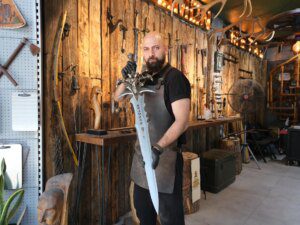
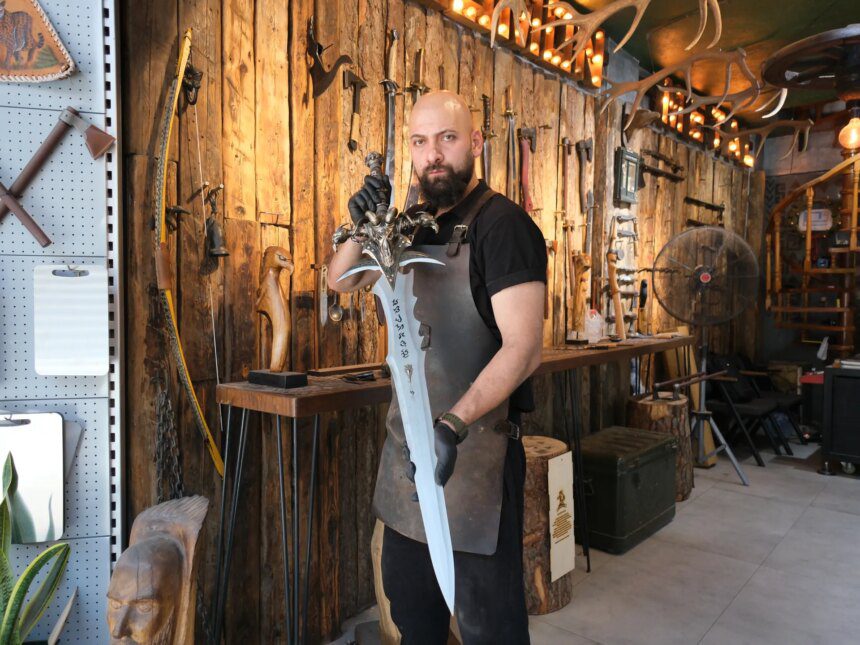
Omer Akdemir carries on a family tradition of blacksmithing in Kemeralti, a historic district in Izmir, Turkey. With roots tracing back to the Greek occupation between 1919 and 1922, the Akdemir family’s workshop highlights the resilience of traditional craftsmanship amid modern advancements. Omer’s approach reflects an adaptive mindset, embracing change while preserving his craft’s heritage.
The Enduring Craftsmanship of the Akdemir Family
Omer Akdemir’s narrative of lineage reveals a rich tapestry of blacksmithing history in his family. His lineage can be traced back to Sabri Alim, an apprentice during the Greek occupation, who later took over the workshop founded by his master, Suleyman Acarlar. Omer’s father, Suleyman Akdemir, began his apprenticeship under Sabri in 1955, eventually taking over the workshop himself before passing his skills on to Omer and now his son.
This persistence of craft reflects not only family dedication but also the cultural significance of blacksmithing in Turkey, paralleling similar traditions in India, where artisanal skills and local craftsmanship are often passed through generations.
Adapting to Modern Demands
Initially, the Akdemir workshop produced specialized tools like shoe-sole cutting blades and agricultural implements. However, consumer demand shifted with technological advances such as laser cutting, leading to the decline of certain products. Despite the challenges, Omer maintains a forward-thinking approach. He explains, “If you stay fixed in one place, you cannot grow.” This philosophy emphasizes the importance of adaptability in a rapidly changing market.
Omer is not averse to his son leveraging the internet to connect with customers. This reflects a growing trend where artisans globally, including in India, utilize digital platforms to reach wider audiences and create niche markets. Omer’s insight on modern connectivity underscores an increasingly global approach to local crafts.
Crafting a Future with Tradition
In Omer’s workshop, traditional blacksmithing meets contemporary needs. The regular influx of customers seeking repairs signifies a lasting appreciation for locally crafted goods. This hands-on engagement allows artisans to maintain quality and customize their services—a trait that resonates with consumers valuing authenticity and craftsmanship. The recent visit by a customer needing an axe repair illustrates the ongoing relevance of manual skills in today’s society.
Moreover, Omer’s open-mindedness towards technological advancements speaks volumes about the future of traditional crafts. Importantly, this adaptive strategy can be mirrored in India, where traditional artisans are also facing the challenge of balancing age-old practices with modern technological advancements.
What This Means
The Akdemir family’s commitment to blacksmithing highlights a universal theme: the value of tradition in the face of modernization. For Indian readers, this serves as both an inspiration and a cautionary tale. As Indian artisans like weavers, potters, and metalworkers face the pressure of industrialization, the story of the Akdemir workshop illustrates that preserving heritage and embracing change can coexist. Such narratives can motivate local craftsmen in India to innovate while remaining grounded in their cultural roots.
Frequently Asked Questions
What is the significance of blacksmithing in Turkish culture?
Blacksmithing is an important traditional craft in Turkey, symbolizing resilience and a connection to cultural heritage. It serves practical needs and represents artisanal skill passed through generations.
How can artisans adapt to modern market changes?
Artisans can leverage technology, such as online platforms, to reach broader audiences, while also remaining open to adapting their products and services to current consumer needs.
Are there similar artisan traditions in India?
Yes, India has a rich tapestry of traditional crafts ranging from weaving and pottery to metalwork, where skills are often passed down through generations, similar to the blacksmithing tradition in Turkey.
How does technology impact traditional craftsmanship?
Technological advancements can pose challenges but also provide opportunities for increased market reach and efficiency. Many artisans use social media and e-commerce to connect with new customers while retaining their traditional practices.