
Summary
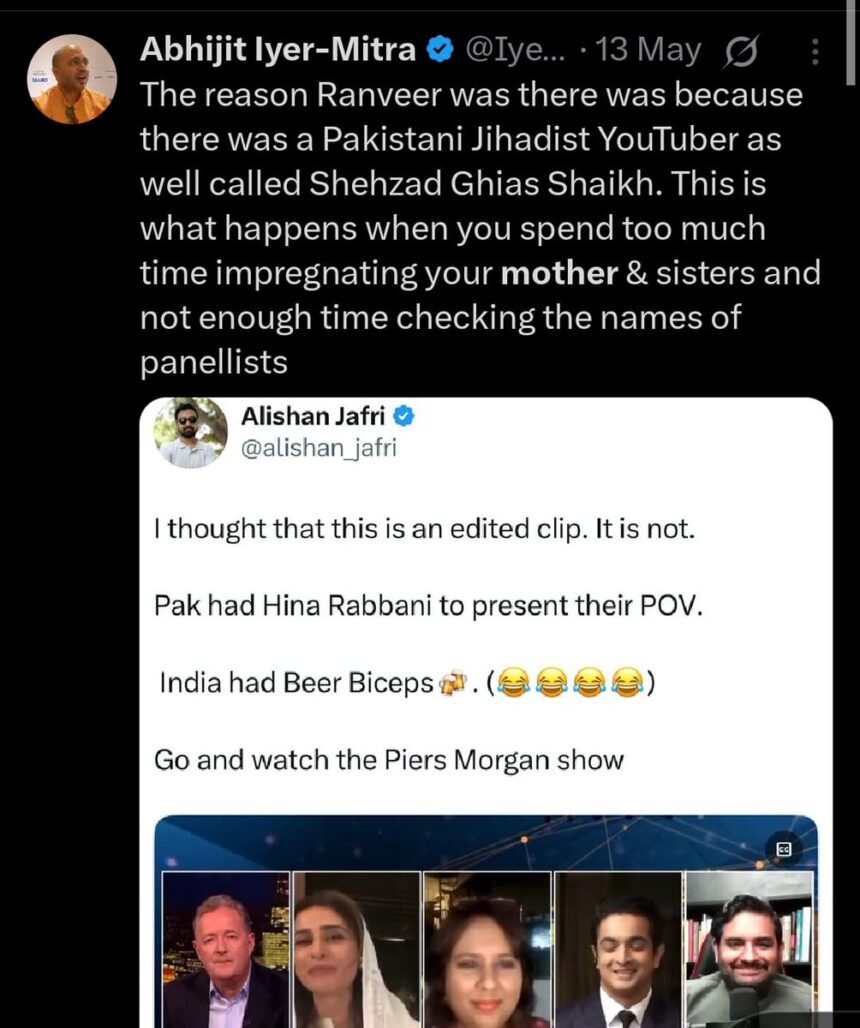
In a recent discussion, prominent Indian political commentator Mohammed Zubair criticized the decision to feature Abhijit Iyer-Mitra on shows hosted by Barkha Dutt and Smita Prakash. He highlighted Iyer-Mitra’s history of making derogatory comments, particularly targeting Muslims, thereby raising concerns about the ethics of inviting such individuals onto platforms that influence public discourse.
Criticism of Abhijit Iyer-Mitra
Abhijit Iyer-Mitra has garnered a reputation for his controversial remarks, which often include inflammatory language against various communities, particularly Muslims. Zubair pointed out that this behavior is not a recent development, indicating that Iyer-Mitra has been making such comments for years. By continuing to platform him, mainstream media figures, like Dutt and Prakash, run the risk of normalizing harmful rhetoric that could contribute to communal tensions.
The Role of Media Ethics
The inclusion of controversial figures on news panels raises critical questions about media ethics and accountability. Journalists and editors have a responsibility to ensure that their platforms do not perpetuate hate speech or intolerance. By inviting guests like Iyer-Mitra, media outlets may be perceived as endorsing their viewpoints. This can lead to a significant erosion of public trust in journalistic integrity, especially in a diverse nation like India, where communal harmony is of utmost importance.
Impact on Public Discourse
Allowing individuals who espouse divisive rhetoric to participate in public discussions can skew the narrative and influence public perception in dangerous ways. Mainstream platforms have the power to shape opinions and can inadvertently give legitimacy to harmful ideologies when they amplify such voices. As India grapples with its complex socio-political landscape, the responsibility of the media becomes even more critical in fostering an informed and respectful dialogue.
Why This Matters
The political significance of featuring figures like Abhijit Iyer-Mitra on popular news platforms cannot be understated. The normalization of hate speech poses a substantial threat not only to communal harmony but also to the democratic fabric of the country. In an environment where misinformation can spread rapidly, platforms that give voice to divisive individuals may contribute to widening societal rifts, making it imperative for media to engage in self-reflection regarding guest selections and the messages being broadcast.
Frequently Asked Questions
What has Abhijit Iyer-Mitra said in the past?
He has made several controversial remarks that have been criticized for being derogatory and inflammatory, particularly towards the Muslim community.
Why is it controversial to invite figures like Iyer-Mitra on shows?
Inviting such individuals risks normalizing hate speech and could mislead the public into accepting divisive narratives as mainstream discourse.
What impact does media representation have in India?
Media representation plays a vital role in shaping public opinions and societal attitudes. Misrepresentation can exacerbate communal tensions and deepen societal divides.
What constitutes media ethics in this context?
Media ethics involves responsibility in guest selections, ensuring that platforms do not promote hate speech, and fostering an inclusive environment that respects all communities.