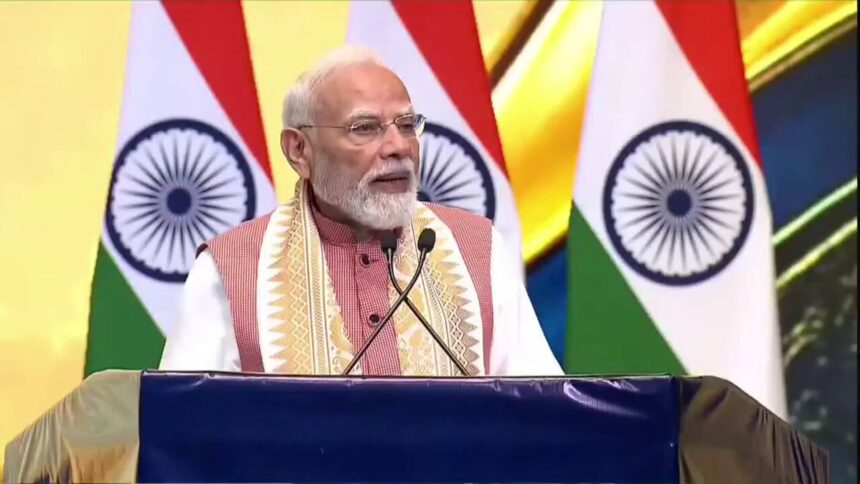

In a recent tweet, prominent political commentator Mohammed Zubair drew attention to Prime Minister Narendra Modi’s comments linking significant numbers, specifically, the number 26 associated with India’s Republic Day and the number 8 derived from adding digits. This tweet has stirred discussions regarding its implications and connections in political narratives.
Context: The Tweet Breakdown
Mohammed Zubair highlighted a statement made by PM Modi where he noted that India celebrated its Republic Day on January 26 last year. According to Modi’s arithmetic, 2 plus 6 equals 8, a number he whimsically connected to Indonesian President Prabowo Subianto’s birthday on 17th January, which also sums up to 8. This observation appears to reflect the Prime Minister’s approach to drawing symbolic connections that often resonate with the public.
Political Background
The mention of Republic Day, a pivotal national holiday in India, brings forth themes of patriotism and national pride. However, by connecting this to the number 8, Modi seems to evoke a sense of unity and coincidence between India and Indonesia, potentially fortifying bilateral ties in the eyes of the electorate. The significance of personal relationships in international politics cannot be understated; Modi’s strategy often emphasizes camaraderie with leaders of neighboring nations.
Analysis of Symbolism in Political Discourse
Using numbers in speeches is not unique to Narendra Modi, but his style integrates such numerical references to create a memorable impact. Zubair’s interpretation of Modi’s point raises questions about the nature of political rhetoric and its effectiveness in shaping public sentiment. The symbolic resonance of numbers can serve as a powerful tool in political communication, particularly in a culturally rich and numerically significant context like India.
Why This Matters
This incident highlights the significance of communication in political leadership. Modi’s ability to weave narratives through numbers could inform how voters perceive relationships between India and other nations. Given that the political climate is often charged with discussions on nationalism and international affairs, employing relatable symbolism may enhance public receptiveness to diplomatic narratives. Furthermore, it points to Modi’s strategic focus on establishing a personal rapport with leaders of nations like Indonesia, which could influence future policy and collaborative efforts.
Frequently Asked Questions
What was the main point of Modi’s statement regarding the numbers?
Modi linked India’s Republic Day (January 26) with the number 8 through simple arithmetic, making a connection to Indonesian President Prabowo Subianto’s birthday (January 17) which also equals 8. This connection is symbolic of unity and democratic values.
How did Mohammed Zubair react to Modi’s comments?
Zubair questioned the logic behind Modi’s numerical observations and highlighted the coincidence, encouraging discussions about their implications in political narratives.
Why do numbers matter in political contexts?
Numbers can serve as compelling symbols that resonate with public sentiment and understanding. They can embody values, signify unity, or demonstrate connections that politicians wish to highlight among various demographics or nations.
What are the implications of connecting India and Indonesia in this context?
Such numerical connections may strengthen bilateral relations between the two countries by fostering a sense of commonality and shared values in the minds of citizens, potentially influencing public support for future diplomatic endeavors.