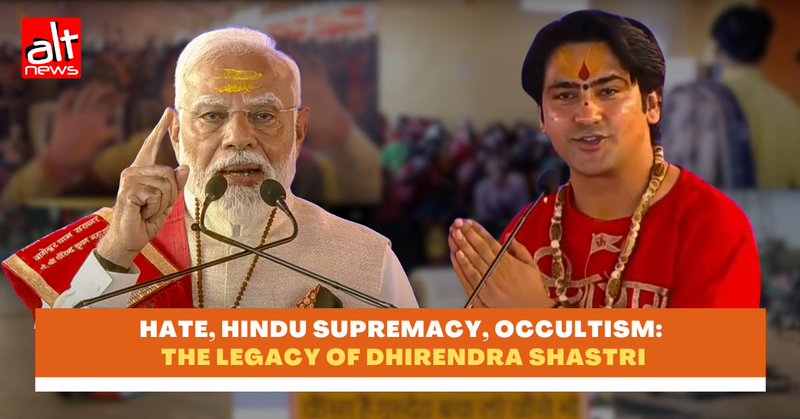

A recent article delves into the controversial figure of Dhirendra Shastri, who is often dubbed as Modi’s “younger brother” from Bageshwar Dham. The piece explores allegations surrounding his promotion of Hindu supremacy, occult practices, and how these factors intertwine with contemporary politics in India.
Controversial Figure Emerges
Dhirendra Shastri has become a focal point in Indian political discourse, particularly among supporters of Hindu nationalism. As a self-styled spiritual leader, he claims to offer solutions and remedies for various ailments and societal issues, often invoking Hindu religious narratives. His rise coincides with the broader socio-political atmosphere in India, where religious identity is increasingly being utilized as a political tool. The article emphasizes how Shastri has positioned himself as a significant player in the nationalistic rhetoric, aligning with the Bharatiya Janata Party (BJP) and its ideology.
Hindu Supremacy and Occult Practices
The article further investigates the contentious claims surrounding Shastri’s endorsements of Hindu supremacy and his alleged practices of occultism. Critics argue that his teachings and public addresses attempt to elevate Hindu cultural and religious practices above others, sometimes leading to divisive sentiments. This has sparked debates on the implications of such rhetoric in a multi-religious society like India. The piece underscores how Shastri utilizes social media and public gatherings to propagate his beliefs, drawing attention and sometimes criticism from various quarters.
Your Mother’s Health
Amid discussions about Shastri’s controversial practices, a personal narrative emerges regarding a mother’s battle with cancer. After fighting for three years, her condition has deteriorated to stage four, emphasizing the struggles families face in dire health situations. The juxtaposition of personal suffering against the backdrop of broader political issues raises poignant questions about the intersection of healthcare and spirituality in India. The article highlights how citizens often turn to unconventional healing methods in desperation, illustrating the complex landscape of faith and medicine in the country.
Why This Matters
Dhirendra Shastri’s narrative resonates significantly within India’s current political climate, where Hindu identity often collides with secular ideals. Understanding his influence is crucial for political analysts and observers, as it reflects broader societal trends that may affect elections, policy making, and communal harmony. As the BJP continues to consolidate power, figures like Shastri demonstrate how spiritual leadership can intertwine with political ambitions, shaping the future of governance in India. The political landscape is not only challenged by dialogues around nationalism but by how belief systems can guide public sentiment.
Frequently Asked Questions
Who is Dhirendra Shastri?
Dhirendra Shastri is a spiritual leader from Bageshwar Dham who has gained considerable popularity for his teachings that often intertwine Hinduism and political nationalism.
What are the claims against him?
Critics have accused Shastri of promoting Hindu supremacy and engaging in occult practices, which they argue can foster divisive sentiments within India’s multi-religious society.
What is the significance of his rise in the political context?
Shastri’s rise reflects a broader trend in Indian politics where religious identity plays a central role in political discourse, particularly among supporters of the BJP.
How does personal health intersect with Shastri’s influence?
The article draws attention to the desperation of individuals seeking remedies for serious health issues, illustrating how faith-based solutions can sometimes be prioritized over conventional medical advice.