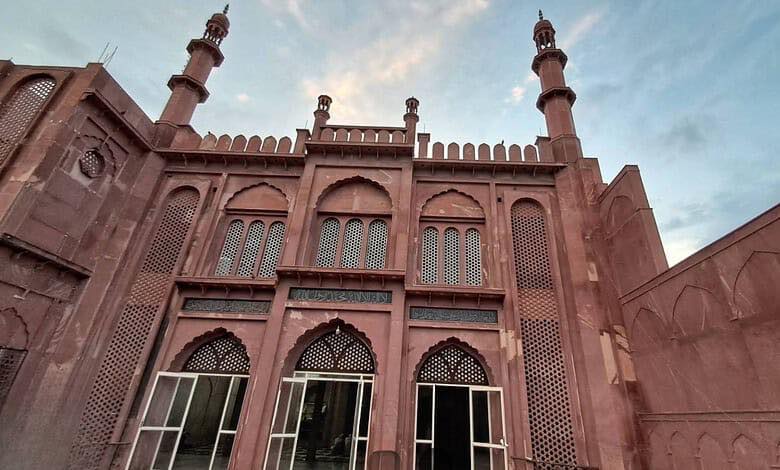

A fresh dispute has emerged in Kharkhoda, Uttar Pradesh, over the ownership of the historic Jama Masjid, or “Thane Wali Masjid,” located within the premises of the Kharkhoda Police Station. This issue highlights an ongoing trend of legal and social disputes surrounding religious sites in India, particularly affecting marginalized communities, including Muslims, amid the political backdrop of the BJP and affiliated organizations.
Background of the Dispute
The Jama Masjid, a mosque with significant historical value, finds itself at the center of conflict as authorities assert it was constructed on land claimed by the Kharkhoda Police Station. According to a recent survey from the revenue department, the mosque occupies approximately 6,450 square meters of land officially recorded as belonging to the police station, which dates back to the pre-Independence era. This has led to a seven-day notice served to the mosque’s imam, Abdul Ghaffar, demanding proof of ownership and the removal of what is deemed unauthorized construction.
Claims and Counterclaims
The mosque’s management has issued a strong rebuttal to these accusations. Imam Abdul Ghaffar contends that the land was legally recorded under the Waqf Board in 1985, asserting that the mosque is a legitimate Waqf property. He maintains that all necessary documentation substantiating their claim has been submitted to the authorities. This contradiction highlights a critical challenge concerning land ownership disputes involving religious sites, where claims often clash with historical records and governmental interpretations.
Political Context and Implications
In recent years, the political environment, particularly under the BJP, has fostered an atmosphere where disputes involving Muslim places of worship have escalated. The involvement of local police and government agencies in such conflicts raises concerns about potential discrimination and social exclusion faced by Muslim communities. The BJP’s approach to historical and religious sites has led to instances of marginalization, directly affecting the socio-economic status of Muslim populations in Uttar Pradesh and beyond. The Kharkhoda case may not be an isolated incident, but rather a part of a larger pattern where religious minorities face challenges in establishing their rights over historical properties.
Why It Matters
The ongoing dispute over Jama Masjid represents more than just a conflict of land ownership. It underscores broader issues of social equity, religious rights, and political bias in India. As communities navigate these legal battles, the outcome could influence future interactions between state authorities and religious minorities. Understanding these dynamics is essential for developers and users interested in the socio-political landscape of India, especially for those engaged in initiatives related to social justice and community rights.
Frequently Asked Questions
What triggered the dispute over Jama Masjid?
The dispute arose after a revenue department survey indicated that the mosque was built on land officially owned by the Kharkhoda Police Station, leading to a notice being served to the mosque’s management.
What do the mosque’s management claim regarding ownership?
The mosque’s management asserts that the land has been registered under the Waqf Board since 1985, indicating that the mosque is a legitimate Waqf property and that they have supporting documentation to prove this claim.
How does this dispute reflect broader social issues in India?
This case highlights ongoing trends of discrimination and marginalization faced by Indian Muslims, particularly in the context of ownership of religious sites amidst political dynamics that may favor one group over another.
What are the next steps in resolving this dispute?
Further action will depend on thorough verification of documents and historical revenue records as both sides present their claims. This process may also involve local governance decisions influenced by the broader socio-political environment.