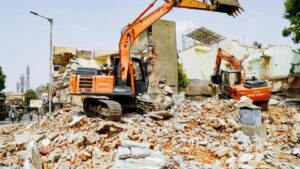

In a recent development that raises concerns over religious and social equity, the Jaisalmer district administration in India conducted an anti-encroachment drive targeting structures near the India-Pakistan border. Under “Operation Clean,” six mosques and madrassa buildings were demolished, showcasing the ongoing tensions regarding land use and religious freedom in border areas.
Background of the Demolition Drive
On July 17, 2026, the local government carried out the demolition in the Nachna, Tanot, and Shahgarh regions, focusing on alleged illegal encroachments on government land. The operation is part of a broader strategy that aims to clear out unauthorized structures within a 50-kilometer radius of the international boundary. Authorities presented the action as a necessary step for national security, particularly in a sensitive border region.
The demolished mosques and madrassas were reportedly built on land designated for families affected by the Pong Dam project. This raises crucial questions about the rights of religious minorities and their access to land and resources in India, particularly in areas with heightened security concerns. The presence of police and security forces during the operation underscored the precarious social dynamic in the region.
Legal Backing and Institutional Support
The Jodhpur Bench of the Rajasthan High Court recently dismissed petitions that challenged the eviction notices issued to the religious institutions, reinforcing the government’s stance on prioritizing national security. In its ruling, the court emphasized that national security considerations must take precedence over individual rights in border areas.
This judicial endorsement raises alarms about potential institutional discrimination, particularly against minority communities. Legal avenues for recourse may be dwindling, posing challenges for those who feel marginalized by state actions. The court’s ruling effectively expands the government’s power to conduct such demolition drives, which may set a precedent for future actions against minority religious institutions.
Social and Economic Implications
The demolition drive, branded as “Operation Clean,” has drawn criticism from various civil society organizations who view it as an act of marginalization against the Muslim community. Demolishing places of worship affects not only the immediate religious practices of these communities but also has long-term implications for their social integration and economic stability.
Encroachment drives like these can contribute to economic disenfranchisement, as attacked structures often housed educational institutions that supported economic mobility for their communities. By disrupting the educational ecosystem, such actions exacerbate existing inequalities and further alienate marginalized groups, limiting their access to resources and opportunities.
Why It Matters
The ongoing anti-encroachment operations highlight broader trends in governance under the Bharatiya Janata Party (BJP) and affiliated organizations. These trends may indicate a strategic alignment with nationalist narratives that favor certain demographic profiles over others. Such actions could have long-term effects on societal cohesion in India, amplifying existing divides between different religious and ethnic groups. For AI industry developers and users, understanding the socio-political landscape is crucial, particularly when creating technologies that interact with or affect diverse communities.
Frequently Asked Questions
What triggered the anti-encroachment drive in Jaisalmer?
The drive was initiated as part of a broader operation named “Operation Clean” aimed at clearing illegal structures in border areas to enhance national security.
What were the outcomes of the demolition drive?
Six mosques and madrassa buildings were demolished, which were reportedly built on government land reserved for displaced families.
How did the local courts respond to challenges against these actions?
The Rajasthan High Court dismissed petitions challenging eviction notices, supporting the government’s authority to conduct these demolitions as a matter of national security.
What are the social implications of such actions against minority communities?
The demolitions may exacerbate social and economic inequalities, contributing to marginalization and disenfranchisement of affected communities, particularly in the context of limited access to educational and economic opportunities.