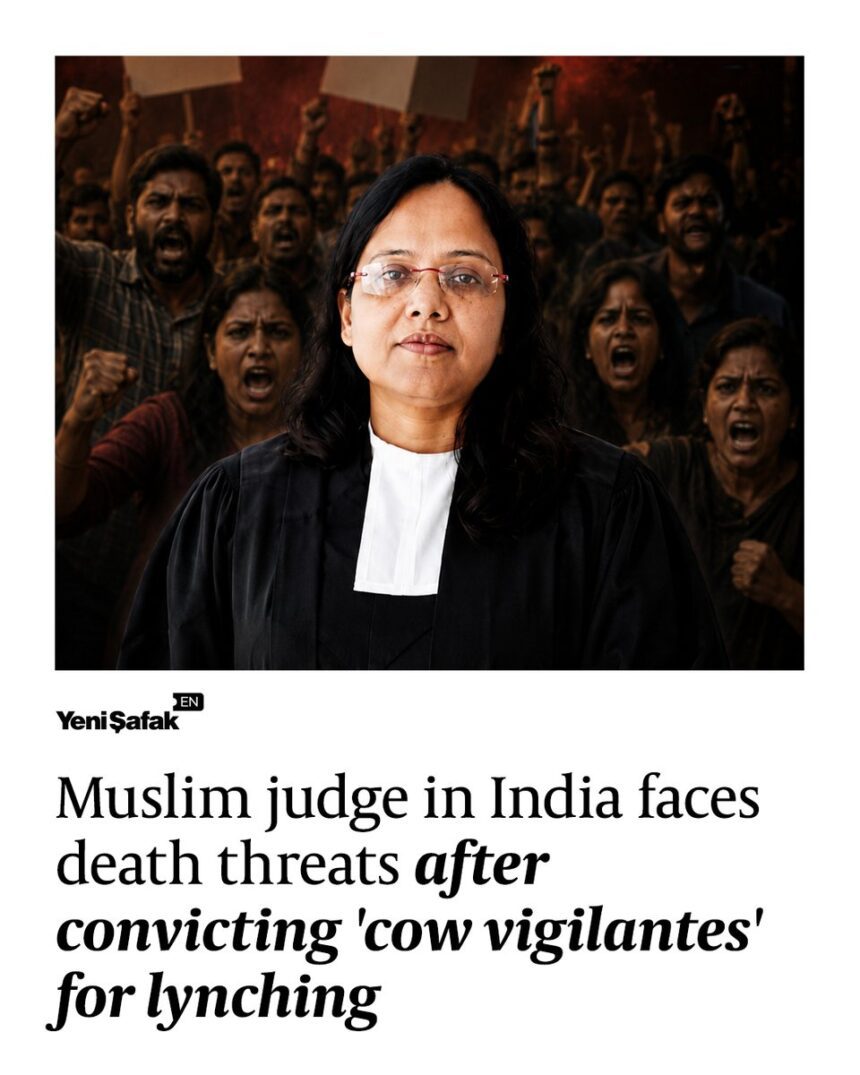

Judicial Targeting: A Muslim Judge Faces Backlash for Delivering Justice
In a troubling display of communal tension in India, a Muslim woman judge is facing severe online harassment and threats after sentencing 14 Hindu men to life imprisonment for their involvement in the lynching of a Muslim man. This incident underscores a broader pattern of discrimination against Muslims within the legal and social frameworks of India, particularly when judicial decisions appear to challenge majoritarian views.
Background of the Case
On June 12, Additional District and Sessions Judge Tabassum Khan delivered a landmark verdict in a case involving the death of Nazir Ahmad, a Muslim man killed by a mob of self-proclaimed “cow protectors” in Seoni Malwa. The court found the 14 men guilty of murder, rioting, and wrongful restraint. This conviction is pivotal, not merely for its legal significance but also as a bellwether for communal relations in India.
Following Judge Khan’s ruling, a wave of hostility erupted online. Videos began circulating that featured Hindutva influencers hurling abuse and issuing vile threats of rape and death directed at the judge. These threats included alarming calls for “bloodshed” and “massacre” in retribution unless the convicted men were freed. Such rhetoric highlights an alarming trend of aiming at the personal and religious identity of judicial figures rather than engaging with the legal implications of their rulings.
Response from Judicial and Advocacy Bodies
The reaction to the threats against Judge Khan has drawn criticism from various legal organizations. Both the Indian Supreme Court Bar Association and the Supreme Court Advocates-on-Record Association have condemned the abuse and called for immediate action to protect the judge. The Madhya Pradesh High Court has also taken notice, seeking reports regarding Judge Khan’s security in light of the threats she has received.
This incident exemplifies the increasing risks faced by Muslim judicial officers in India, especially when their verdicts seem to conflict with the narratives upheld by dominant nationalist ideologies. The targeting of Judge Khan serves as a reminder of the escalating tensions and intolerance that have marked recent years in the region, particularly against those who dare to challenge majoritarian norms.
A Broader Context of Marginalization
Judge Khan’s experience is not an isolated case but rather part of a larger cultural and political landscape that has seen the systematic exclusion of Muslims from various spheres of public life in India. This marginalization extends beyond the courtroom, impacting community resources, employment opportunities, and social standing. Reports have highlighted instances of economic boycotts against Muslim businesses, further complicating their social integration.
This background sets a concerning precedent that undermines judicial independence and the integrity of legal frameworks in a democratic society. When judges face threats for their rulings, it sets a dangerous tone for justice and equity, particularly for marginalized communities.
Why It Matters
The implications of this incident are significant for both domestic and global perceptions of India’s governance and judiciary. The targeting of Muslim judges like Tabassum Khan raises urgent questions about the rule of law and the safety of minority communities within India. A judiciary that is perceived as under threat not only jeopardizes justice for individuals but also erodes public confidence in legal institutions. Furthermore, these incidents can deter capable legal professionals from serving in an increasingly hostile environment, thereby impacting the judiciary’s ability to function impartially.
Frequently Asked Questions
What are the consequences of threats against judges in India?
Threats against judges can create a chilling effect on judicial independence, leading to fear of retaliation and a reluctance to render fair judgments, especially in sensitive cases involving communal tensions.
How does the Indian legal system respond to threats against judicial personnel?
Judicial bodies often condemn such threats and may seek police protection for targeted judges, as demonstrated by the Madhya Pradesh High Court’s response in this case, which called for a report on Judge Khan’s security.
What does this incident reveal about communal tensions in India?
This incident highlights the rising intolerance and communal polarization in India, particularly as it relates to the treatment of Muslims, who often find themselves marginalized in public discourse and threatened for their religious identity.
How can one support judicial independence in such a climate?
Supporting civil society initiatives that advocate for judicial independence and human rights can help combat the forces that seek to intimidate judges. Engaging in discussions and raising awareness about the importance of justice for all communities can also play a crucial role.