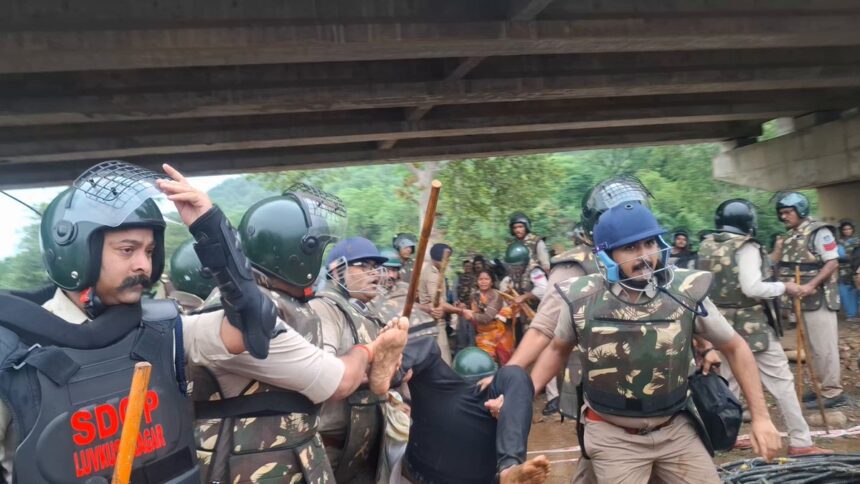

The situation surrounding the Ken-Betwa river linking project has escalated as activist Amit Bhatnagar faces police action while leading protests in Madhya Pradesh. Demonstrators, primarily from tribal communities, are demanding fair compensation and transparency regarding rehabilitation as they oppose the significant infrastructure project.
Context of the Protests
The Ken-Betwa river linking project, with an estimated cost of ₹44,605 crore, aims to irrigate over 10.62 lakh hectares of land, supply water to 62 lakh people, and generate 130 MW of power. Despite its ambitious goals, the project has sparked significant unrest among tribal groups in Madhya Pradesh’s Chhatarpur and Panna districts. The affected communities are demanding assurances regarding their future, as the project threatens their livelihoods and homes.
Escalation of Tensions
Amit Bhatnagar, a prominent activist leading the protests, was recently taken into custody by police in Chhatarpur. This incident has further fueled anger among the protestors who have denounced the police action as an attempt to silence their calls for justice. The ongoing protests have included striking demonstrations where tribal individuals have appeared lying on makeshift death beds and standing with nooses in the Barana river. Such acts symbolize their despair and determination to resist what they perceive as systemic oppression.
The Demands of the Tribals
The affected adivasi communities have made clear demands for a transparent rehabilitation process, including a public list of families impacted by the project. They have expressed concern over being intimidated into submission and the lack of consultation regarding their rights and livelihoods. The situation reflects deeper issues around development policies in India, particularly how they intersect with indigenous rights and environmental sustainability.
Why This Matters
The protests surrounding the Ken-Betwa river linking project highlight critical tensions in India’s development narrative, particularly regarding how government initiatives can often marginalize vulnerable populations. The struggles of tribal communities against large-scale infrastructure projects are not isolated incidents but part of a larger pattern of resistance against developmental policies that overlook local voices. This situation raises questions about inclusive governance and the need for adequate safeguards for communities that could be significantly impacted.
Frequently Asked Questions
What are the main objectives of the Ken-Betwa river linking project?
The project aims to irrigate over 10.62 lakh hectares, supply drinking water to 62 lakh people, and generate 130 MW of hydroelectric power, addressing water scarcity and agricultural needs in the region.
Who is Amit Bhatnagar and what role does he play in the protests?
Amit Bhatnagar is an activist advocating for fair compensation and transparency for communities impacted by the Ken-Betwa river linking project. He has been leading protests to voice the concerns of the tribal population over the potential adverse impacts of the project.
What are the tribal communities demanding?
The tribal communities are demanding a transparent rehabilitation process, a public list of affected families, and an end to intimidation tactics used against them as construction of the project progresses.
What implications do these protests have for future development projects in India?
The protests amplify concerns about how development projects can marginalize indigenous populations, highlighting the need for inclusive policies that genuinely consider the voices and rights of affected communities. This could affect how future projects are conceived and executed, pressing the government to reevaluate its approach to development.