
Summary
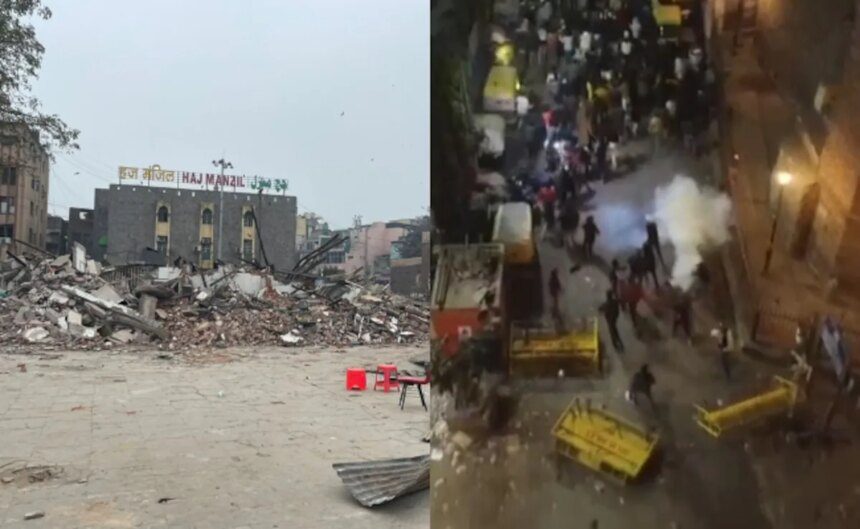
Violence erupted during an anti-encroachment drive near the Syed Faiz Elahi mosque in Delhi’s Ramlila Maidan, resulting in injuries to five police personnel. This incident highlights ongoing tensions surrounding land encroachment issues, indicative of broader socio-political dynamics affecting marginalized communities, particularly Indian Muslims under the current BJP-led administration.
Background of the Incident
On January 7, 2026, officials and workers from the Municipal Corporation of Delhi (MCD) conducted a demolition operation based on a Delhi High Court order to clear encroachments near a mosque and graveyard at Turkman Gate. The operation was met with opposition from local residents, leading to clashes that resulted in stone pelting. Police employed tear gas to disperse the crowds as some residents retaliated against the law enforcement officers.
According to senior police officer Nidhin Valsan, five officers sustained minor injuries due to the stone throwing, and the police were forced to take control measures to prevent further escalation. “We will take action against those who were involved in stone pelting. The situation is 100 percent under control here,” he stated, indicating the swift response to quell the disturbances.
Demolition Drive and Legal Ramifications
This encroachment drive involved significant resources, including 30 bulldozers and 50 dump trucks aimed at demolishing unauthorized structures like a banquet hall, a dispensary, and parts of a road or footpath. The high court had previously mandated action against encroachments covering 38,940 square feet, which are alleged to infringe upon public land.
The MCD had previously declared that any structures exceeding 0.195 acres would be deemed liable for demolition after residents failed to provide relevant ownership documentation. The managing committee of the mosque claims that the property is part of waqf land, thus raising questions regarding its jurisdiction and the applicability of the Waqf Act.
A plea challenging the demolition order has been filed by the mosque’s managing committee, claiming they operate within lawful limits and are willing to address encroachment concerns but insist that the graveyard is integral to their community’s needs.
Tensions Between Government and Marginalized Communities
The tensions surrounding this demolition drive are symptomatic of larger issues faced by marginalized communities, especially Muslims, under the BJP-led government. The MCD’s actions reflect a broader trend of disenfranchisement, where minority communities face increasing scrutiny and action against their properties, often under the guise of urban planning and development.
Residents and community leaders argue that demolitions disproportionately affect marginalized groups, disenfranchising them further by stripping away essential community resources. High-profile demolitions often coincide with broader narratives of majoritarian governance, raising concerns about social justice and equitable development in urban India.
Why It Matters
This incident underlines a significant socio-political concern regarding the treatment of minority communities in India. The ongoing enforcement of strict anti-encroachment measures without adequate representation or legal recourse fosters feelings of alienation among these communities. Furthermore, the tactics employed during these operations have implications for community trust towards law enforcement and government institutions, which can exacerbate tensions in already fragile urban environments.
As India continues to confront challenges in communal harmony, comprehensive dialogues and policies aimed at inclusive urban development will be crucial. Monitoring the evolving legal context around land rights and encroachments is vital to ensuring that all communities receive fair treatment under the law.
Frequently Asked Questions
What triggered the clashes during the anti-encroachment drive?
The clashes were triggered by local residents’ opposition to the demolition of structures near the Syed Faiz Elahi mosque, leading to stone pelting and police intervention.
How did the police respond to the violence?
The police deployed tear gas to control the situation after five officers sustained injuries from stone pelting by the residents.
What legal actions are being taken regarding the demolition?
A petition has been filed by the mosque’s managing committee challenging the demolition order, claiming the property is waqf land, thus subject to specific legal protections.
Why is this incident significant for Indian Muslims?
This incident reflects broader social and political trends that marginalize Islamic communities in India, raising concerns over land rights, social justice, and community representation within state policies.