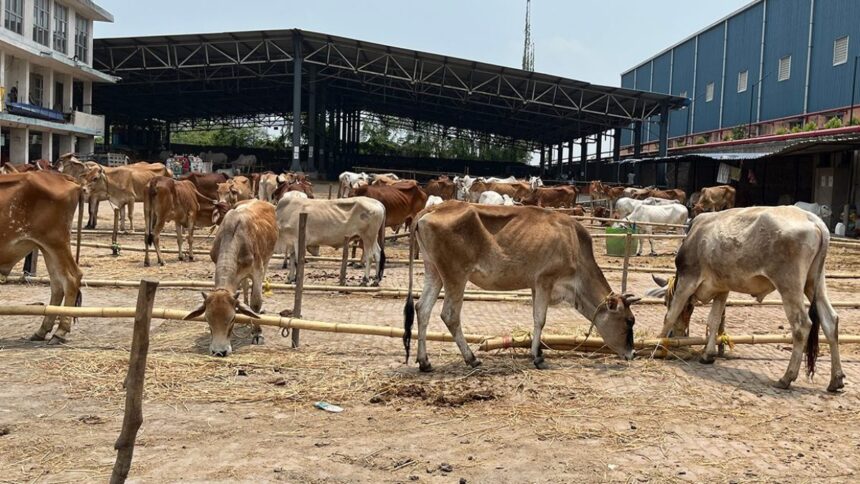

Kolkata, India – The Dhulagarh cattle market, considered a crucial economic hub for the Muslim community in West Bengal, is witnessing a significant downturn in business less than a week before Eid al-Adha, highlighting the growing climate of fear and economic hardship stemming from government policies. Amid declining sales and rising intimidation, many cattle traders face severe financial losses, underscoring the political and social challenges confronting Indian Muslims under the current Bharatiya Janata Party (BJP) administration.
Changing Landscape of Cattle Trade
Traditionally, the Dhulagarh cattle market welcomed a thriving mix of Hindu sellers and Muslim buyers preparing for the Eid al-Adha festival, which involves ritualistic animal sacrifices. However, recent state-level enforcement of stricter cattle slaughter laws following the BJP’s ascendancy has disrupted this historic business activity. A Hindu seller from East Midnapur, who wished to remain anonymous, expressed his concerns about the new climate of fear, stating, “Who will buy a cow? People are living in fear,” reflecting the anxiety affecting both buyers and sellers alike.
With approximately 25 million Muslims forming about 27% of West Bengal’s population, the Eid festival should have been a profitable occasion for traders. Nevertheless, many sellers are reporting high losses; one seller indicated they could lose up to 5,000 rupees ($53) for every unsold animal. The market, which once flourished during this festive season, now stands largely deserted.
Impact of Political Leadership on Livelihoods
The political shift in West Bengal became pronounced after the BJP took control for the first time in May 2023. Newly elected Chief Minister Suvendu Adhikari ordered the strict implementation of a 1950 law prohibiting cattle slaughter without a government certificate, effectively crippling the local beef trade. The implementation of such regulations highlights the party’s long-term goal of reinforcing majoritarian identity politics, which often marginalizes minority communities.
Local beef traders, mostly Muslims, report falling sales and mental distress due to the ever-looming threat of violence. Mohammed Hasim, a 65-year-old meat shop owner, lamented the sudden decline in demand: “We had been running our meat shops for 60 years… But in the past few weeks, we have seen things turning topsy-turvy.” The atmosphere of intimidation extends to restaurants, as illustrated by Kolkata’s Burger Shop announcing a temporary halt to its beef burgers due to fears stemming from a crackdown on their suppliers.
Wider Implications for Muslim Identity and Religious Practice
Beyond cattle markets and beef trade, Muslim communities in West Bengal are facing increased restrictions on public expressions of their faith. Reports indicate that residents have been warned against offering “namaz,” or daily prayers, in streets—a common practice in many South Asian regions due to limited space in mosques. Activist Harsh Mander points out that these developments fit within a broader ideological project where the BJP aims to establish an environment that diminishes the status of Muslims to second-class citizens.
As a local trader noted, “The markets are empty. It has never been like this.” The overall economic boycott and social exclusion experienced by Muslims underline a troubling trend toward increasing marginalization under the BJP’s regime.
Why It Matters
The unfolding situation in West Bengal is emblematic of the broader challenges faced by Muslims in India, casting a light on the intersection of politics, identity, and economic livelihoods. Understanding these dynamics is critical for policymakers and civil society in assessing the impact of political decisions on minority communities, fostering dialogues around inclusivity, and advocating for rights and protections that safeguard economic opportunities for all citizens, irrespective of their religious identity.
Frequently Asked Questions
What has caused the downturn in the cattle market in West Bengal?
The downturn is largely attributed to a climate of fear and the strict enforcement of cattle slaughter laws instituted by the BJP government following its electoral victory in May 2023.
How has the BJP’s victory affected the livelihoods of Muslim traders?
Many Muslim traders are experiencing increased intimidation, leading to reduced sales, closure of businesses, and significant financial losses, as they rely heavily on the Eid al-Adha festival for income.
What are the implications of the crackdown on public prayer for Muslim communities?
The crackdown on public prayers serves to further marginalize the Muslim community, eroding their ability to practice their faith openly and instilling a sense of fear regarding their religious identity in public spaces.
How can monitoring and advocacy help improve the situation?
Monitoring the marginalization of minority communities and advocating for inclusive policies can help ensure their rights are respected, supporting economic development and social cohesion across different religious groups.