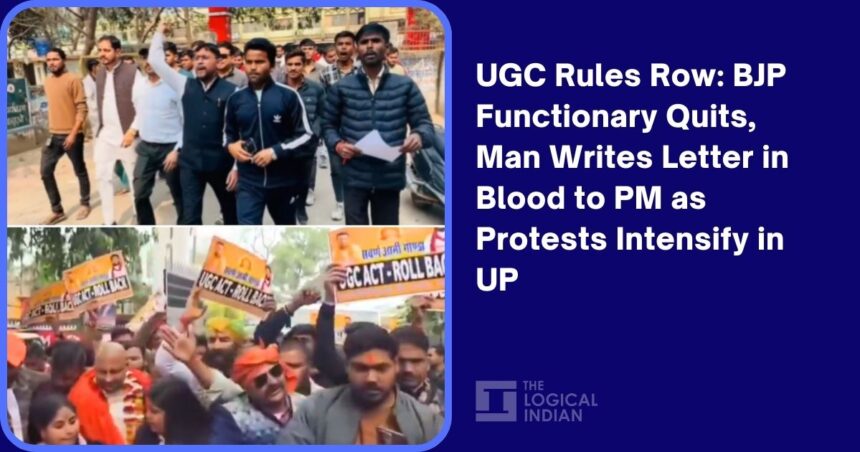

Protests erupted across Uttar Pradesh against the University Grants Commission (UGC) Equity Regulations 2026 on 28 January 2026, triggered by widespread discontent over perceived discrimination against the general category in educational institutions. Demonstrators voiced strong opposition to the rules, characterizing them as harmful and divisive.
Background on UGC Regulations
The unrest began following a UGC notification released on 13 January 2026, titled the “Promotion of Equity in Higher Education Institutions Regulations.” This regulation mandates colleges and universities to form “Equity Committees” aimed at addressing caste-based discrimination within academic settings. While the government defends these regulations as essential for protecting SC, ST, and OBC students, critics assert that they pre-determine victim status and exclude general category representatives from oversight roles.
In a notable protest, Shyam Sundar Tripathi, a local BJP leader from Raebareli, resigned in anger at these new rules, citing them as “divisive” and detrimental to social harmony. Such resignations reflect the internal discord within the ruling party regarding this contentious policy.
Symbolic Acts of Protest
In Kaushambi, Abhishek Pandey, a local leader of the Savarna Army, penned a letter to Prime Minister Narendra Modi using his own blood, labeling the UGC guidelines as a “death warrant” for general category students. His dramatic act symbolizes the deep emotional distress felt by many, portraying the regulations as institutionalizing social division and threatening equal opportunities in education.
This sobering demonstration and others have sparked significant conversations on social media, underlining the psychological impacts of the UGC regulations on students throughout Uttar Pradesh. The resonance of such actions amplifies concerns of injustice felt by those opposing the UGC’s approach.
Mass Protests in Deoria
Deoria emerged as a key protest site where thousands gathered in a sit-in led by Pritam Mishra, President of the Collectorate Bar Association. Demonstrators occupied the district court premises and refused to disperse, causing extensive traffic jams throughout the city. They demanded immediate withdrawal of what they termed the “black law.” The legal community’s active participation signifies the extensive concern over educational policies that could have broader ramifications for societal equity.
Mishra and his supporters escalated their demands, threatening to extend their protest to judicial work unless prompt action was taken by the government. Their engagement highlights the complexity and reach of these protests, linking educational policy directly to the principles of justice and social equity.
Government’s Response
Defending the controversial regulations, Union Education Minister Dharmendra Pradhan emphasized the government’s commitment to fairness in educational institutions. He stated that the Equity Committees are essential for providing marginalized communities a secure space free from systemic bias and humiliation.
Critics, however, express concern over the ambiguous legal language that could enable misuse of the system, allowing complaints regarding minor academic disputes. The absence of a neutral observer in the committees raises alarms regarding fairness and adherence to natural justice principles. Protesters highlight that these regulations foster an environment where the general category appears inherently guilty, challenging the fundamental tenets of equality and justice.
Why This Matters
The UGC regulations and the resulting protests symbolically represent the ongoing struggle between social justice and perceived exclusionist policies in India. The backlash from various segments of society illuminates the complexities of affirmative action in a diverse nation, where the quest for equity can easily become a point of contention rather than a consensus. Political responses to these protests will have significant implications for the upcoming elections and the broader discourse surrounding caste, equity, and education in India.
Frequently Asked Questions
What are the UGC Equity Regulations 2026?
The UGC Equity Regulations 2026 are guidelines requiring colleges and universities to create Equity Committees to combat caste-based discrimination in educational institutions.
Why are people protesting against these regulations?
Protesters argue that the regulations discriminate against the general category by pre-defining victim status and not including their representation in oversight committees.
What actions have protesters taken?
Protesters across Uttar Pradesh have engaged in sit-ins, blocked roads, and expressed their dissent in dramatic symbolic acts, such as a leader writing to the Prime Minister in blood.
How has the government responded to the protests?
The government defends the regulations as necessary for ensuring fairness and accountability while asserting that they prevent systemic bias and support marginalized students.