
Summary
The political climate in Eastern India, particularly in states like Assam and West Bengal, has deteriorated markedly under Prime Minister Narendra Modi’s BJP government. Increasing instances of discrimination against Muslims are evident, including allegations of voter suppression, hate speech, and a controversial crackdown on citizenship, leading to fears of statelessness among many families.
Rise in Political Violence and Discrimination
Following the recent elections, Eastern India has seen a surge in political violence, escalating fears among minority communities. With Modi’s party securing key victories amidst allegations of voter suppression, particularly targeting Muslim voters, tensions are high. Allegations have surfaced that this campaign has been laced with anti-Muslim rhetoric, which has not only incited violence but also altered the socio-political landscape.
Human rights activists report a troubling shift towards systemic discrimination, particularly affecting Bengali-speaking Muslims in Assam and West Bengal. This demographic historically inhabits areas that straddle the porous India-Bangladesh border, a region that has become central to the Modi administration’s controversial citizenship policies. The targeting of this community raises alarming concerns about the implications for secularism in India.
State Policy and Citizenship Crackdown
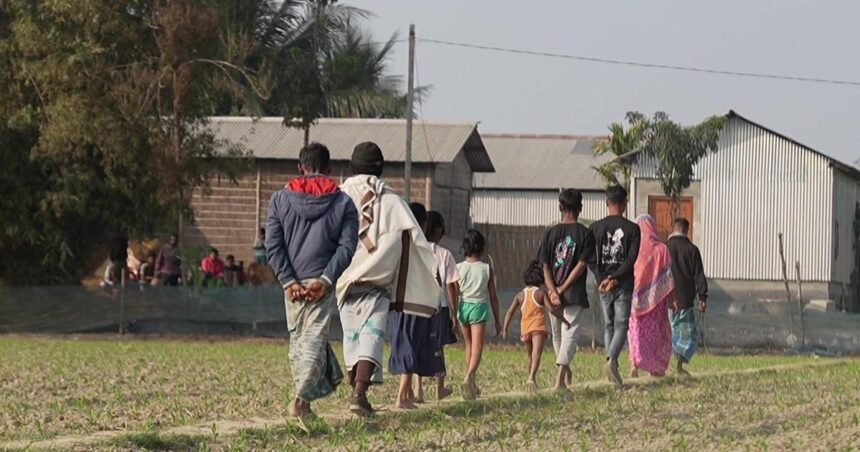
The Modi administration’s revival of stringent immigration laws has led to a citizenship crackdown in Assam, with many residents, including Ramzan, a patriarch from a rural village, facing the prospect of statelessness. The authorities have labelled individuals as “doubtful citizens,” forcing them to prove their citizenship, often resulting in detentions without due process and widespread fear within the community.
Angana Chatterji from the University of California, Berkeley, describes the citizenship policies as a means of weaponizing citizenship, particularly targeting Muslims to instill fear and reinforce a majoritarian narrative. This backdrop of intensified scrutiny and hostility has resulted in families being torn apart, as exemplified by Ramzan’s separation from his wife due to these policies.
Socio-Economic Impact and Displacement
The socio-economic implications of these discriminatory policies have been dire. The state government has deployed old laws to evict marginalized communities, leading to the demolition of homes and displacement of thousands. Families such as that of Amna Khatoun, who witnessed her home being bulldozed, reflect the emotional and financial toll of these actions. Many of those affected are left in makeshift camps, struggling to meet basic needs amidst ongoing uncertainties.
The traumatic experiences shared by residents reveal the broader social problems at play. With investigations into citizenship status leading to severe repercussions for those deemed illegal immigrants, cases like that of Suleiman Nisa exemplify the tragic consequences, including loss of life, exacerbated mental health issues, and overall destabilization of communities.
Why It Matters
The current situation in India is significant not only for the country but also for observers around the globe concerned with human rights and democratic values. The targeting of religious minorities raises questions regarding the future of India’s secular framework and democratic institutions. As international attention heightens, these developments may influence diplomatic relationships and aid dynamics, especially as global citizens increasingly advocate for human rights. This evolving landscape could be pivotal in shaping both regional and global political narratives.
Frequently Asked Questions
What is the current status of Muslims in India under the Modi administration?
The status of Muslims in India has deteriorated significantly under Modi’s rule, with reports of discrimination, violence, and increased scrutiny over citizenship, disproportionately affecting Bengali-speaking Muslims in border states.
What actions has the BJP taken against Muslims in recent years?
The BJP has implemented laws that critics claim disproportionately target Muslims, including citizenship revocation and a rise in hate speech, leading to violence and displacement within Muslim communities.
What has been the impact of the citizenship crackdown in Assam?
The citizenship crackdown in Assam has led to widespread fear and uncertainty, with thousands facing detention or deportation. This policy has resulted in families being separated and many residents grappling with statelessness.
How has the international community responded to these issues?
There has been increasing concern from human rights organizations and some foreign governments regarding the treatment of Muslims in India, urging the Indian government to uphold democratic norms and protect minority rights.