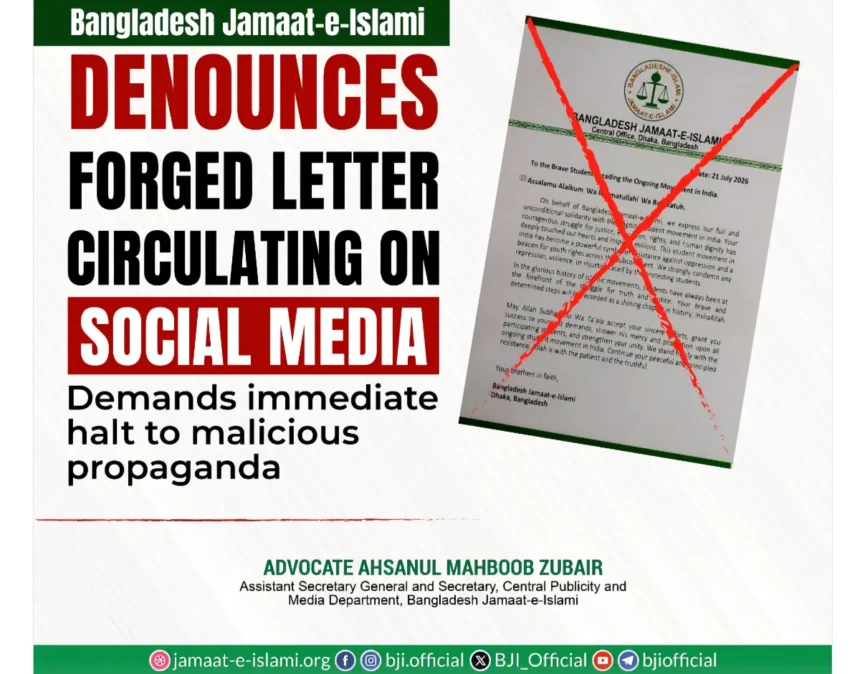

Recent protests at Jantar Mantar in New Delhi have ignited a flurry of political activity and misinformation, exemplified by a forged letter falsely attributing support from Bangladesh Jamaat-e-Islami to the ongoing agitation in India. This controversy highlights the complex interplay of social media, political narratives, and inter-country relations that can misrepresent community sentiments and exacerbate communal tensions.
The Misinformation Campaign
The forged letter, which circulated widely on social media platforms, falsely claimed that Bangladesh Jamaat-e-Islami had extended its support to the ongoing protests in India. Notably, this document gained traction among certain political commentators, including Ankit Dubey, a supporter of the Bharatiya Janata Party (BJP). In response to the misinformation, the party issued a categorical denial, emphasizing that the document was fabricated and aimed at maligning its reputation.
In a statement released on July 21, 2026, Advocate Ahsanul Mahboob Zubair, the Assistant Secretary General for the party, condemned the sharing of the fake document. The party characterized the letter as not only a misrepresentation of its views but also a deliberate attempt to create discord and confusion regarding its stance on international matters.
Party’s Response and Evidence of Fabrication
Bangladesh Jamaat-e-Islami’s leadership highlighted several inconsistencies in the forged letter that underlined its fraudulent nature. Key errors included the misspelling of the party’s name, the omission of its official registered address, and the absence of any mandatory reference number. Additionally, the tone and format of the letter did not align with the organization’s established mailing practices.
The party reiterated its long-standing policy of non-interference in the internal affairs of other nations, emphasizing that the sentiments expressed in the bogus letter contradicted its foundational principles. It accused “vested quarters” of orchestrating this misinformation to undermine its credibility and damage its relationships with various stakeholders.
The Impact of Misinformation on Community Dynamics
The circulation of misleading narratives such as this forged letter has profound implications for the socio-political landscape in India. With rising tensions around religious identity and communalism, the spread of disinformation can exacerbate existing divides. The incident underscores the fragility of trust in inter-community relations and the potential of misinformation to incite unrest.
The need for vigilant media literacy among the public has never been more critical. Bangladesh Jamaat-e-Islami’s appeal to social media users to validate any content before sharing resonates particularly in an age where misinformation can travel faster than facts. By actively promoting a responsible and discerning approach to information sharing, communities can work towards fostering understanding rather than division.
Why It Matters
The incident involving the forged letter serves as a cautionary tale about the potential ramifications of misinformation within the broader context of communal relations in India. For policymakers, civil rights advocates, and community leaders, it highlights the necessity of addressing the root causes of social exclusion and economic boycotts faced by marginalized groups, such as Indian Muslims. Understanding the dynamics at play can help inform strategies designed to combat prejudice and discrimination while also promoting social cohesion.
Frequently Asked Questions
What was the content of the forged letter?
The forged letter falsely claimed that Bangladesh Jamaat-e-Islami extended support to the protests taking place in India, but it was quickly debunked by the party as a fabrication.
Who circulated the forged letter?
Individuals, including political commentator Ankit Dubey, shared the document on social media, linking it to the ongoing protests and furthering the misinformation.
What were the indications that the letter was fake?
Key indicators included misspellings of the party’s name, missing official address, absence of a reference number, and a format that did not match the party’s official stationery.
What is the stance of Bangladesh Jamaat-e-Islami regarding foreign protests?
The party maintains a strict policy of non-interference in the internal affairs of other countries, asserting that the sentiments expressed in the forged letter contradict its principles.