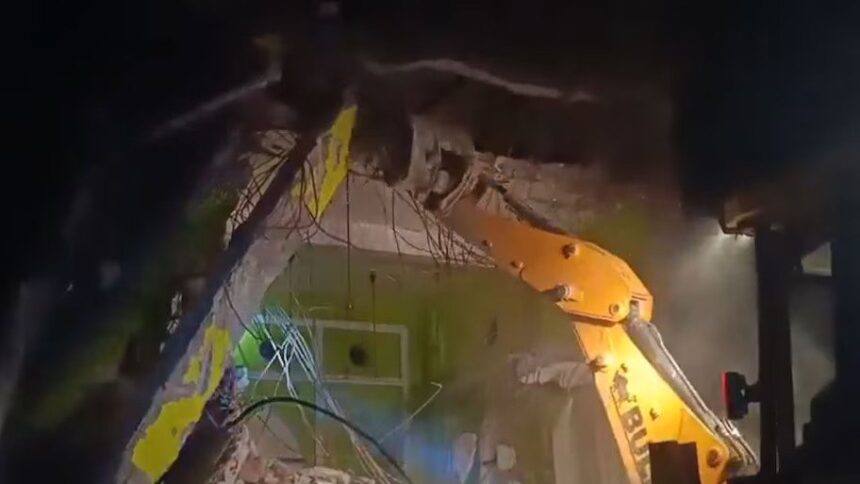

Demolition of Mustafa Qadri Mosque in Sambhal District
The late-night demolition of the Mustafa Qadri Mosque in Kaserwa village, Uttar Pradesh, has ignited significant political controversy and accusations of discrimination against the Muslim community. Local officials claimed the mosque was built illegally on land designated for a graveyard, leading to its removal using bulldozers.
Political Fallout and Opposition Reactions
The mosque’s demolition coincided with a visit from a delegation of the Indian National Congress, who were in the area to inspect earlier demolitions carried out by the authorities. This timing raised questions about the administration’s motives, with opposition parties alleging that the action was taken to suppress dissent. Zia-ur-Rehman Barq of the Samajwadi Party criticized the demolition, asserting that the land belonged to the Waqf Board, thereby challenging its classification as government property. He announced intentions to fight the demolition legally, highlighting ongoing tensions between the ruling party and opposition groups.
Community Impact and Viral Public Response
The demolition has had a significant impact on the local Muslim community, exacerbating fears of social exclusion and marginalization. Following the Congress delegation’s departure, local reports indicated that municipal authorities accelerated the clearing of debris, leading to viral videos showcasing heavy machinery dismantling the remaining mosque structure. This spectacle has sparked outrage among community members and supporters, raising alarms about the systematic erosion of Islamic cultural spaces in the region. The strong reactions on social media reflect a sense of ongoing victimization felt by many Indian Muslims under prevailing political dynamics.
Controversy Over Posters During Demolition
Adding another layer to an already charged situation, authorities claimed to have discovered posters stating “I Love Mohammad” within the mosque premises during the demolition. A separate investigation has been launched in response to this find, further complicating the narrative surrounding the mosque’s demolition. The Superintendent of Police ordered the case, suggesting that the discovery might be used to frame the mosque’s identity in a contentious manner. This incident has underscored the ongoing scrutiny of religious expressions in India, particularly those related to Islam, as the political atmosphere becomes increasingly polarized.
Why It Matters
This incident is emblematic of the broader societal challenges faced by Indian Muslims, particularly under the governance of the Bharatiya Janata Party (BJP) and its affiliates. The demolition reflects a trend toward marginalization of Muslim communities, often labeled as a pretext for legal compliance yet serving to erase cultural identity. The implications of such actions extend beyond immediate community concerns, affecting social cohesion and contributing to a climate of fear and division. For developers and users engaged in AI or social policy, understanding the nuances of such discrimination is crucial for developing technologies that can address systemic inequalities in society.
Frequently Asked Questions
What was the reason for the mosque’s demolition?
Officials claimed the Mustafa Qadri Mosque was built illegally on land designated for a graveyard, which led to its demolition by the administration.
What reactions have emerged from political parties regarding the demolition?
Both the Samajwadi Party and the Indian National Congress have criticized the demolition. Zia-ur-Rehman Barq of the Samajwadi Party stated that the land belongs to the Waqf Board and plans to challenge the demolition in court.
Why were posters found during the demolition significant?
The discovery of posters saying “I Love Mohammad” within the mosque has led to a separate police investigation. This has further complicated the already sensitive situation surrounding the demolition.
How has the local community responded to the demolition?
The community has expressed strong condemnation, with videos and images of the demolition circulating on social media, showcasing a widespread sense of injustice and marginalization among local Muslims.