
Summary
The Rampur Development Authority has declared that 38 out of 40 buildings at Maulana Mohammad Ali Jauhar University, founded by former Uttar Pradesh minister Azam Khan, are unauthorized and face demolition. This move has raised concerns among students and faculty, highlighting broader issues of governance, discrimination, and marginalization affecting the Muslim community in India.
Demolition Order Affects Education and Community
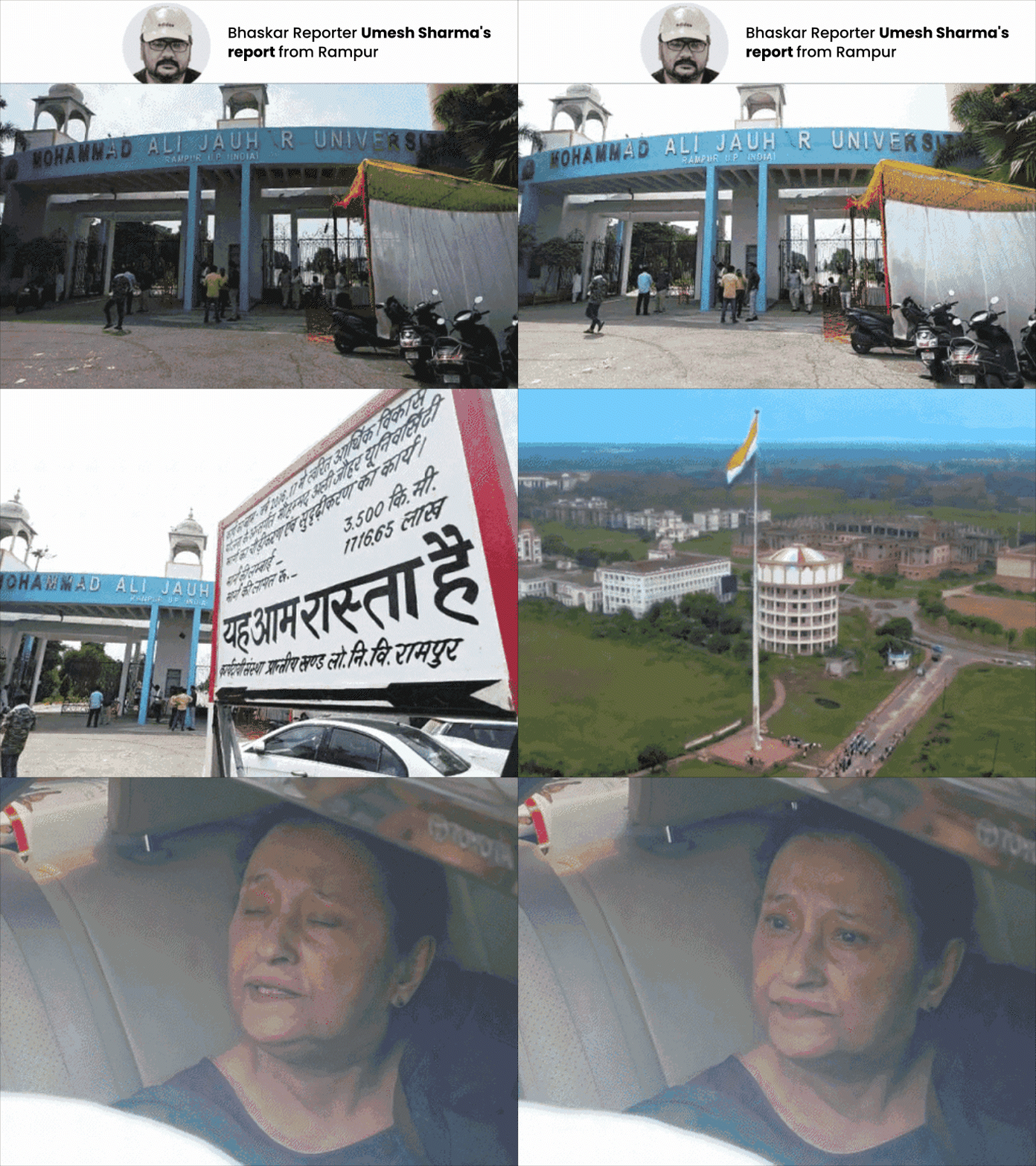
The Rampur Development Authority (RDA) issued a demolition order, granting the university 15 days to remove the unauthorized structures. This includes two mosques that were built without proper permits. Azam Khan, once a prominent figure and advocate for educational opportunities for Muslims, responded ambiguously when questioned about the construction, which indicates a complicated administrative scenario. His wife’s objections to police presence at the university underscore the tension and uncertainty surrounding the institution’s future.
As the demolition orders were enforced, student attendance dropped sharply. On July 16, only a few students were present at the university. A faculty member revealed that enrollment had plummeted from over 5,000 students to just about 1,200 since Khan’s imprisonment. This situation is indicative of how institutional instability can lead to fear and disengagement from educational pursuits, particularly among marginalized communities.
Public Access and Institutional Accountability
The authorities have maintained that the removal of unauthorized structures is in accordance with existing regulations. The Rampur District Magistrate, Ajay Kumar Dwivedi, clarified that the area’s jurisdiction fell under the RDA only after 2024 and that the university had previously obtained approval for only two buildings. Despite being aware of the need for permissions, the massive scale of unauthorized construction raises questions about governance and oversight. The installation of a signboard indicating that the road leading to the university is public property further complicates the narrative, as tensions over access persist.
This situation serves as a critical case study on how local governance can disproportionately impact minority communities. The presence of locked gates and restricted access raises issues of transparency and accountability, with implications for civil liberties and education access in Rampur, which has historically been marked by socio-political upheaval.
Student Perspectives and Future Implications
Students like Sidrul Nisha voice their concerns, emphasizing the value of the university in providing educational opportunities for girls in the district. They argue that the demolition actions are unfair and call for the strengthening of academic programs rather than punitive measures against the institution. This sentiment reflects a broader cry for justice and support in the face of perceived discrimination.
Dr. Tanzeen Fatima, Azam Khan’s wife, indicated a reluctance to provide further statements about the university’s future, highlighting the distress and uncertainty among the administration and students. This reluctance to engage openly speaks volumes about the fear of repercussions in an environment where governmental actions can rapidly affect community stability.
Why It Matters
The unfolding situation at Maulana Mohammad Ali Jauhar University highlights ongoing issues of governance, discrimination, and the marginalization of Muslim communities in India. The demolition of educational institutions, especially those aiding minorities, raises concerns about the accessibility and quality of education for these communities. As the Indian government asserts its regulatory authority, the legal and social frameworks in place will be pivotal in determining equitable access to education. Furthermore, it serves as a reminder of the socio-political dynamics that can influence educational institutions, which have often become battlegrounds for broader communal conflicts.
Frequently Asked Questions
What led to the demolition order at Maulana Mohammad Ali Jauhar University?
The Rampur Development Authority declared that 38 out of 40 buildings were unauthorized due to lack of proper permits. The university was given 15 days to remove these structures before possible demolition.
How has student enrollment changed since Azam Khan’s imprisonment?
Following Azam Khan’s imprisonment, student enrollment reportedly dropped from over 5,000 to around 1,200, indicating a significant decline in engagement and attendance at the university.
What is the current status of the mosques on the campus?
Both mosques on the university campus have also been declared unauthorized and are liable for demolition, raising concerns about the implications for community religious practices.
What are the broader implications of this situation for the Muslim community in India?
This incident exemplifies ongoing challenges faced by minority communities in accessing educational resources and highlights issues of governance that may disproportionately affect them. The situation serves as a reflective moment for civil rights and community support in India.