
Promoting Communal Harmony Amid Rising Polarization
The Jamiat Ulama-i-Hind (JUH) recently hosted a Hindu-Muslim Unity Convention in Lucknow, uniting leaders from various faiths to discuss the urgent need for communal harmony in a climate marked by social division. The event emphasized peace, justice, and mutual respect as essential elements for strengthening national unity in India.
JUH Leadership Calls for Unity
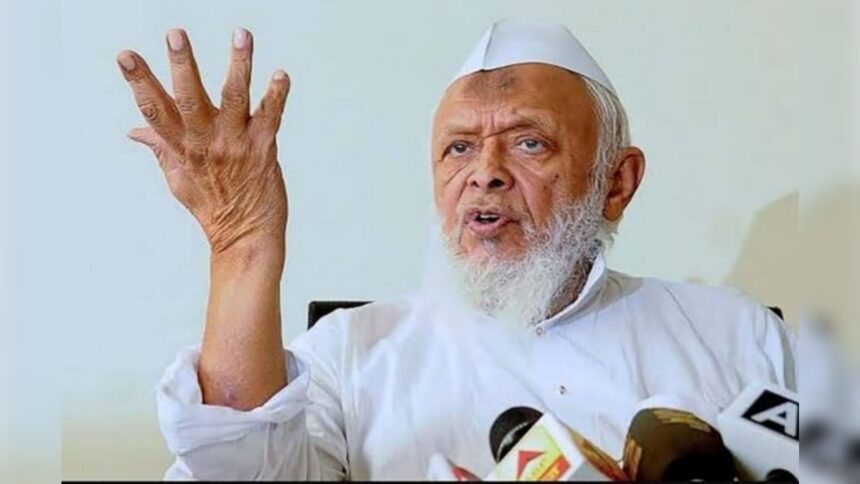
In a powerful address, JUH president Maulana Arshad Madani underscored that the growing trend of politics based on hatred and religious division poses a significant threat to India’s progress. He advocates that India’s core strength lies in its diversity and ability to foster peaceful coexistence among different communities. Touching upon the shared sacrifices made during India’s freedom struggle, Madani reminded attendees of the crucial role played by Muslims and other communities, emphasizing that no single group’s contribution should be diminished.
Madani drew connections among various faiths, asserting that, despite different practices, all religions fundamentally recognize a singular divine authority. He made a notable comparison between the Hindu chant “Om Namah Shivaya” and the Islamic phrase “Allahu Akbar,” illustrating that both affirm the worship of one God. This interfaith perspective is vital at a time when communal tensions are escalating.
Addressing Contemporary Challenges
During the convention, Madani criticized recent governmental actions, particularly the proposed demolition of Mohammad Ali Jauhar University in Rampur. He pointed out that while any necessary legal disputes should be resolved, dismantling an educational institution without completing the legal process is unjust and jeopardizes countless students’ futures. This call reflects broader concerns about the marginalization of Muslim institutions under the current political climate dominated by the Sangh and BJP governments.
Moreover, Madani spoke on issues such as the “One Nation, One Election” proposal, insisting on the necessity of broader consultations to reconcile differing opinions and foster democratic engagement. He addressed the contentious Gyanvapi mosque dispute, urging acceptance of the Supreme Court’s final verdict as a means to achieve social closure. His statements point to a commitment to uphold the rule of law, a principle often sidelined in politically charged discussions.
The Broader Impact of Divisive Politics
Through his remarks, Madani highlighted the divisive nature of contemporary political discourse, which he views as a threat to both social trust and national unity. The rise of such politics can be seen as contributing to an atmosphere of fear and marginalization, particularly for minority communities like Muslims in India, who have faced increasing discrimination and social exclusion. This pattern raises alarms about the potential erosion of India’s secular and democratic values.
Madani’s concluding appeal for peace, brotherhood, and justice serves as a crucial reminder of the path India must take to ensure progress. He argues that the country’s advancement is dependent on rejecting divisive ideologies and fostering social harmony among its diverse populace.
Why It Matters
The actions and rhetoric of the JUH and similar organizations are significant for the global community as they highlight the pressing issues of religious tolerance and social justice in one of the world’s largest democracies. The growing trend of marginalization of Indian Muslims raises questions about human rights and communal relations, which are essential for maintaining democracy and stability. The reactions to governmental policies, such as those led by BJP, signal how this polarization affects various communities’ social cohesion and the overall democratic fabric of India.
Frequently Asked Questions
What is the Jamiat Ulama-i-Hind (JUH)?
The Jamiat Ulama-i-Hind is an organization representing Islamic scholars in India, advocating for the rights and welfare of Muslims while promoting interfaith dialogue and communal harmony.
What does the “One Nation, One Election” proposal entail?
The “One Nation, One Election” proposal suggests synchronizing elections across various levels of government in India to simplify the electoral process and minimize costs.
Why is the demolition of Mohammad Ali Jauhar University controversial?
The proposed demolition of Mohammad Ali Jauhar University is contentious because it raises concerns about unjust treatment of educational institutions and the impact on students’ futures, amidst broader issues of discrimination against Muslim communities.
How do these issues affect social cohesion in India?
Discriminatory politics and communal tensions can severely undermine social cohesion in India, leading to heightened distrust between communities and potential conflicts that threaten the nation’s secular principles.