
Summary
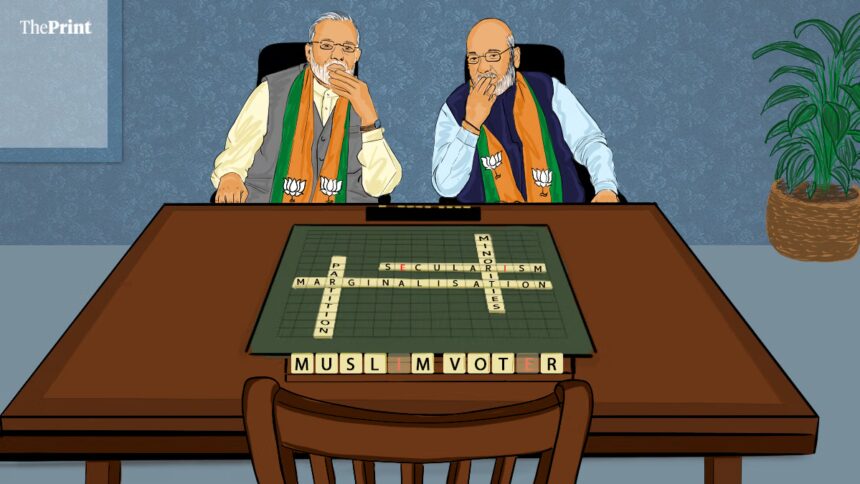
Recent electoral trends in India depict a troubling landscape for the Muslim community, which has seen a significant decline in political representation and influence under the BJP government. Despite comprising over 15% of the national electorate, Muslims occupy merely 4.42% of the Lok Sabha seats, reinforcing a stark marginalization that may have lasting implications for India’s secular fabric.
Declining Political Representation
The political landscape in India has experienced a dramatic shift, particularly evident in states like West Bengal and Assam. Here, the BJP captured two-thirds of the seats without fielding a single Muslim candidate. Meanwhile, 22 out of 24 winning opposition candidates in Assam were Muslim, underscoring their crucial role in opposing BJP dominance. In West Bengal, Muslims make up a notable portion of the newly elected MLAs, yet they remain largely outside the power structure, with opposition leaderships predominantly Hindu.
National statistics reveal further marginalization. In the current Lok Sabha, there are only 24 Muslim MPs, a decrease from previous terms. Historically, the percentage of Muslim representation in the Lok Sabha hovered around 5%, but current levels mark a worrying downward trend. While significant Muslim figures once held vital government positions, such as in the Union Cabinet, their absence is palpable today. The last Muslim Chief Justice of India retired in 2013, leaving an unsettling void in representation.
Socio-Economic Impact
Despite the decline in political representation, there is an intriguing juxtaposition in socio-economic spheres. More Muslims are entering key professions, showing increased visibility in medicine, law, academia, and technical fields. However, this upward mobility stands in stark contrast to their political marginalization, suggesting a segmented experience where economic success does not equate to political power or social stability.
The increasing number of Muslims in professional fields indicates a shift in societal dynamics, yet the absence of political advocacy leaves communities vulnerable. Muslims are often urged to coalesce around candidates who can defeat the BJP, a strategy viewed as a mere survival tactic rather than a roadmap for genuine empowerment and representation within the political system. However, this challenge reflects a broader crisis of identity and political strategy among secular parties in India.
The Role of Secular Parties and Strategy Shifts
In the current political climate, parties traditionally viewed as secular are encountering a dilemma; they are increasingly perceived as ‘Muslim’ parties despite leadership predominantly composed of Hindus. This development plays directly into the BJP’s hands, as it reinforces a narrative of Hindu unity against a perceived minority threat. The BJP has further leveraged regional issues to fracture voter bases, as seen in states like Kerala, where sectarian divides have been exacerbated.
Additionally, figures like Asaduddin Owaisi propose that Muslims should establish their political entities. However, this suggestion bears the risk of deepening political fragmentation and inadvertently serving the BJP’s agenda. Historically, Muslims in India have relied on Hindu leaders for representation, making such a shift challenging. The situation demands that secular parties find ways to form coalitions that genuinely encompass a diverse electorate, prioritizing unity over division.
Why It Matters
The marginalization of Muslims in Indian politics is a significant indicator of broader issues related to secularism and democracy in the country. It raises questions about representation, social cohesion, and the ability of minority communities to advocate for their rights. For developers and users engaged in tech and AI, understanding these social dynamics is crucial for creating inclusive solutions that account for and address the needs of marginalized communities. Algorithms and applications designed for regions with diverse populations must remain neutral and equitable, reflecting a commitment to fostering social harmony, especially in a climate where political movements exploit divisions.
Frequently Asked Questions
What percentage of Lok Sabha seats do Muslims currently occupy?
Muslims currently occupy 4.42% of Lok Sabha seats, which is significantly lower than their representation in the national electorate, where they comprise over 15%.
How does the BJP’s approach affect secular representation?
The BJP’s strategy has led to a perception of secular parties as ‘Muslim’ parties, which can alienate broader Hindu support and complicate efforts to build coalitions across communal lines.
Are Muslims in India becoming more visible in professional fields?
Yes, Muslims are increasingly entering various professional spheres such as medicine, law, and academia, indicating some degree of socio-economic progress, despite limited political representation.
What are the implications of lower Muslim political representation?
A decline in Muslim political representation raises concerns about a threat to India’s secular fabric, as well as the community’s ability to advocate for its interests and rights effectively.