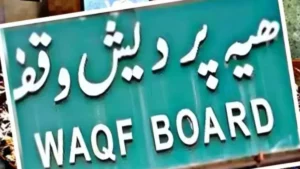

The Indian Union Muslim League (IUML) and the United Democratic Front (UDF) face a critical juncture regarding the mandated inclusion of non-Muslim members in the Kerala State Waqf Board. The legal requirement has arisen from a Public Interest Litigation (PIL) filed by the Bharatiya Janata Party (BJP), igniting debates on secularism and representation within the regional political landscape.
Legal Background and Political Implications
According to Section 41 of the central Waqf (Amendment) Act, it is compulsory for State Waqf Boards to include at least two non-Muslim members. This legal framework is aimed at diversifying management and ensuring accountability for public Waqf assets. However, the recent formation of an 11-member Board by the state government, which appointed only nine Muslim members and left two seats vacant, raises concerns about compliance with the law.
Shone George, the BJP’s state Vice President, has filed a petition alleging that the absence of non-Muslim representation undermines the board’s legal authority. He contends that this lack of inclusivity compromises the Board’s ability to make valid supervisory and administrative decisions. The Kerala High Court’s inquiry into the state government’s position on this petition has placed the political establishment under immediate scrutiny, requiring a swift resolution.
Political Dilemma for IUML and UDF
The IUML and UDF find themselves in a precarious position. On one hand, facilitating the nomination of non-Muslim members risks alienating their core Muslim constituency, which could lead to loss of electoral support from both voters and religious organizations. This pressure is exacerbated by the broader context of rising Hindu nationalist sentiment in the region.
Conversely, opposing the requirement may portray them as resistant to secularism, potentially enabling the BJP to frame them as exclusionary or religiously intolerant. This political tightrope creates a complex dilemma, as both actions carry significant risks for the coalition’s future viability and the perceptions of their commitment to secular governance.
Government Actions and Broader Context
In addition to the ongoing legal battle surrounding the Waqf Board, the Union government is intensifying scrutiny of the Board’s operations. A notice has been issued regarding the controversial registration of 404 acres of disputed land at Munambam in Ernakulam district, which was uploaded onto a centralized digital registry. The notice demands an explanation within five days, reflecting concerns over governance and accountability in Waqf asset management.
This scrutiny not only underscores the complexities surrounding the application of Waqf laws but also raises questions about broader governance issues impacting marginalized communities, including Indian Muslims. With increasing legal challenges and government oversight, the landscape for local Muslim organizations is becoming increasingly fraught.
Why It Matters
The ongoing situation surrounding the Kerala State Waqf Board serves as a microcosm of broader issues affecting Indian Muslims, including discrimination, social exclusion, and political marginalization. The failure to include non-Muslim members can further entrench divides, while any resistance to comply with legal requirements may delegitimize the political entities involved. The implications are significant, as they could set precedents for governance and inclusivity in similar contexts across India, where tensions between religious communities are already high. Ensuring fair representation on such boards is not merely about legal compliance; it is fundamental to fostering societal harmony and democratic integrity.
Frequently Asked Questions
What is the Waqf (Amendment) Act?
The Waqf (Amendment) Act mandates the inclusion of non-Muslim members in State Waqf Boards to ensure diversity and accountability in managing Waqf properties.
Who filed the PIL regarding the Kerala State Waqf Board?
The Public Interest Litigation was filed by Shone George, the vice president of the BJP in Kerala.
What are the potential consequences of the High Court’s decision?
A ruling in favor of the PIL could compel the state government to appoint non-Muslim members, which may impact the political dynamics for IUML and UDF.
Why is inclusion of non-Muslim members considered important?
Inclusion is seen as a critical step toward ensuring secular oversight and accountability in the management of religious properties, reflecting broader principles of democratic governance.