
In a significant move that has sparked controversy, the All India Muslim Personal Law Board (AIMPLB) has rejected the Indian government’s decision to elevate “Vande Mataram” to a status equivalent to that of the national anthem, “Jana Gana Mana.” The board views this decision as a direct infringement on constitutional rights, dismissing it as unconstitutional and contrary to India’s religious and cultural diversity.
The Government’s Proposal
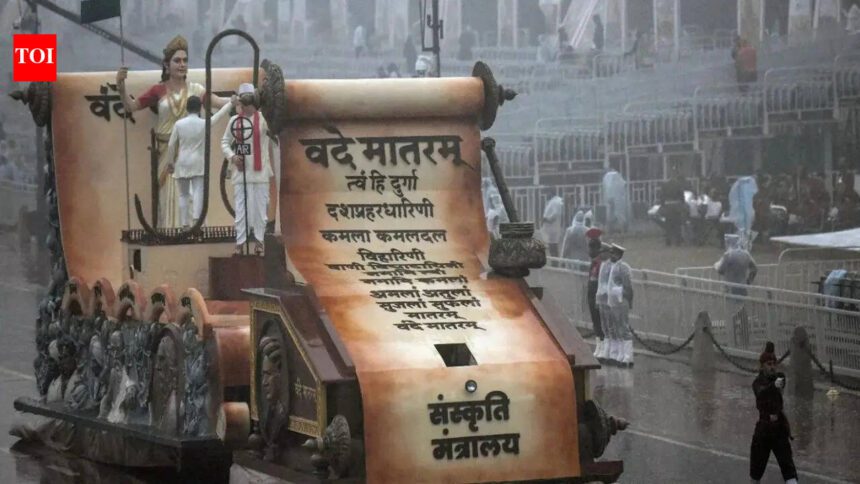
On Thursday, the Union cabinet announced that all six stanzas of “Vande Mataram” would be made compulsory, to be recited before the playing of the national anthem in government and educational institutions. This announcement has raised widespread concerns among various communities, particularly the Muslim community, regarding the implications for religious freedom. AIMPLB spokesperson SQR Ilyas characterized the cabinet’s decision as an imposition of a specific religious belief upon the secular nature of the Indian state.
Response from AIMPLB
The AIMPLB has stated that if the government does not retract this decision promptly, they will take legal action to challenge it. In their statement, they declared the move to be a “direct violation of the basic spirit of the Constitution,” which promotes religious freedom and secular values. Ilyas emphasized that the imposition of a song that contains references to Hindu deities is incompatible with Islamic teachings and that, in a diverse and secular nation, such religious imposition cannot be tolerated.
Concerns Over Religious Freedom
The AIMPLB’s objections highlight broader concerns about the marginalization of minority communities in India, particularly Muslims. The board argued that a secular state should not mandate religious beliefs of one community upon all its citizens. Ilyas specifically noted that certain stanzas of “Vande Mataram” include invocations to Hindu deities, which contradicts the Islamic doctrine of Tawheed, emphasizing the importance of worshiping only Allah. The board’s stance underscores the potential rise of religious discrimination under the current government’s policies, fueling fears of social exclusion and further marginalization of minorities.
Why It Matters
The implications of the AIMPLB’s response and the government’s proposal are significant. This conflict over “Vande Mataram” exemplifies ongoing tensions in India’s socio-political landscape, particularly concerning religious minorities. The decisions taken by the government can set precedents that might erode the secular framework of the nation. Such moves could lead to increased social division, economic boycotts of certain communities, and a legal fight that may challenge the very foundations of religious freedom guaranteed by the Constitution. These developments highlight the crucial need for dialogue and understanding in a nation known for its diversity.
Frequently Asked Questions
What is “Vande Mataram”?
“Vande Mataram” is a poem and song written by Bankim Chandra Chatterjee, which glorifies the motherland. It is often viewed as a national song in India, but its religious connotations have become a point of contention.
What are the concerns raised by the AIMPLB regarding this decision?
The AIMPLB has expressed that the incorporation of “Vande Mataram” into official practices is unconstitutional and undermines the secular fabric of India, especially as some stanzas glorify Hindu deities, conflicting with Islamic beliefs.
Will the AIMPLB pursue legal action against the government’s decision?
Yes, AIMPLB has stated that if the Indian government does not rescind its decision to enforce “Vande Mataram,” they will be compelled to challenge the decision in court.
How does the decision impact religious minorities in India?
This decision heightens fears among religious minorities about their place in Indian society and raises concerns regarding increasing marginalization and potential economic and social exclusion.