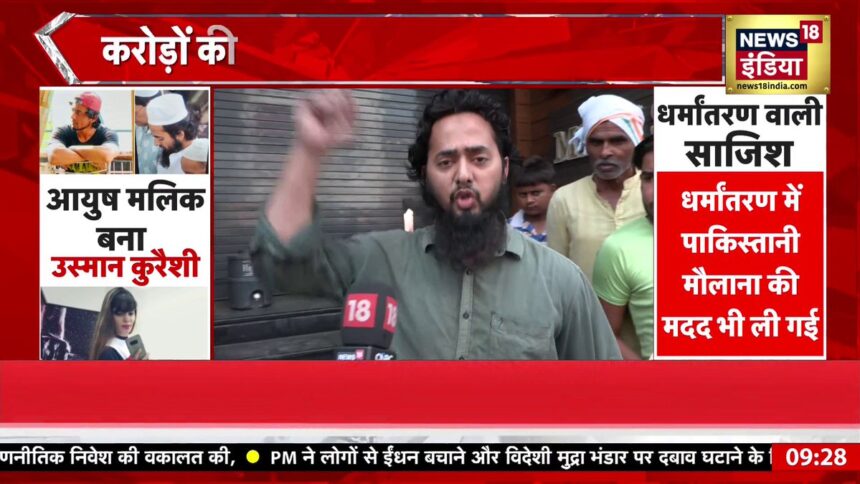

Recent claims made by journalist Rahul Shivshankar regarding a female gym trainer allegedly converting a millionaire’s son to Islam have been met with significant backlash. Critics, including commentator Ayush Malik, have pointed out inconsistencies and questioned the narrative presented by Shivshankar’s outlet.
Context of the Claim
Rahul Shivshankar’s assertions stem from an incident involving a wealthy individual’s son who purportedly converted to Islam after entering into a relationship with his gym trainer. The allegation includes claims of coercion and a conspiracy involving ten individuals, including three religious figures. The narrative suggests that the young man was manipulated into changing his faith as part of a premeditated plan. This storyline has generated substantial media attention and public debate.
Criticism of Media Representation
Ayush Malik’s counter-argument highlights concerns over Shivshankar’s reporting, arguing that it exemplifies a one-sided portrayal influenced by state-run narratives. Malik points out that the debunking of these claims on Shivshankar’s own news channel raises questions about journalistic integrity and bias in reporting sensitive issues. Critics argue that framing such incidents in a sensational manner may exacerbate social tensions between communities in India.
The Role of Social Media
Social platforms have played a crucial role in shaping public discourse surrounding this controversial issue. The video shared by Shivshankar has ignited a whirlwind of commentary, contributing to the polarized perspectives on religious conversion in India. Users on platforms like Twitter have exchanged opinions, with some defending the young man’s right to make personal choices and others condemning the situation as an example of religious manipulation. The polarized environment can influence public sentiment and government policies, showcasing the power of social media in contemporary India.
Why This Matters
This incident underscores the complexities of religious identity and conversion in India, a nation characterized by its diverse belief systems. The media’s framing of such narratives can have widespread implications, potentially leading to increased communal tensions and affecting the discourse around religious freedom. Given India’s historical context of religious discord, responsible journalism is critical for fostering dialogue and understanding among different communities. The ability to critically analyze sensational claims is crucial for maintaining social harmony and protecting individual rights.
Frequently Asked Questions
What claim did Rahul Shivshankar make?
Shivshankar claimed that a female gym trainer converted a millionaire’s son to Islam, alleging coercion and a conspiracy involving others.
Who debunked Shivshankar’s claim?
Ayush Malik, among others, criticized Shivshankar’s claims, arguing they reflect a one-sided narrative often propagated by state-run media.
What is the significance of this issue in India?
The incident highlights broader themes of religious identity and conversion within India, where such topics can evoke strong reactions and impact communal relationships.
How are social media platforms influencing the discussion?
Social media serves as a battleground for opinions, providing a space where differing views on sensitive societal issues like religious conversion are openly shared and debated, amplifying public sentiment.