
A recent incident in Ghaziabad, Uttar Pradesh, has drawn attention as members of the Hindu Raksha Dal group attacked slum dwellers, accusing them of being “Bangladeshi infiltrators.” This label is frequently used by right-wing groups in India to target Muslims.
Details of the Incident
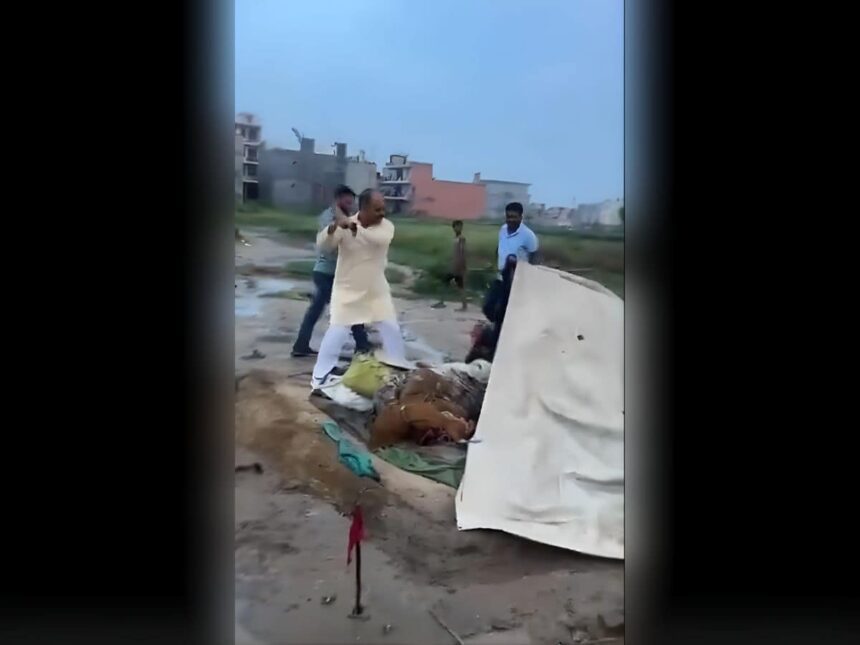
The attack occurred on August 8, near a railway station, where attackers reportedly wielded sticks and destroyed the makeshift homes of the victims. A video of the incident circulated on social media, leading to public outcry and the arrest of Hindu Raksha Dal chief Pinky Chaudhary alongside another individual. One victim recounted that he was cooking outside his makeshift shelter when the group suddenly attacked them.
The victims, primarily rag pickers, described the chaos during the assault, highlighting the vulnerability of their living conditions. As many as 15 shanties were present in the area affected by the violence.
Police Response and Legal Action
In response to the situation, the Ghaziabad police have registered a First Information Report (FIR) encompassing multiple serious charges, including rioting and causing grievous bodily harm. According to police officials, these charges are based on sections of the Bharatiya Nyaya Sanhita, which outlines the legal framework for addressing violent behavior in India.
Despite this legal action, questions linger about the effectiveness of the police response and whether such violence can be curtailed in a politically charged atmosphere.
Political Reactions
The incident has prompted significant political responses, particularly from Samajwadi Party chief Akhilesh Yadav. He has called upon the courts to take cognizance of the situation, questioning the role of organizations affiliated with the ruling Bharatiya Janata Party (BJP) in perpetuating violence against minorities. In a social media post, Yadav emphasized that even the government must abide by the law, raising concerns that the actions of groups like the Hindu Raksha Dal reflect an alarming trend of arbitrary violence sanctioned or overlooked by authorities.
Yadav’s comments suggest a growing unease among political figures regarding the implications of such assaults, particularly as they undermine the rule of law and harm the reputation of Uttar Pradesh, especially given its proximity to the national capital.
Why This Matters
This incident underscores a troubling trend in India where marginalized communities face violence under the guise of national security and identity politics. It raises critical questions about the safety and rights of minorities, illustrating how issues related to citizenship and belonging are increasingly exploited for political gain. The reaction from political leaders like Akhilesh Yadav highlights the potential for further polarization in an already fraught political landscape and suggests that such incidents could resonate beyond local contexts, affecting national discourse and policy.
Frequently Asked Questions
What prompted the attack in Ghaziabad?
The attackers, affiliated with the Hindu Raksha Dal, accused the slum dwellers of being “Bangladeshi infiltrators,” a provocative label often directed at Muslims by right-wing groups in India.
How did the police respond to the incident?
The Ghaziabad police have filed an FIR against those involved under several sections related to rioting and causing bodily harm, indicating a legal response to the violence.
What is the political significance of this incident?
The attack highlights ongoing tensions in Indian society regarding minority rights and the increasing incidents of violence against vulnerable communities, prompting political leaders to call for accountability and legal intervention.
What have political leaders said about the attack?
Akhilesh Yadav criticized the violence and urged the courts to take action, questioning whether such events are indicative of a broader strategy by political factions to displace minorities from their homes.