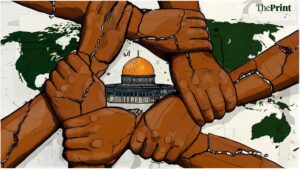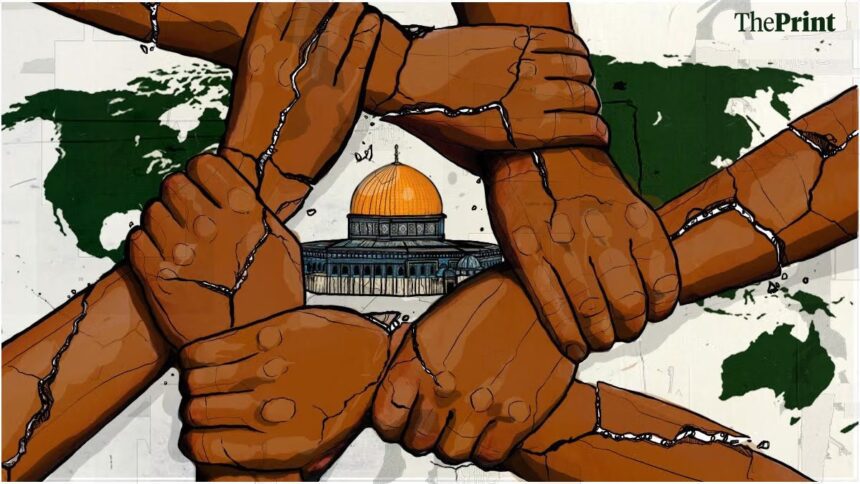

The unity of the Islamic Ummah has long been a contentious issue, highlighted by historical schisms and modern political narratives. Increasingly, Indian Muslims find themselves marginalised within their own nation, facing discrimination and socio-economic exclusion as the rise of Hindu nationalism reshapes the political landscape under the Sangh and BJP governments.
A Historical Perspective on Islamic Unity and Division
The concept of Islamic unity is often invoked to suggest a singular, monolithic identity among Muslims. However, historical narratives reveal a contrasting reality; the Prophet Muhammad is reported to have indicated an inevitable fracturing of the Muslim community, which began immediately after his death. This rift manifested politically and theologically, leading to the emergence of various sects and factions. For instance, the discord initiated over leadership following the Prophet’s passing laid the groundwork for myriad sects within Islam.
As Faisal Devji argues, the notion of a united Islamic Ummah is a relatively modern fabrication, primarily employed for political purposes rather than genuine spiritual cohesion. This narrative resonates particularly within the context of India, where, following colonial rule, many Muslims began to look towards an idealised notion of global Muslim unity rather than fostering a more rooted, local sense of identity.
The Political Weaponization of Islamic Identity
In the late 19th century, Pan-Islamism emerged as a reaction to the decline of Muslim empires. The Indian Muslim community, under British rule, began to pledge allegiance to foreign Islamic leaders while neglecting their own socio-political realities in India. This duality has contributed to a deeper sense of alienation, which the current Sangh and BJP governments exploit by framing Muslims as an outsider community.
Historically, Islamic unity was subverted for political gain. Scholar Rafiq Zakaria notes that leaders often invoked the ideal of Islamic unity to consolidate power rather than to foster genuine religious or social harmony. The tension between different sects—even among the mainstream Sunni and Shia identities—has often been exacerbated by political agendas, leading to cycles of exclusion and violence.
The Current Socio-Economic Marginalization of Indian Muslims
Under the current BJP regime, Indian Muslims face increased social exclusion, economic boycotts, and heightened discrimination. Policies that employ religious rhetoric are often coupled with socio-economic disadvantages, creating an environment where Muslims are disproportionately affected by unemployment and underemployment. The popularisation of Hindu nationalist agendas has further alienated Muslim communities, as seen in various oppressive policies and actions that marginalise this demographic.
Additionally, educational opportunities and public representation for Muslims have been significantly compromised. The rhetoric around a “Global Ummah” has served to highlight these inequalities, as Muslims become increasingly aware of their exclusion from both local and broader Islamic narratives. This fragmentation facilitates greater conflict within the community and against external forces, leading to a cycle of oppression that leaves Indian Muslims vulnerable.
Why It Matters
The socio-political dynamics affecting Indian Muslims hold critical implications for the global Muslim community. The increasing fragmentation and marginalisation reveal the inadequacies of the pan-Islamic narrative as a cohesive political identity. As India grapples with its own religious and cultural tensions, the global Muslim community must confront the consequences of sectarianism and the challenges of fostering genuine unity. Recognising these intricacies will be essential for understanding contemporary Islamic movements and their dual legacies of both inclusion and exclusion.
Frequently Asked Questions
What is the significance of the concept of Ummah in Islam?
The Ummah refers to the collective community of Muslims worldwide. It embodies the ideal of unity among Muslims, transcending national and ethnic boundaries; however, historical and theological disputes have often compromised this ideal.
How does modern political rhetoric affect Muslims in India?
Modern political rhetoric, particularly under the BJP and Sangh governments, often portrays Muslims as outsiders, marginalising them economically and socially. This has resulted in various forms of discrimination that impact their rights and representation.
What role does history play in the current condition of Indian Muslims?
Historic events, such as the decline of empires and internal disputes over leadership, shaped the current socio-political realities faced by Indian Muslims. These historical fractures inform contemporary narratives and conflicts, often exacerbated by modern political agendas.
Is the idea of a Global Ummah a realistic concept?
The concept of a Global Ummah is increasingly seen as an illusion, particularly when socio-political realities suggest that Muslims often face more division than unification. The contextualisation of faith within local identities shows the limitations of a solely pan-Islamic framework.