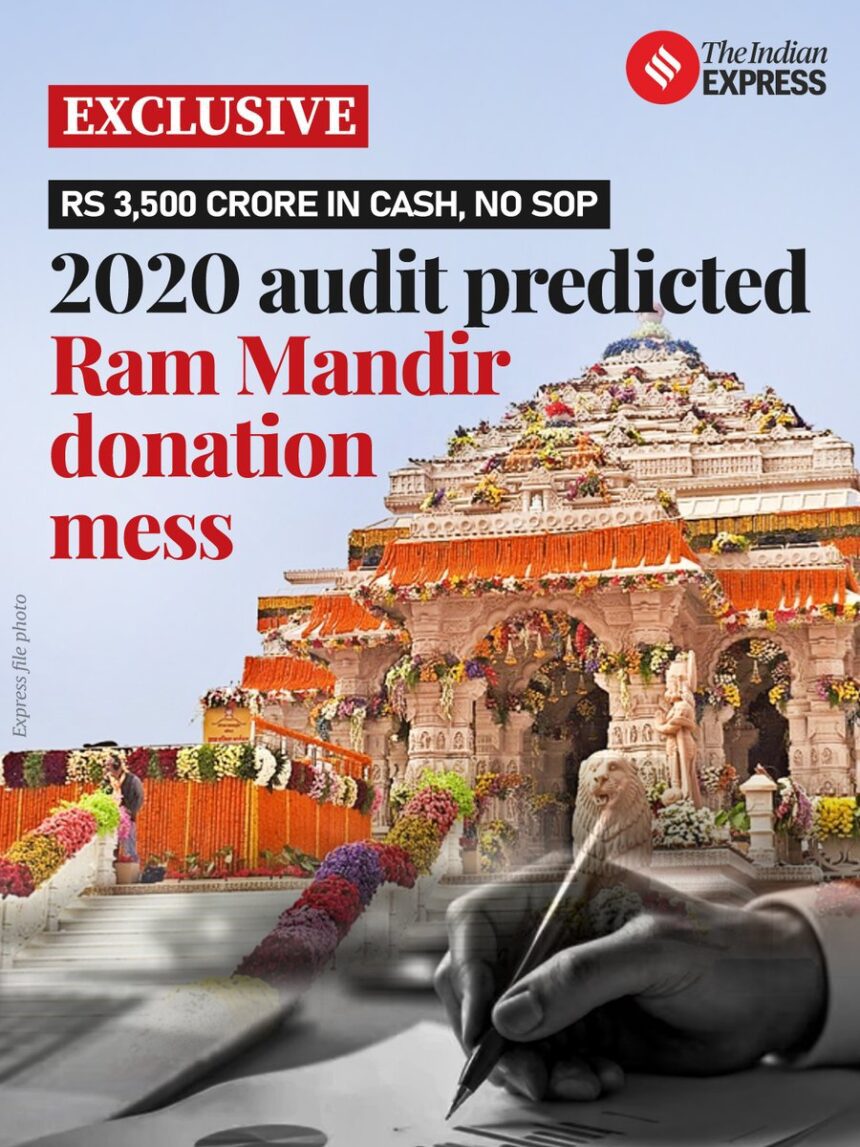

Six years before a Special Investigation Team (SIT) began probing allegations concerning irregularities in donations to the Ram Temple, a private audit firm had issued a warning about significant deficiencies in the trust’s operational systems. The 2020 audit highlighted complete discrepancies in managing donations, asserting that inadequate oversight could lead to serious accountability and reporting issues.
Audit Findings Uncovered Serious Gaps
The audit performed in 2020 pointed to a lack of systematic record-keeping for donations received by the Ram Temple trust. It emphasized that weak data management practices were detrimental to financial accountability. The absence of standardized operating procedures (SOPs) made it difficult to track donations efficiently, raising red flags about potential mismanagement.
According to the audit firm’s report, the inadequate data management systems not only compromised transparency but also posed challenges in ensuring that donations were being utilized as intended. The findings suggested that the temple trust was ill-prepared to address queries regarding its financial operations, placing its credibility at risk.
Impact of the SIT Investigation
Following the audit, the SIT was established to further investigate these concerns. The inquiry was prompted by allegations that significant sums had been misappropriated, which, if true, would be a major breach of trust. The SIT was tasked with determining whether these irregularities were indicative of a broader pattern of corruption within the trust’s operations.
The emergence of the SIT investigation has reignited debates surrounding financial accountability in religious institutions. Critics argue that religious trusts often operate with minimal regulatory oversight, which can foster environments where financial irregularities flourish. The findings from the 2020 audit underscore the urgent need for reform in managing donations in such trusts.
Broader Implications for Governance
This situation shines a light on broader governance issues in India, particularly concerning transparency and accountability among religious and charitable organizations. The revelations about the Ram Temple trust’s operational deficiencies may prompt policymakers to re-evaluate existing regulatory frameworks governing such trusts.
In light of recent developments, there are growing calls for stricter regulations to ensure that donations to religious trusts are carefully monitored and transparently reported. The implications of the investigation could extend beyond the Ram Temple trust, potentially leading to a review of similar organizations across the country.
Why This Matters
The revelations surrounding the Ram Temple donations are particularly significant for Indian political discourse, where the intertwining of religion and politics plays a crucial role. As a landmark religious project, the Ram Temple has been a focal point of political mobilization for various parties.
Inadequate transparency in managing funds for such a prominent project risks undermining public trust not only in the trust overseeing the temple but also in the political entities associated with it. As scrutiny increases, the political ramifications could be considerable, influencing voter perceptions and political agendas leading up to elections.
Frequently Asked Questions
What are the main findings of the 2020 audit on Ram Temple donations?
The audit pointed out serious deficiencies, including a lack of systematic record-keeping, poor data management, and the absence of a standard operating procedure for handling donations.
What triggered the SIT investigation?
The SIT was formed to investigate allegations of financial irregularities in the Ram Temple trust, prompted by concerns raised about misappropriation of funds.
Why is this issue important in Indian politics?
This matter touches on the intersection of religion and politics in India, with implications for public trust and accountability in governance, particularly concerning religious institutions.
What could be the future implications of these findings?
The findings may lead to increased scrutiny and potential regulatory reform for religious trusts across the country, impacting how donations are managed and reported.