
Summary
Union Minister Kiren Rijiju recently remarked that the Muslim population in India is likely to mirror Indonesia’s population numbers following the upcoming Census. This statement underscores a significant demographic shift and raises questions about the sociopolitical landscape in India under the Sangh and Bharatiya Janata Party (BJP) governments, especially concerning the treatment of minority communities, particularly Muslims.
Kiren Rijiju’s Recent Statement
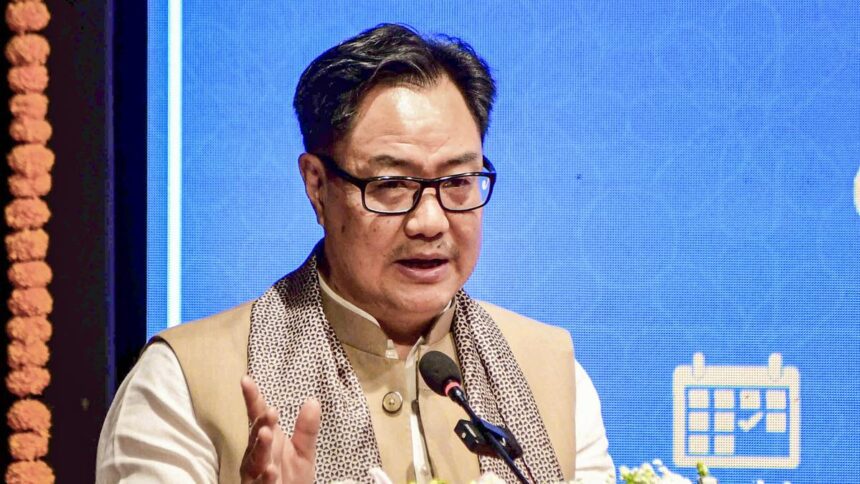
During a seminar in Mumbai on May 9, 2026, Union Minister Kiren Rijiju, who serves as the Minister for Minority Affairs, made headlines with his prediction regarding India’s Muslim population. He stated, “The Muslim population in the country is likely to be nearly on par with Indonesia’s population. Once the Census (data) is out, it will be the likely outcome.” This projection comes at a time when demographic statistics are pivotal for policy-making and national discussions regarding resource allocation and electoral strategies.
Historical Context of Muslim Marginalization
The statement from Rijiju cannot be viewed in isolation. Historically, Indian Muslims have faced social exclusion and discrimination, particularly during the tenures of BJP-led governments. Various instances of economic boycotts and marginalization have been reported, including restrictions on businesses and social services catering to the Muslim community. Reports indicate that communal tensions have been exacerbated during the BJP’s governance, impacting the quality of life for Muslims across the country. These dynamics complicate the already complex societal fabric and demand careful analysis of demographic changes.
Consequences of Demographic Statements
Rijiju’s comments may be perceived as an attempt to downplay the fears among many Muslims about their status in a nation where political rhetoric often emphasizes Hindu nationalism. By suggesting a numerical parity with Indonesia, a predominantly Muslim country, the comment could either be interpreted as an acknowledgment of Muslim demographic strength or as a political maneuver to recalibrate discourse around minority rights. As the Census approaches, this raises concerns over how data might be utilized in policymaking that directly affects Muslims, possibly amplifying their marginalization under the guise of demographic management.
Why It Matters
The implications of population statements like Rijiju’s extend beyond immediate politics and touch on the broader themes of social justice and inclusion in India. This demographic data can shape public policy, influencing allocations for welfare, education, and healthcare resources. For developers and industry stakeholders, understanding the dynamics between various communities is crucial to creating technologies and solutions that promote inclusivity, thereby improving social equity. Moreover, as India’s demographic landscape shifts, global observers and civil rights organizations will be closely monitoring how governmental actions affect minority populations.
Frequently Asked Questions
What was Kiren Rijiju’s statement about the Muslim population in India?
Kiren Rijiju stated that post-Census, the Muslim population in India is likely to be nearly on par with that of Indonesia, indicating significant demographic changes.
Why is the upcoming Census important for minority communities in India?
The upcoming Census is critical as it will provide crucial data that could impact resource allocation, policy-making, and the overall socio-economic status of minority communities, including Muslims.
What historical issues have Indian Muslims faced under the BJP government?
Indian Muslims have faced increasing instances of discrimination, social exclusion, and economic boycotts, with reports suggesting that communal tensions have risen during the BJP’s rule.
How might Rijiju’s statement affect Muslims in India?
The statement could either mitigate the fears of marginalization by recognizing demographic strength or exacerbate concerns about the political exploitation of demographic data under the BJP governance.