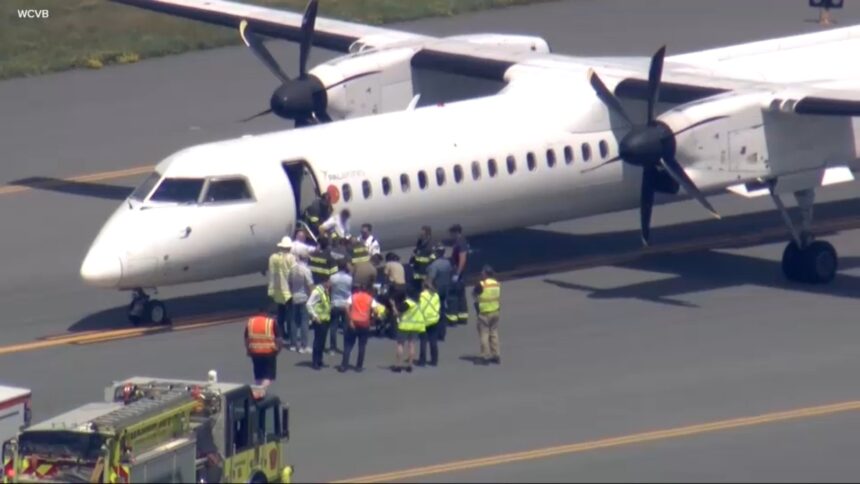

A harrowing incident unfolded on Air Canada Flight AC7664, which was en route from Newark to Halifax, Nova Scotia, when the captain suffered a significant medical episode mid-flight. The aircraft was safely diverted to Boston, thanks to the quick actions of the first officer and some passengers who assisted during the emergency.
Emergency Mid-Air Situation
On Wednesday afternoon, the flight operated by regional partner PAL Airlines was cruising when it encountered a critical situation. Reports indicated that the captain lost control due to a medical emergency, necessitating immediate intervention. A passenger, Rodney McDonald, recounted the terrifying moments as the aircraft started to swerve violently. Flight attendants rushed into the cockpit, and passengers swiftly joined forces to assist the incapacitated captain.
“It was really horrifying. Myself and about four others worked to get him under control. It was a fairly strenuous 40 minutes keeping him down,” McDonald shared, highlighting the fear and urgency that enveloped the cabin.
Successful Diversion and Landing
With the first officer taking control of the De Havilland Q400, the flight was diverted to Boston, where it landed safely with 61 passengers on board. As the cabin filled with anxiety, many passengers resorted to prayer and support for one another. McDonald indicated that, “Every thought goes through your mind. You start praying.”
Medical experts note that pilots are trained to manage emergencies, including flying and landing without additional assistance. Passengers reported that the captain appeared incoherent until the emergency landing when he regained some awareness shortly before aid was rendered. In what has become a crucial safety protocol, passengers used seatbelt restraints to help manage the captain during the episode.
Medical Response and Aftermath
Post-landing, first responders attended to the captain, ensuring his safe transport to Massachusetts General Hospital for further evaluation and treatment. The swift action of both the cockpit crew and the passengers prevented a potentially disastrous outcome. Experts commented on the dangers of attempting to restrain individuals who may be experiencing seizures, advising that they should be turned gently on their side to maintain clear airways.
In light of this incident, the airline is working to arrange alternative travel options for the impacted passengers, prioritizing their comfort and safety. Such emergency responses underscore the robust training protocols in aviation, aiming to ensure passenger safety even in unforeseen circumstances.
Why This Is Trending
This incident has captured interest in India, especially among air travel enthusiasts and those concerned about flight safety protocols. The rise in medical emergencies during flights, coupled with the dramatic nature of this incident, has sparked conversations about the preparedness of airline crews and safety protocols in place. Additionally, the thrill-seeking nature of aviation enthusiasts always attracts attention to such captivating, albeit alarming, stories from around the globe.
Frequently Asked Questions
What happened on Air Canada Flight AC7664?
During a flight from Newark to Halifax, the captain suffered a medical episode, leading to an emergency landing in Boston.
How did passengers respond to the emergency?
Some passengers, including Rodney McDonald, assisted the flight crew in managing the incapacitated captain by using seatbelts to help restrain him and prevent further injury.
What did the first officer do when the captain became incapacitated?
The first officer took control of the aircraft and successfully diverted it to Boston, ensuring a safe landing.
What happens when a pilot has a medical emergency mid-flight?
Pilots are trained to handle various emergencies, including operating without a second pilot. They follow specific protocols to ensure passenger safety and aircraft control.