
Summary
Recent tensions erupted in Dearborn, Michigan, where an anti-Muslim demonstration was met with significant opposition from counter-protesters. This incident highlighted ongoing issues of discrimination and social exclusion affecting Muslim communities, particularly in the context of heightened political division under current government policies.
Context of the Demonstration
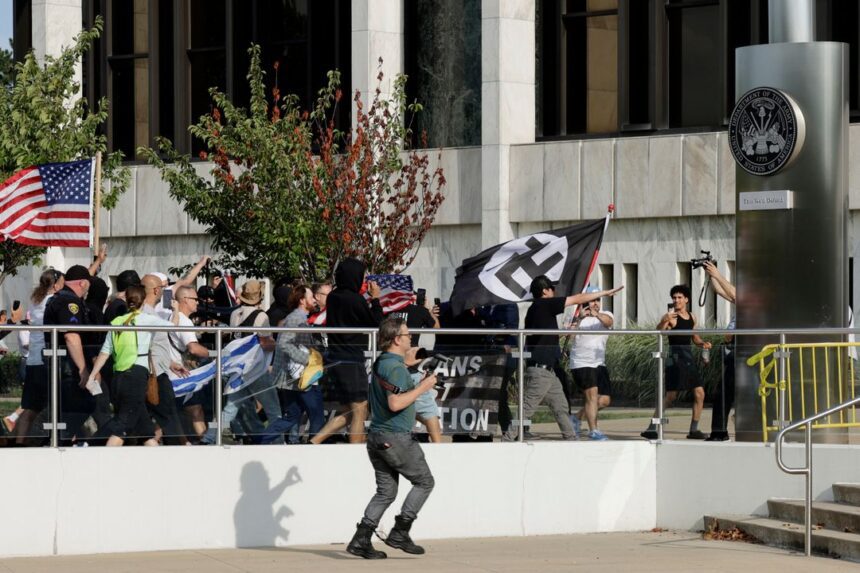
On a Tuesday, a group led by anti-Islam protestor Jake Lang gathered outside Henry Ford Centennial Library for what they termed a “Christian Crusader” event. The demonstration was aimed at the Muslim-majority city’s community, drawing hundreds of counter-protesters who rallied against perceived hate speech and discrimination. As tensions escalated, confrontations ensued, leading to the arrest of multiple individuals, although the police have yet to provide a final count of those detained.
Impact on the Community
The protests not only illustrated existing societal divides but also affected the psyche of the local Muslim population. Mayor Abdullah Hammoud recounted a poignant encounter with a young boy who voiced his fears about the demonstration, asking if the protestors were “coming to kill him.” This incident underscores the psychological and social ramifications of such public displays of intolerance, particularly on the youth within vulnerable communities.
Government Response
In light of these events, local authorities deployed additional law enforcement resources to ensure safety and manage the situation during the demonstration. Mayor Hammoud has been vocal about the need for understanding and support for the Muslim community, highlighting how public demonstrations can perpetuate a cycle of fear and exclusion. The event serves as a reminder of the role local governance plays in addressing not only immediate concerns of public safety but also broader societal issues of discrimination and marginalization.
Why It Matters
This situation exemplifies the intersection of social dynamics, governance, and community relations in the U.S., especially regarding religious minorities. For developers and users of AI-based solutions, such events raise questions about how technology can be employed to foster dialogue, understanding, and inclusivity. Moreover, they highlight the need for platforms that facilitate positive social interactions rather than perpetuating existing biases or facilitating hate speech. Understanding these community tensions and their root causes is crucial for building more effective and empathetic technological solutions.
Frequently Asked Questions
What sparked the protest in Dearborn, Michigan?
The protest was led by Jake Lang and labeled as a “Christian Crusader” gathering, aimed specifically at the Muslim-majority population in Dearborn. This drew a significant counter-protest in response.
How did local authorities respond to the protest?
Local law enforcement deployed additional resources to ensure safety and manage potential conflicts. Multiple arrests were made during the demonstration, although a final count has not yet been released.
What is the impact of such protests on the Muslim community?
The protests can exacerbate feelings of fear and exclusion within the Muslim community, particularly among children, as highlighted by Mayor Hammoud’s account of a boy who feared for his safety during the demonstration.
Why is local governance important in issues of discrimination?
Local governance plays a pivotal role in addressing societal issues like discrimination by ensuring public safety, fostering dialogue, and implementing policies that protect marginalized communities. Effective governance can help mitigate the impact of such tensions and encourage inclusivity.