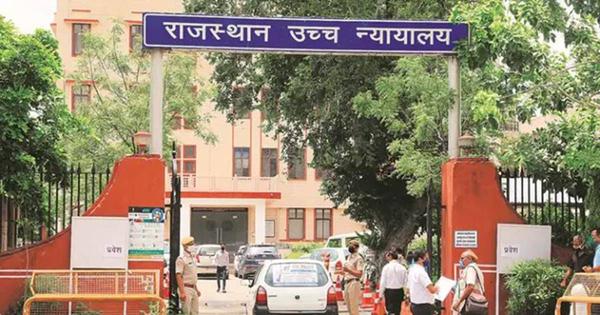

The Rajasthan High Court recently dismissed petitions challenging the demolition of several mosques, dargahs, and madrasas within 50 kilometers of the India-Pakistan border. This controversial decision has raised alarms regarding the implications for religious sites, particularly among the Muslim community, and highlights ongoing tensions related to national security and religious discrimination in India.
Judicial Ruling on Demolitions
On Monday, the Rajasthan High Court upheld the Union government’s move to enhance the operational powers of the Border Security Force (BSF), emphasizing the need for strict regulation due to security concerns. The bench argued that the structures in question were unauthorised, indicating that petitions to halt the demolition lacked participation in previous legal processes. Justice Sameer Jain asserted that issues of national security and regulatory compliance supersede claims of religious discrimination, stating, “the attempt to attribute communal colour to the demolitions was misplaced.”
Communal Reactions and Political Backlash
The demolitions initiated a political firestorm, drawing accusations from opposition leaders that the actions target Muslim places of worship disproportionately. Leaders such as Asaduddin Owaisi have reported that several mosques, including those in districts directly adjacent to the Pakistan border like Phalodi, Jaisalmer, and Barmer, have been demolished. Owaisi further indicated that notices had been issued for potentially hundreds of other religious sites, intensifying concerns within the Muslim community regarding the preservation of their historical sites.
Similarly, Ashok Gehlot of the Congress party condemned the Bharatiya Janata Party (BJP) government for undermining historical religious landmarks through what he termed coercive actions. This stark political divide illustrates the broader communal tensions simmering in Indian society, especially concerning religious identity and the treatment of minority communities.
Implications for National Security and Community Relations
While the government argues that the demolitions align with national security protocols, experts warn that associating religious structures with threats can further marginalize vulnerable populations. The notion that places of worship, particularly those affiliated with the Muslim community, are under scrutiny fosters an atmosphere of distrust and fear.
The Rajasthan High Court’s ruling reflects a critical intersection of legal authority, national security, and religious identity. As state policies evolve to address security needs, scrutiny over how these policies affect communal harmony is essential. Legal decisions that appear to overshadow the rights of specific religious groups contribute to a narrative of exclusion and societal division, further entrenching the marginalization of Muslims within India.
Why It Matters
This situation highlights ongoing concerns regarding discrimination and marginalization in India. As government actions intersect with religious beliefs, the implications extend beyond local governance to broader issues of human rights, community relations, and social cohesion. The dismissal of petitions defending religious structures along the border raises questions about the balance between security and the protection of cultural heritage. Understanding these dynamics is crucial for stakeholders invested in promoting social equity and justice within diverse communities.
Frequently Asked Questions
What prompted the demolitions of mosques and dargahs in Rajasthan?
The demolitions were enacted as part of enhanced security measures by the Union government concerning structures within 50 kilometers of the India-Pakistan border, deemed unauthorised by judicial authorities.
How did the Rajasthan High Court justify its ruling?
The court emphasized that communal allegations against the demolitions were misplaced and that the focus was on national security and regulatory compliance, rather than religious discrimination.
What has been the political response to these demolitions?
Opposition leaders, including Asaduddin Owaisi and Ashok Gehlot, have strongly criticized the demolitions, arguing that they disproportionately affect Muslim religious sites and that they signify a broader attack on the Muslim community’s heritage.
Why is this issue significant for religious and cultural preservation?
The ongoing demolitions and the rationale behind them highlight tensions between national security measures and the preservation of cultural and religious heritage, which are crucial for maintaining societal harmony in a diverse nation like India.