
The rise of Hindu nationalism in India has sparked significant social and political changes, particularly for marginalized communities, including Muslims. Recent events, such as the motorcycle parade by Rashtriya Swayamsevak Sangh (RSS) supporters in Telangana, reflect an ongoing project to reinforce a Hindu identity in public spaces, elevating historical figures like Chhatrapati Shivaji Maharaj as national symbols. This shift poses challenges for India’s secular fabric and the rights of religious minorities.
Hindu Nationalism and the Use of History
On May 29, 2026, a parade of a few hundred motorcyclists in Sangareddy, Telangana, showcased the growing influence of the RSS, a key organization within the Hindu nationalist movement. Attendees donned saffron scarves and waved flags colored similarly to those of the Bharatiya Janata Party (BJP), the ruling party under Prime Minister Narendra Modi. This display wasn’t an isolated episode; rather, it forms part of a broader strategy to use historical figures, particularly Shivaji, to forge a Hindu nationalist identity.
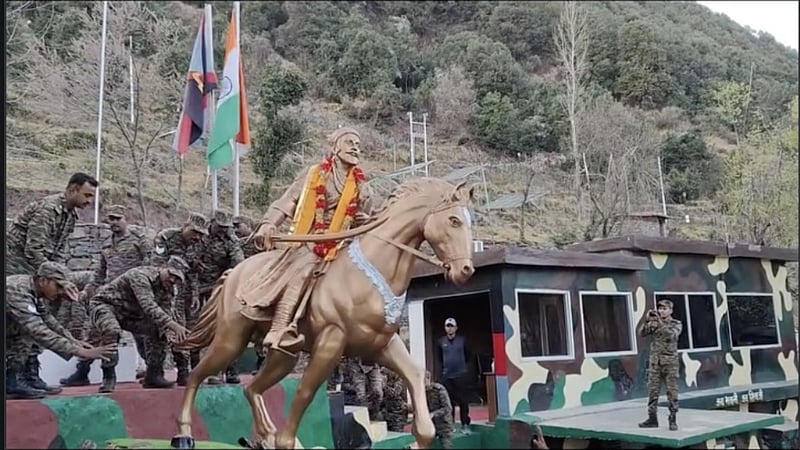
Shivaji, a 17th-century king known for his defiance against the Mughal emperor Aurangzeb, has been appropriated as a symbol of Hindu resistance in contemporary political discourse. Since 2022, large statues of Shivaji have been erected not only in Maharashtra but also in regions traditionally less aligned with Hindu nationalist ideologies, such as Telangana. The portrayal of Shivaji in this manner aligns with the BJP’s political agenda, aimed at solidifying Hindu cultural dominance in public life.
The Social Exclusion of Religious Minorities
As part of this cultural agenda, the government has allocated funds to promote Shivaji’s legacy across various states, reinforcing the notion that a Hindu identity is synonymous with Indian identity. This has profound repercussions for religious minorities, particularly Muslims and Christians, who face increasing marginalization. Rohit Chopra, a professor at Santa Clara University, argues that the rise of Shivaji statues signifies a broader project to establish India as a de facto Hindu state. The presence of these monuments subtly conveys that public spaces are predominantly reserved for Hindu narratives, pushing religious minorities further into the margins.
This exclusionary atmosphere compounds existing pressures faced by Muslims and Christians, redefining public culture and stifling dissent. The implications are severe; voicing concerns about such developments often incurs significant personal risk for individuals from minority backgrounds. Chopra’s observations highlight how the glorification of figures like Shivaji serves not only a political purpose but also reinforces the idea that minority identities are unwelcome in the national conversation.
Political Strategy and Geographic Expansion
The strategic erection of Shivaji statues is meticulously planned, as these sites are carefully chosen to enhance the BJP’s influence across India. Telangana, which hasn’t historically been a BJP stronghold, demonstrates this tactical approach aiming to establish a pan-Hindu identity across various regions. The use of local partnerships to facilitate these installations indicates a concerted effort to expand the boundaries of Hindu nationalism, challenging the secular character of the Indian state.
By embedding nationalist symbols in diverse geographical locations, the BJP and its affiliates are signaling their intention to reshape the nation’s cultural landscape. As this effort unfolds, it is likely that nationalists will push for similar initiatives in other regions, reinforcing their narrative and expanding their political reach.
Why It Matters
The growing influence of Hindu nationalism has significant implications for India’s socio-political environment and raises concerns about the erosion of democratic values. This shift not only affects the rights and security of minority communities but also risks transforming the cultural dynamics that define Indian identity. For the international community, understanding these developments is crucial, as they reflect broader trends of nationalism and identity politics that resonate globally. The BJP’s actions provide a case study of how cultural heritage can be manipulated for political ends, serving as a cautionary tale about the fragility of secularism in a diverse society.
Frequently Asked Questions
What is the RSS?
The Rashtriya Swayamsevak Sangh (RSS) is a Hindu nationalist volunteer organization that plays a crucial role in shaping the ideologies of the BJP and promoting Hindu values.
Why are statues of Shivaji being erected across India?
Statues of Shivaji are being erected as part of a Hindu nationalist project to establish a pan-Hindu identity in public life and to promote a narrative that aligns with the ruling BJP’s political agenda.
How have religious minorities been affected by the rise of Hindu nationalism?
Religious minorities, particularly Muslims and Christians, have faced increased discrimination, marginalization, and violence since the rise of Hindu nationalism, leading to a sense of exclusion from public life.
What are the potential implications of this cultural shift?
The cultural shift towards Hindu nationalism may undermine India’s secular foundation, exacerbate social tensions, and lead to further polarization within society.