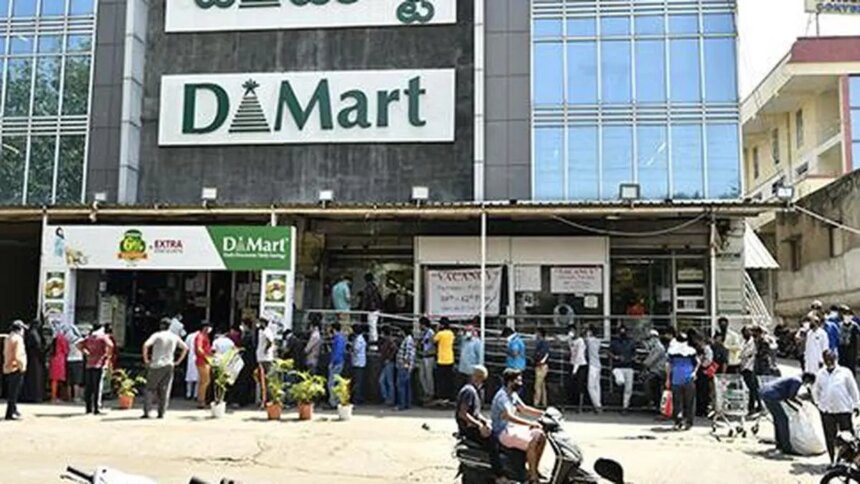

Avenue Supermarts Ltd, the operator of the DMart supermarket chain, has approved a plan to raise up to ₹1,000 crore through non-convertible debentures (NCDs). This decision comes alongside a reported 12.8% year-on-year increase in standalone profit after tax (PAT) for the quarter ending June 30, 2026, indicating a robust performance despite challenges in certain markets.
Financial Performance Overview
The financial results for Avenue Supermarts paint a picture of strong growth. The company recorded a profit after tax of ₹936 crore for the latest quarter, which is an increase from ₹830 crore during the same quarter last year. This growth in PAT is complemented by a 15.1% rise in revenue, which reached ₹18,343 crore, up from ₹15,932 crore year-on-year.
Additionally, the company’s earnings before interest, tax, depreciation, and amortisation (EBITDA) rose to ₹1,527 crore, which is a 16.3% improvement. This is reflected in the EBITDA margin, which increased slightly to 8.3%, up from 8.2% in the previous year. The basic earnings per share also rose, climbing from ₹12.75 to ₹14.35, highlighting the company’s improving profitability.
Challenges in Same-Store Sales Growth
Despite the overall positive financial outcomes, Avenue Supermarts faces challenges in its sales growth, especially within mature markets. Anshul Asawa, Managing Director and CEO, noted that same-store sales growth for outlets over two years old has moderated to 5.5%, down from 7.1% a year ago. This deceleration indicates potential saturation in major metro areas where these stores are located.
In particular, the performance in large metropolitan regions has flatlined, as stores that generate significantly high revenue per square foot are showing little to no growth. Conversely, regions outside the metros continue to witness positive sales trends, suggesting a shift in consumer spending patterns or market opportunities.
Expansion Plans and Future Outlook
Avenue Supermarts has expanded its footprint by adding three new stores this quarter, bringing its total network to 503 locations, which collectively cover a retail business area of 20.7 million square feet. This expansion aligns with the company’s long-term growth strategy, even as existing stores face differing sales scenarios based on location.
The decision to raise funds through NCDs indicates a proactive approach to bolster its expansion and potentially diversify its offerings. Notably, the company has not disclosed specific plans for the use of the proceeds from this debt issuance, leaving room for speculation about future growth strategies.
What This Means
Avenue Supermarts’ robust financials reflect the growing demand for organized retail in India, especially as the country witnesses increasing urbanization and consumer spending. However, the moderating same-store sales growth highlights a need for the company to adapt and explore new growth avenues, particularly in saturated urban markets. The ability to leverage funds from NCDs could play a critical role in maintaining competitive advantage and responding effectively to market dynamics.
Frequently Asked Questions
What are non-convertible debentures (NCDs)?
NCDs are fixed-income instruments that cannot be converted into equity shares and are typically used by companies to raise funds for various operational or expansion needs.
How does DMart’s expansion impact Indian retail?
The expansion of DMart is indicative of the broader trend towards organized retail in India, offering consumers a more structured shopping environment and potentially changing how traditional markets operate.
What factors influence same-store sales growth in retail?
Same-store sales growth can be impacted by various factors including changes in consumer preferences, market saturation, competitive pressure, and regional economic conditions.
Why is EBITDA an important measure for companies?
EBITDA provides a clearer picture of a company’s operational performance as it excludes variables like interest, taxes, and depreciation that can obscure profitability from core business operations.