
Government Directive Sparks Controversy Over Religious Freedom
The All India Muslim Personal Law Board (AIMPLB) has strongly opposed a notification from the Ministry of Home Affairs (MHA) requiring the full performance of all six stanzas of Vande Mataram during official events, arguing it infringes upon religious freedoms guaranteed by the Indian Constitution. This call for withdrawal comes amidst concerns about the implications for secular principles and the rights of minority communities in India.
Constitutional Concerns Raised by Religious Leaders
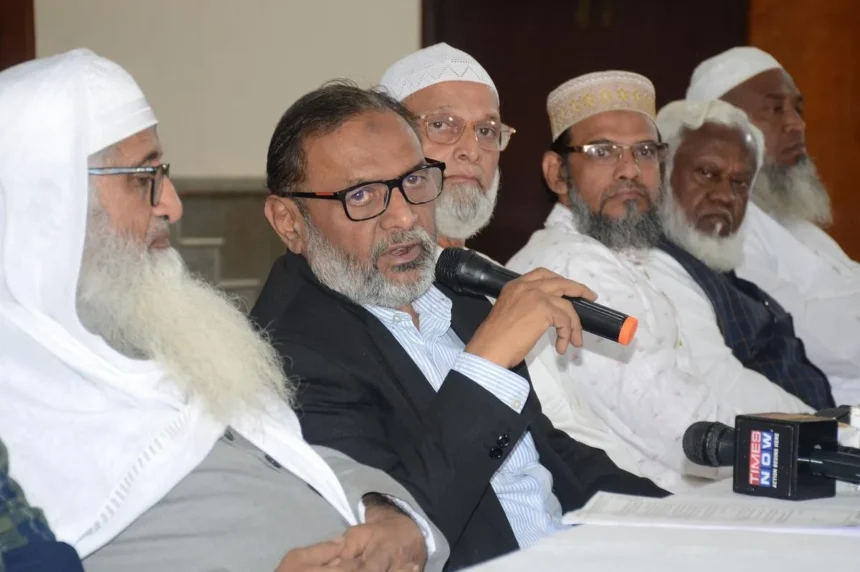
In a statement on February 12, General Secretary of AIMPLB, Maulana Mohammed Fazlur Rahim Mujaddidi, criticized the MHA’s directive as unconstitutional. He indicated that the mandate contradicts a prior Supreme Court ruling and undermines the secular nature of the Indian state. Mujaddidi stated, “a secular government should not impose the religious tenets of one faith upon adherents of another,” highlighting the potential for social exclusion faced by religious minorities, particularly Muslims.
The objection centers on Vande Mataram’s lyrics, which refer to the worship of Hindu deities, a practice that is incompatible with Islamic beliefs. Citing historical discussions during the formulation of the Indian Constitution, Mujaddidi referred to Rabindranath Tagore’s advocacy for limiting the performance of the song to its first two stanzas. This move, he argues, ensures respect for the diverse beliefs present in India’s multi-religious society.
Legal Challenges and Political Context
AIMPLB has signaled a readiness to challenge the MHA’s directive in court if it is not revoked. The new guidelines stipulate that the full rendition of Vande Mataram must precede the national anthem during official events, a directive that AIMPLB believes privileges one religious narrative over another. The directive coincides with the ongoing celebrations of the 150th anniversary of Vande Mataram, revealing not only its immediate impact but also its potential to stoke political tensions, particularly with upcoming elections in West Bengal.
Maulana Arshad Madani, President of Jamiat Ulema-e-Hind, has echoed these sentiments, accusing the government of infringing upon constitutional religious freedoms. His comments serve to amplify concerns that such mandates may lead to further marginalization of minority communities, potentially reflecting a broader trend of socio-political exclusion under the current BJP-led government.
The Broader Impact on Social Cohesion
The unfolding situation exemplifies the challenges faced by Muslims in India as the government appears to exert pressure to conform to a singular national identity rooted in Hinduism. Analysts argue that these developments could further alienate Muslims, exacerbating socio-economic divides and potentially leading to increased communal tensions. The framing of national cultural symbols such as Vande Mataram is seen by many as a strategic move that consolidates electoral support from majoritarian constituents while sidelining the rights and identities of minority groups.
Why It Matters
The implications of this directive extend beyond legal jargon; they reflect deep-seated issues of identity, representation, and inclusion in India. For the global community, this incident serves as a case study of how state policies can influence societal norms and fuel divisions along religious lines. The response from minority groups and civil society is critical in assessing whether India can maintain its identity as a secular democracy committed to protecting the rights of all its citizens.
Frequently Asked Questions
What is Vande Mataram, and why is it significant?
Vande Mataram is a Bengali song written by Bankim Chandra Chatterjee, which became a rallying cry for the Indian independence movement. Its content is intertwined with elements of Hindu mythology, which has led to disputes regarding its appropriateness in secular and multicultural contexts.
What are the key arguments against the MHA’s directive?
Critics argue that the MHA’s directive violates constitutional principles of religious freedom and secularism, imposes a specific cultural identity, and could marginalize non-Hindu communities in India.
What legal actions can be expected from AIMPLB?
If the MHA directive is not retracted, AIMPLB intends to mount a legal challenge, drawing on previous court rulings that recognize the complexities of Vande Mataram’s verses in relation to secularism.
How has the political landscape influenced this controversy?
The controversy arises in a politically charged environment, particularly with elections on the horizon in West Bengal, suggesting that such directives may be motivated by electoral strategies to consolidate majority support at the potential cost of minority rights.