
A recent protest by the Hindu Sangharsh Samiti in Janakpuri Colony, Muzaffarnagar, Uttar Pradesh, has highlighted the rising tensions surrounding property purchases by Muslim families in predominantly Hindu neighborhoods. The protesters allege that these acquisitions threaten the area’s demographic balance, leading to police involvement and government action against certain properties.
Protest and Sealing of Houses
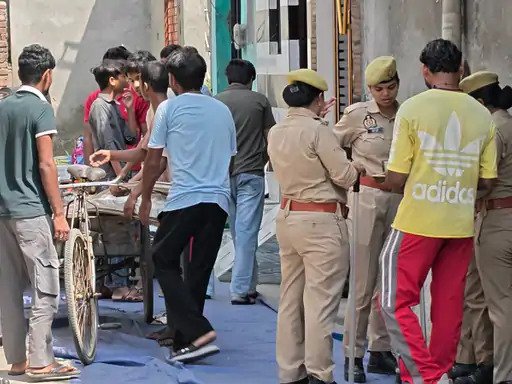
On Wednesday, the Hindu Sangharsh Samiti gathered outside homes purchased by Muslim families, expressing concerns over demographic changes in the locality. In response, police and administrative officials arrived to assess the situation. Officials discovered that at least six houses had changed ownership to Muslim families, with four of these homes reportedly constructed under the Pradhan Mantri Awas Yojana (PMAY).
Following an initial inquiry, authorities sealed two properties said to have been built under the PMAY, instructing the occupants to vacate. Verification processes concerning the ownership of the remaining homes are currently in motion, raising questions around legality and due process in these matters.
Allegations of Planned Conversion
The Hindu Sangharsh Samiti has articulated a stance that the purchase of houses by Muslim families is part of an orchestrated effort to alter the demographic landscape of Janakpuri Colony. Convenor Narendra Pawar announced that the group would hold weekly recitations of the Hanuman Chalisa in front of the affected properties as a form of protest until the Muslim families vacate. He asserted that these property acquisitions disrupt the social atmosphere of the area and threaten its Hindu-majority status.
This type of rhetoric fits into a larger narrative seen in various parts of India, where concerns over demographic changes often lead to community tensions and social exclusion. The larger implications of such actions suggest a shift towards communal segregation in formerly integrated localities.
Responses from Affected Families
In contrast to the allegations from the Hindu Sangharsh Samiti, the affected Muslim families maintain that their property purchases were legitimate and not part of any grand conspiracy. One homeowner, Mohammad Azim, recounted his experience of purchasing his home for ₹23.25 lakh about a month and a half ago, stating that he was unaware it was constructed under a government housing scheme.
Azim expressed frustration about the sealing of his home without prior notice, emphasizing that his family might have followed the legal process had they been notified of any issues. This highlights a deeper issue concerning the rights of minority communities to secure housing and the potential for government actions that prioritize demographic considerations over individual rights.
Police and Administrative Response
The police, under the direction of Additional Superintendent of Police Siddharth K. Mishra, reported that they were alerted to the protest, which involved approximately 20 to 25 individuals gathered outside various houses. Immediate action was taken to inform the revenue authorities regarding the disputes.
The local tehsildar is currently investigating the complaints lodged by both sides, with a focus on verifying property ownership and compliance with regulations. Despite the tensions, law enforcement affirmed that the situation in Janakpuri Colony remains under control, indicating a measure of stability amid an environment of heightened sensitivity around communal identity and property rights.
Why It Matters
The events unfolding in Janakpuri Colony exemplify a broader trend of social exclusion and discrimination faced by Muslim communities in India. Such incidents are manifestations of a growing communal divide, influenced by political narratives that often exploit demographic anxieties for electoral gain. For developers, the implications are critical: the housing market is not just an economic arena but also a landscape interwoven with issues of social justice, community dynamics, and regional stability. Understanding these interactions is essential for policymakers and stakeholders aiming for inclusivity in urban planning and development.
Frequently Asked Questions
What is the Pradhan Mantri Awas Yojana (PMAY)?
The Pradhan Mantri Awas Yojana is a government initiative in India aimed at providing affordable housing to the urban poor, ensuring that every individual has access to a basic housing facility.
What are the concerns about demographic changes in India?
Concerns about demographic changes often stem from fears that shifts in population composition may threaten cultural identities or political power structures, leading to tensions within communities, particularly between majority and minority populations.
How do protests affect community relations in India?
Protests can exacerbate tensions between different community groups, potentially leading to further division, social unrest, and even violence, as seen in various parts of the country where communal identities are highly politicized.
What can be done to address issues of discrimination in housing?
Addressing discrimination in housing requires legal reforms, awareness campaigns about housing rights, and community engagement initiatives aimed at fostering coexistence among different cultural groups.