
Summary
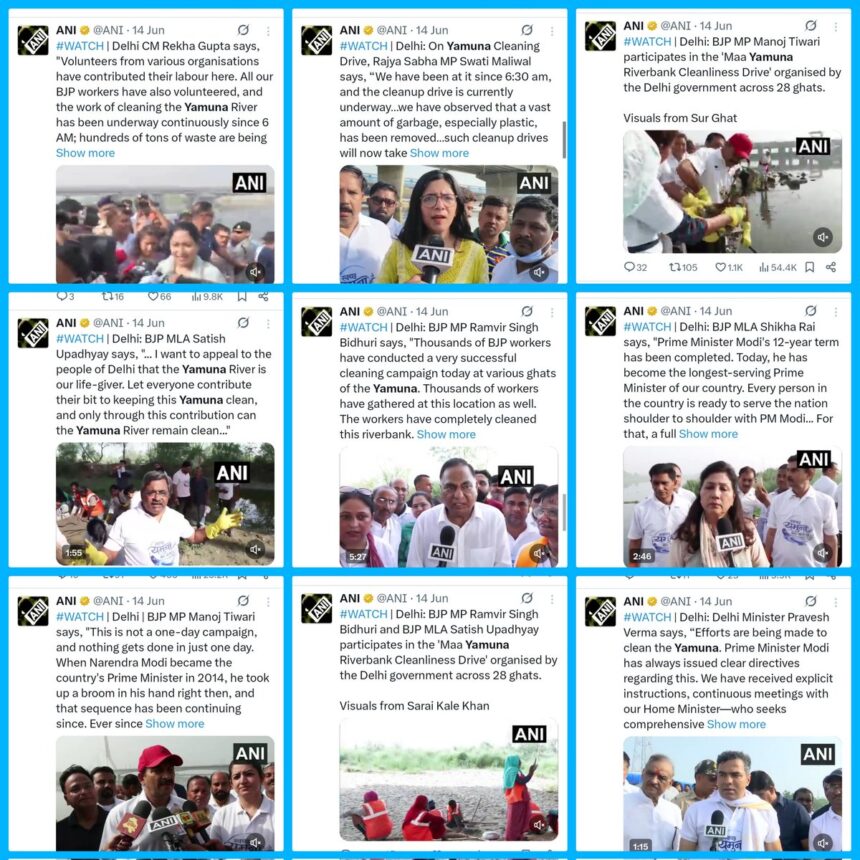
Recently, BJP leaders launched the ‘Maa Yamuna Riverbank Cleanliness Drive’, drawing attention from various media outlets. However, political commentator Mohammed Zubair criticized the lack of coverage regarding the current state of the Yamuna River, noting that reports focus more on the cleanliness drive than the river’s longstanding pollution issues.
Context of the Cleanliness Drive
The ‘Maa Yamuna Riverbank Cleanliness Drive’ is part of the Bharatiya Janata Party’s (BJP) efforts to highlight environmental initiatives ahead of upcoming elections. This event aimed at creating a positive image of the party’s commitment to environmental issues, focusing on the cleaning of the riverbanks of Yamuna, which has been heavily polluted for decades. Various prominent figures, including party leaders and local influencers, participated in the campaign, with significant media coverage promoting their efforts.
Criticism and Current State of the Yamuna
Despite the initiative’s visibility, critics like Zubair point out that the media is neglecting the broader context of the Yamuna River’s health. They argue that while the cleanliness drive generates positive publicity, it fails to address systemic issues that contribute to the river’s pollution. Zubair’s pointed remarks draw attention to the discrepancy between the image constructed by the BJP and the harsh realities faced by the Yamuna, which remains one of India’s most polluted rivers. His comments reflect a growing frustration among citizens and environmental activists regarding superficial attempts at rehabilitation without addressing underlying problems.
Media Representation and Public Perception
Media agencies like ANI and journalists such as Smita Prakash played a crucial role in disseminating the narrative of the cleanliness drive. The lack of coverage regarding the river’s ongoing degradation raises questions about media accountability and bias. Critics suggest that the narrative crafted by these agencies prioritizes government initiatives, thereby sidelining challenges that require urgent attention. Zubair’s criticism serves as a reminder that media representation can significantly influence public perception and discourse around environmental issues. The spotlight should not just shine on isolated events but should encompass the broader, persistent challenges that communities face.
Why This Matters
The political significance of Zubair’s observations and the ensuing discourse is profound in India’s current landscape. Environmental issues like river pollution have implications not just for public health but also for electoral politics. With the approaching elections, parties are increasingly leaning on environmental clean-up initiatives to gain favor with voters. However, the effectiveness of these programs will ultimately depend on their ability to deliver long-term solutions rather than mere short-term optics. Citizens become more engaged when issues are transparently discussed, highlighting the need for truthfulness in political and media narratives.
Frequently Asked Questions
What is the ‘Maa Yamuna Riverbank Cleanliness Drive’?
The ‘Maa Yamuna Riverbank Cleanliness Drive’ is an initiative by BJP leaders aimed at cleaning the banks of the Yamuna River and promoting environmental awareness as part of their political agenda ahead of elections.
Who is Mohammed Zubair?
Mohammed Zubair is a prominent Indian political commentator known for his critical insights on various political issues, often addressing discrepancies between governmental narratives and ground realities.
Why is the condition of the Yamuna River significant?
The Yamuna River is one of India’s most polluted rivers and its degradation poses serious health risks and environmental challenges. Its condition is a reflection of broader issues concerning water management, pollution, and governmental accountability.
What role does the media play in this discussion?
Media outlets influence public perception and political discourse, and their coverage can highlight significant issues or detract from systemic problems. The way they report on initiatives like the cleanliness drive can shape public understanding and awareness of environmental challenges.