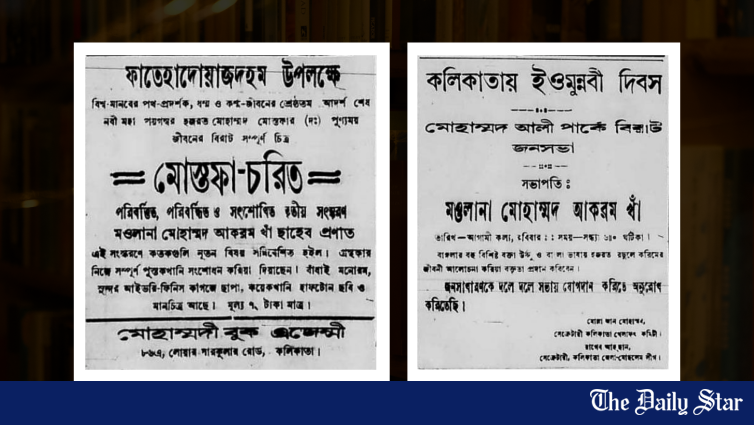

Understanding the Cultural Evolution of Milad-un-Nabi in Bengali Muslim Society
Milad-un-Nabi, the celebration of the birth of the Prophet Muhammad (PBUH), has transformed from a largely religious observance into a significant cultural event for Bengali Muslims. This evolution illustrates the wider cultural and communal identity that emerged among Muslims in Bengal, particularly during the early 20th century.
A Historical Perspective on Cultural Marginalization
In 1913, a young Muslim boy, as recounted by Syed Murtaza Ali, found himself excluded from the joyous celebrations surrounding Saraswati Puja at Moulvibazar Government High School, a reflection of the cultural void in Bengali Muslim society. While Hindu students actively participated in vibrant cultural activities, their Muslim counterparts faced isolation. This exclusion paralleled the broader cultural landscape, underscoring a significant disconnect that prompted many Muslim students to seek their own avenues of cultural expression.
The void felt by Murtaza Ali was ultimately addressed through the celebration of Milad-un-Nabi at Sylhet Government High School, where students decorated the premises and engaged in discussions about the Prophet’s life and teachings. This shift not only provided a festive occasion but also allowed Muslim students to cultivate their cultural identity, an essential break from their previous experiences of marginalization.
The Literary and Political Dimensions of Milad-un-Nabi
As the Milad-un-Nabi celebrations expanded, they became intertwined with literature, allowing prominent writers like Kazi Nazrul Islam and Golam Mostafa to explore the significance of the occasion through poetry. The annual event fostered creative expression, evidenced by competitions that encouraged Muslim students to write about the Prophet’s life.
Additionally, political dimensions began to surface, where Milad-un-Nabi served as a platform for the Muslim community to rally and organize. The celebration of the event was tied to broader socio-political movements, reflecting rising awareness and mobilization within the Muslim community. In the context of the Pakistan Movement, for example, the celebrations acted as a means of strengthening communal bonds and fostering a distinct identity among Bengali Muslims.
Why It Matters
The evolution of Milad-un-Nabi illustrates the resilience of cultural identity among marginalized communities. By transforming an often-overlooked religious observance into a vibrant cultural festival, Bengali Muslims have not only reclaimed their narrative but have also created a significant communal space for cultural expression and solidarity. This transformation has implications for understanding how cultural practices can influence social structures and foster collective identity, especially in the face of exclusion or systemic discrimination.
Frequently Asked Questions
What is Milad-un-Nabi?
Milad-un-Nabi celebrates the birth of the Prophet Muhammad (PBUH) and is observed through various cultural and religious activities, especially among Muslims.
How did Milad-un-Nabi celebrations evolve in Bengali Muslim society?
The celebrations transitioned from being a primarily religious observance to a cultural phenomenon that fostered communal identity and creativity, particularly during the early 20th century.
Who were some notable figures associated with these celebrations?
Prominent figures like Kazi Nazrul Islam and Syed Murtaza Ali played crucial roles in articulating the significance of Milad-un-Nabi through poetry and personal accounts, respectively.
What impact did Milad-un-Nabi have on the mindset of Bengali Muslims?
The celebration encouraged a sense of belonging and identity among Bengali Muslims, helping them reclaim their cultural narrative amid social exclusion and fostering political mobilization.