
Summary
The recent demolition of the Mustafa Qadri mosque in Sambhal, Uttar Pradesh, has led to police action against eight individuals, including the mosque’s caretaker. This incident, marked by the recovery of posters expressing affection for the Prophet Muhammad, raises questions about religious freedoms and state intervention under the ruling Bharatiya Janata Party (BJP) government.
Context of the Demolition
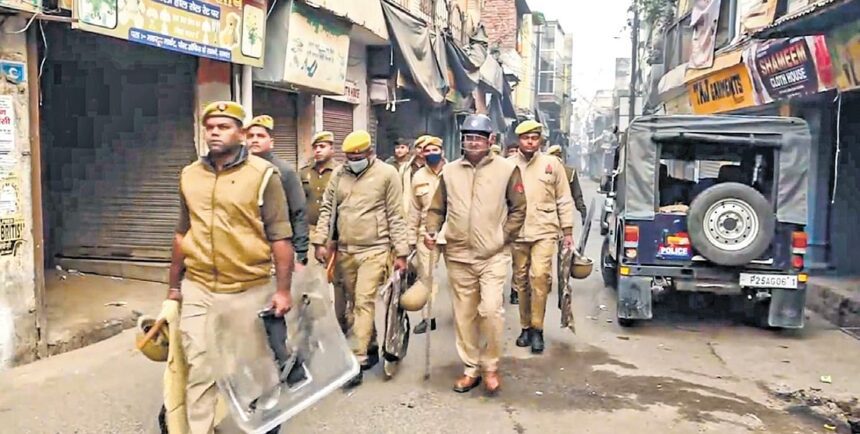
The mosque was demolished under police claims that it was constructed illegally on land designated as a graveyard. During the demolition, authorities discovered 49 posters bearing the phrase “I Love Muhammad,” as well as a green flag that resembles the Pakistani flag. This discovery has intensified scrutiny on how local law enforcement is treating religious symbols and expressions. Critics argue that such actions may reflect a broader agenda to suppress Islamic identity in the region, further marginalizing the Muslim community in India.
Police Actions and Legal Implications
The police registered a case against the individuals under section 353 (2) of the Indian Penal Code, which addresses statements that may incite public mischief. The Additional Superintendent of Police (North), Kuldeep Singh, asserted that the materials found were part of a broader illegal activity. However, the rationale behind this legal response has been challenged, with political figures like Samajwadi Party MP Ziaur Rahman Barq questioning the legitimacy of the case. Barq emphasized that merely displaying posters of a revered figure should not constitute a legal violation, thus raising concerns about potential discrimination and the selective application of laws.
Political Reactions and Community Response
The response from local political figures highlights a growing tension between state authorities and the Muslim community. Ziaur Rahman Barq publicly criticized the state’s actions, framing them as a worrying trend that perpetuates fear among the populace rather than ensuring public order. His remarks echo a broader sentiment within the Muslim community, which increasingly feels targeted under the current political climate. Critics argue this is part of a systemic issue where policies and actions taken by the BJP and affiliated groups contribute to social exclusion and economic boycotts against Muslims.
Why It Matters
This incident exemplifies a recurring pattern of marginalization faced by Muslim communities in India amid rising nationalist sentiments under the BJP administration. The legal repercussions from the demolition and the subsequent police action serve as a potent reminder of how religious expression can sometimes clash with state authority. For developers and users in the AI industry, such incidents raise crucial questions about data fairness and bias. Understanding the socio-political context will be essential for creating algorithms that recognize and mitigate these types of societal disparities, ensuring that technology is developed and applied in an equitable manner.
Frequently Asked Questions
What happened during the demolition of the mosque in Sambhal?
During the demolition of the Mustafa Qadri mosque, police discovered posters saying “I Love Muhammad” and a flag similar to Pakistan’s. Eight individuals were booked, highlighting state actions against perceived religious expressions.
What is the legal basis for the police action against the mosque’s caretakers?
The police charged the individuals under section 353 (2) of the Indian Penal Code, relating to statements that can lead to public mischief. However, critics argue that this legal basis is questionable given the benign nature of the posters.
How are political leaders reacting to the mosque demolition?
Political leaders such as Samajwadi Party MP Ziaur Rahman Barq have condemned the police action, questioning what law was violated by possessing posters that express love for the Prophet Muhammad. He framed the legal actions as an infringement on religious freedom.
What broader implications does this incident have for Indian Muslims?
The incident contributes to a climate of fear among the Muslim community, symbolizing the systemic discrimination and marginalization they may face under current government policies. This raises alarms over religious rights and freedoms in India.