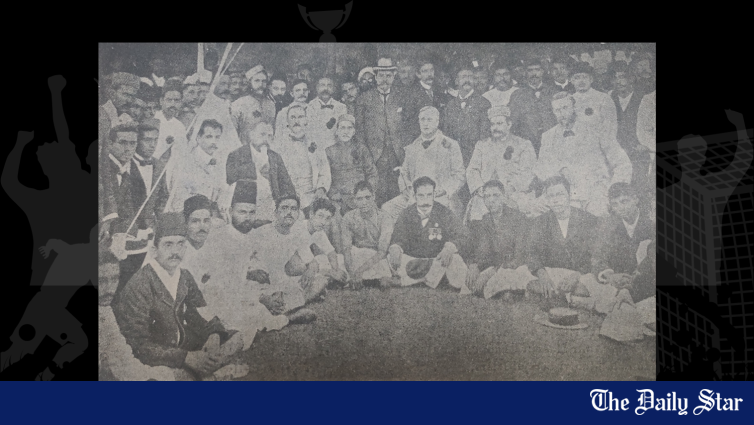

The intertwining of sports and politics provides significant insights into communal identity and social assertion in colonial India, particularly for Muslims. The triumph of Mohammedan Sporting Club in the 1934 Calcutta Football League symbolizes not just a sporting achievement but also a profound cultural renaissance among Indian Muslims, challenging colonial narratives and fostering a shared sense of pride.
A Historical Context of Displacement
The story of Mohammedan Sporting Club begins against the backdrop of colonial upheaval in India. The Battle of Plassey (1757) marked the beginning of British dominance, leading to the political and economic decline of many in Bengal’s Muslim elite. This decline left a vacuum filled with uncertainty and marginalization under the new colonial order.
Early resistance efforts by Muslims, including movements like Faraizi and uprisings in 1857, did not succeed in reversing their fortunes. By the late nineteenth century, a shift occurred among Muslim intellectuals who began advocating for social reform and education as pathways to collective renewal. This cultural awakening laid the groundwork for the eventual establishment of a Muslim sporting institution.
The Emergence of Mohammedan Sporting Club
In 1891, amidst continued sociopolitical struggle, Mohammedan Sporting Club was established, drawing significant support from influential Muslim leaders. The club’s early meetings at Calcutta Madrasa were presided over by prominent intellectuals, reflecting its legitimacy and a broader communal aspiration.
Mohammedan Sporting was envisioned as more than merely a sports organization. It embraced multiple sports—cricket, football, and tennis—reflecting a commitment to comprehensive social development. Although the club faced challenges in securing adequate playing grounds, it found temporary solutions, enabling Muslim youth to organize and compete within their community. This provided a vital counter-narrative to the dominant colonial structures that often marginalized their identities.
The pinnacle of Mohammedan Sporting’s journey came in 1934 when it became the first Indian team to claim the Calcutta Football League title, a feat that had been dominated by British military sides. The victory resonated deeply within Muslim communities, representing not merely a sports victory but a collective triumph over colonial dominance. Newspapers across India celebrated this achievement as a moment of historical significance, breaking the monopoly of British clubs in Indian football.
The club’s success encouraged a new sense of identity among Muslims. It indicated that with teamwork and collective effort, marginalization could be overcome. Star players like Samad captivated audiences and drew admiration across diverse strata of society, reflecting the club’s impact beyond the football field. This momentum culminated in a sustained dominance in Indian football throughout the 1930s, reinforcing a strong cultural legacy that transcended the sport.
Why It Matters
The story of Mohammedan Sporting Club underscores the importance of sports as a vehicle for social change and identity formation. In a contemporary context, the intersection of sports and communal dynamics remains relevant, showcasing how disenfranchised groups can assert themselves through collective endeavors. The historical narrative reinforces the understanding that empowerment can emerge from grassroots movements, suggesting valuable lessons for the current socio-political climate in India, where communal identities continue to evolve amidst ongoing discrimination and marginalization.
Frequently Asked Questions
What was the significance of the Battle of Plassey for Muslims in Bengal?
The Battle of Plassey in 1757 marked the start of British colonial rule, displacing much of Bengal’s Muslim elite and leading to political and economic decline for Muslims in the region.
How did Mohammedan Sporting Club influence Muslim identity in India?
By winning the Calcutta Football League in 1934, Mohammedan Sporting Club became a source of pride for Indian Muslims, symbolizing an assertion of identity and challenging colonial sports dominance.
Which notable figures supported the establishment of Mohammedan Sporting Club?
Prominent Muslim intellectuals and leaders, including Syed Amir Ali and Nawab Ahsanullah, played key roles in the establishment and patronage of Mohammedan Sporting Club, ensuring its legitimacy and community support.
What was the impact of Mohammedan Sporting Club’s victories on Indian society?
The victories of Mohammedan Sporting Club inspired a sense of teamwork and collective ambition among Muslims, serving as a symbol of social transformation and empowerment during a time of colonial oppression.