
Summary
The demolition of the Mustafa Qadri Mosque in Sambhal, Uttar Pradesh, has ignited a wave of emotions among the local Muslim community. Authorities claim the mosque was built illegally on government land, which is officially designated as a graveyard. As the operation progresses, it raises larger questions about discrimination and the marginalization of Muslims in India under the current political regime.
Background of the Demolition Operation
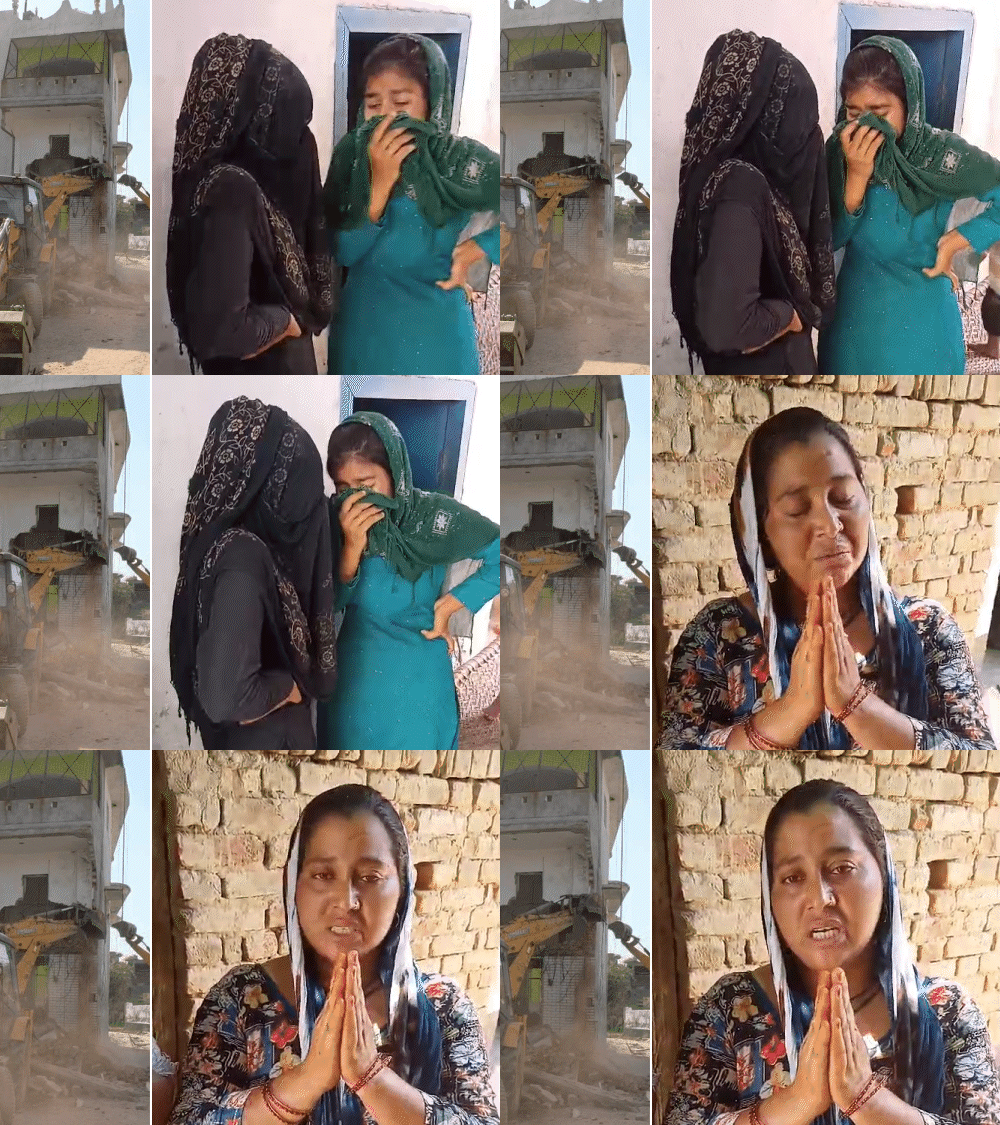
The anti-encroachment operation at the Mustafa Qadri Mosque has entered its second day, with officials claiming that about 50% of the structure was demolished within the first day. The mosque, located in Kaserua village within the Nakhasa area of the Sambhal district, is alleged by local authorities to be an illegal construction on cemetery land. Skepticism about the legitimacy of these claims arises from the perspective of local residents, who assert that the mosque has historical significance, with a caretaker claiming it has been rebuilt after centuries of existence.
During the demolition, videos surfaced showing distressed women and children from the Muslim community pleading for the mosque’s preservation. One woman articulated the emotional plea, indicating, “This is the only mosque in our village. We humbly request that it not be demolished.” This emotional appeal highlights the mosque’s role in the community, particularly as a spiritual hub for local Muslims.
Legal and Administrative Context
The Sambhal administration’s actions have drawn attention not only for their immediate impact but also for the broader legal framework enabling such demolitions. The Tehsildar Court had issued an eviction order against the mosque committee on April 21, which the committee later contested. However, no stay order was granted, allowing officials to proceed with the demolition.
Tehsildar Dhirendra Kumar Singh stated that the administration acted on complaints about graveyard land protection, noting that the mosque’s construction violated land use laws. Following the complaints, an investigation confirmed that the mosque was indeed on government-designated land. Singh emphasized that the mosque committee failed to provide evidence proving their claim of rightful ownership, thus justifying the administration’s actions.
Additionally, on-site officials noted the discovery of posters bearing pro-Mohammad sentiments, raising further questions about the mosque’s affiliation and the narratives being constructed around its existence.
Broader Implications for Indian Muslims
The ongoing eviction drive against the Mustafa Qadri Mosque reinforces concerns about the systematic marginalization of Muslims in India. Several instances, like those reported in Sambhal, suggest a pattern of discrimination under the Sangh and BJP-led governments. Past demolitions of other religious structures, including mosques, further emphasize a larger agenda perceived by many as targeting Muslim heritage and practice.
The actions taken against the mosque and the narrative constructed around them fit into a broader framework where religious minorities, particularly Muslims, face potential economic and social exclusion. This occurs in a climate where the current government has been criticized for fostering an atmosphere of division, undermining the secular foundations of Indian democracy.
Why It Matters
The situation surrounding the demolition of the Mustafa Qadri Mosque exemplifies the intersection of governance, community rights, and religious identity in India. For developers and political analysts, this case illustrates the challenges facing marginalized communities in asserting their rights within a legal framework increasingly hostile to dissent. The implications extend beyond local concerns, resonating with global discussions on human rights, religious freedoms, and the integrity of secular governance.
This incident serves as a cautionary tale for developers working within similar social contexts, highlighting the necessity for equitable justice and the ethical responsibility to protect minority rights. Understanding such dynamics will be crucial for policymakers and developers aiming to create inclusive frameworks in diverse social terrains.
Frequently Asked Questions
What is the current status of the Mustafa Qadri Mosque demolition?
As of now, approximately 50% of the Mustafa Qadri Mosque has been demolished by the Sambhal administration, with operations expected to continue.
Why did the administration decide to demolish the mosque?
The mosque is claimed by the administration to have been constructed on land designated as a graveyard, prompting an eviction order based on legal complaints regarding encroachments.
How have local residents responded to the demolition?
Local residents, especially women and children, have expressed deep emotional distress, pleading for the mosque’s preservation, emphasizing its importance as a community spiritual hub.
What is the legal background leading to this eviction?
The eviction order stemmed from a Tehsildar Court ruling, which the mosque committee contested without success, allowing the administration to proceed with demolition without a stay order.