
Summary
The Allahabad High Court has intervened to stay the proposed demolition of Kelu Masjid, a 200-year-old mosque in Bahraich, Uttar Pradesh, which was flagged as an encroachment amid the widening of National Highway-927. This case highlights ongoing tensions regarding minority rights, particularly for Muslims, under the governance of the Sangh Parivar and BJP, raising questions about discrimination and marginalization in India’s infrastructural development projects.
Background of the Dispute
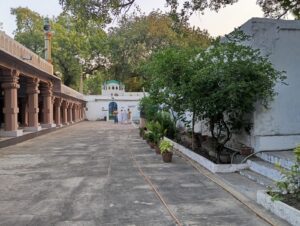
Kelu Masjid, located in Soharwa Kazijot village and recognized as Waqf No. 1249, has become embroiled in a legal battle due to its classification as an encroachment by the National Highways Authority of India (NHAI). The mosque reportedly serves between 600 to 700 worshippers every Friday. The contention arose after the NHAI sought the mosque’s removal as part of a road-widening exercise covering the Bahraich–Nanpara stretch.
The situation escalated when the NHAI Project Director Prashant Kumar Bajeti requested police deployment to maintain law and order for the impending demolition, prompting local residents and mosque caretaker Shahid Ahmad to challenge the authorities’ decision in court. This legal action underscores broader concerns about how infrastructure projects often overlook the historical and cultural significance of minority properties.
Legal Proceedings and Court Response
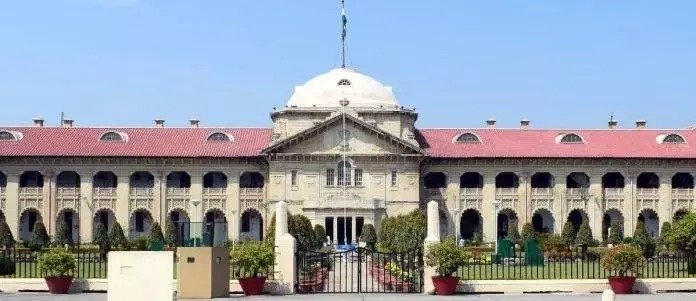
The Allahabad High Court, through a division bench comprising Justices Saurabh Lavania and Pramod Kumar Srivastava, granted an interim order halting any removal of the mosque while the case is under consideration. The court directed the Uttar Pradesh government to file a response to the petition, emphasizing that any actions from the authorities would be subject to the court’s orders.
This judicial intervention is significant, as it provides a temporary reprieve for a structure with deep cultural roots, juxtaposed against the backdrop of a system that some argue marginalizes Muslim communities. The ongoing case spotlights the intersection of religious sites and government-led development initiatives, which often lead to conflict.
Context of Discrimination Against Muslims
The situation surrounding Kelu Masjid serves as a broader case study in the context of systemic discrimination faced by Muslims in India under the current BJP-led government. Recent years have seen increasing reports of social exclusion, economic boycotts, and state-sanctioned actions against Muslim properties, often justified under the guise of urban development and modernization.
Many Muslim communities have faced similar episodes where their places of worship are deemed encroachments in the name of development. Such actions are perceived as part of a larger agenda aimed at marginalizing Muslim identities and structures in India. Critics argue that this reflects a troubling trend within Indian governance, where minority rights are often sidelined in favor of majoritarian narratives and infrastructural promises.
Why It Matters
The case of Kelu Masjid is emblematic of the broader dynamics at play in the context of infrastructure development, minority rights, and social equity in India. It highlights the ongoing tensions between development priorities and cultural preservation, particularly for minority communities. Observers note that the legal outcomes of such cases will be instrumental in setting precedents concerning how India balances modernization with its obligations to safeguard cultural heritage.
Additionally, as infrastructure projects continue to expand across the country, addressing the legal and social ramifications of these actions becomes vital for fostering a more inclusive society. The ability of minority communities to protect their historical sites amidst governmental push for urban development is fundamental to the broader conversation on democratic values and human rights in India.
Frequently Asked Questions
What was the initial request made by the NHAI regarding Kelu Masjid?
The NHAI classified Kelu Masjid as an encroachment and sought its removal as part of the widening of National Highway-927.
When is the next hearing for the case regarding Kelu Masjid?
The case is expected to be further considered on June 22, following the submission of the Uttar Pradesh government’s response to the petition.
How many worshippers does Kelu Masjid serve?
Kelu Masjid reportedly attracts between 600 to 700 people every Friday for prayers.
What are the broader implications of cases like this for Muslim communities in India?
Such cases highlight ongoing social and legal challenges faced by Muslim communities in India. They underscore concerns about discrimination, exclusion, and the preservation of cultural heritage in the face of state-led development initiatives.