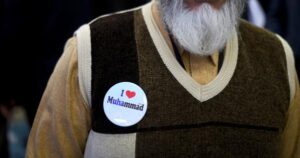
The funeral procession for the late Iranian Supreme Leader Ali Khamenei has commenced in Tehran, drawing significant crowds reminiscent of the overwhelming turnout for his predecessor Ruhollah Khomeini. The nation is bracing for a carefully managed event aimed at preventing chaos similar to that witnessed during Khomeini’s 1989 funeral.
Funeral Procession and Public Mourning
Ali Khamenei’s body,after lying in state for two days at Tehran’s Grand Mosalla religious complex, is now on a procession through the capital. Mourners, estimated to number in the thousands, gathered to pay their respects not only to Khamenei but also to his four family members who were tragically killed during airstrikes on February 28. The atmosphere is filled with emotion as citizens express their sorrow and reverence for their Supreme Leader, who has played a pivotal role in Iranian politics since the 1980s.
As registrars of the state broadcaster IRIB mentioned, the authorities are taking extra precautions this time around. They are keen to prevent a repeat of the mistakes made during Khomeini’s funeral, when crowd surges resulted in fatalities and injuries. It is estimated that more than 10 people lost their lives while over 10,000 were injured, creating a significant concern for public safety in the current procession.
The Scope of Mourning and Memorial Events
In addition to the Tehran events, the nation is set to observe a series of memorial processes that will see Khamenei’s body being taken to several other significant locations. Following Tehran, the procession is scheduled to move to Qom, Iran’s clerical hub. Events will then shift towards Iraq, with memorials planned in the sacred cities of Najaf and Karbala. This concludes with Khamenei’s burial in his hometown of Mashhad in northeastern Iran on Thursday.
The multi-location observances underline the substantial influence Khamenei had both domestically and in the broader Shia Muslim world, particularly in communities that revere the leaders associated with Iran’s Islamic revolution. This also signals Iran’s ongoing efforts to consolidate its influence regionally, appealing to Shia populations in neighboring countries.
Implications for Iran and Beyond
The death of Ali Khamenei raises pivotal questions about the future leadership and direction of Iran. Khamenei’s long tenure had a significant impact on Iran’s foreign relations and internal governance, particularly in relation to its stance against the United States and Israel. This legacy will play a critical role in determining the future political landscape as Iran faces mounting economic pressures and international challenges.
For India, the implications of Khamenei’s passing could be profound. As India maintains close ties with Iran, particularly in energy and regional security matters, a power vacuum or a shift in policies could influence bilateral relations. Tehran’s future alignment with Moscow or Beijing, given its historical ties, would also affect India’s strategic calculations in the region.
What This Means
Iran’s transition period post-Khamenei is likely to be scrutinized both regionally and globally. His successor may have to navigate not just the complexities of domestic governance but also a fraught regional context marked by rivalry with Saudi Arabia, tensions with the US, and the implications of continuing alliances with Russia and China. For India, observing how Iran stabilizes after this leadership change will be important, especially in terms of energy security and countering regional threats.
Frequently Asked Questions
Who was Ali Khamenei?
Ali Khamenei was the Supreme Leader of Iran from 1989 until his death in 2023. He was known for his conservative views and played a vital role in shaping Iran’s domestic and foreign policies.
What were the circumstances of Khamenei’s death?
Khamenei was killed on the first day of an ongoing conflict between the United States and Israel and faced airstrikes while in his office in Tehran, leading to widespread mourning.
How does Khamenei’s death affect Iran’s political landscape?
The death of Khamenei opens a power vacuum in Iranian politics, raising questions about the succession and future direction of both domestic and foreign policy in Iran.
What is the significance of the funeral processions planned?
The funeral processions across significant Iranian and Iraqi sites underline Khamenei’s influence in the Shia Muslim world and the intent to reinforce Iran’s position in the region during this transitional period.