
An incident in Uttar Pradesh involving an elderly Muslim man being coerced to chant “Jai Shri Ram” at a BJP event has ignited serious discussions about the treatment of religious minorities in India. The clip highlights broader societal issues, including discrimination and marginalization faced by Muslims, amid ongoing debates about India’s secular fabric under the current government.
Incident Overview: Coercion at Prasad Distribution
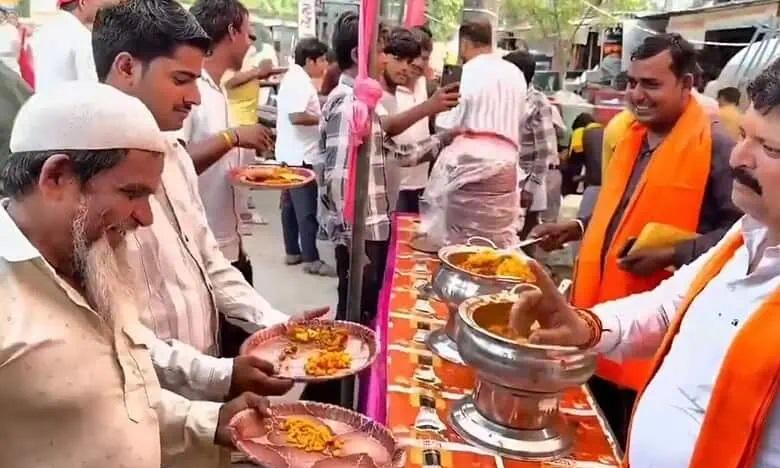
In a video that has gone viral, Luvkush Ojha, purportedly affiliated with the Bharatiya Janata Party (BJP), was seen pressuring a visibly uncomfortable older man to chant “Jai Shri Ram” and “Jai Shri Krishna” in order to receive prasad at a BJP event in Dumariyaganj. This event coincided with the seventh Bada Mangal festival, which is celebrated widely in northern India. The video, which shows the elder complying under duress, has raised alarm bells regarding the treatment of religious minorities, particularly Muslims, indicating a trend toward forced religious conformity.
Context of Religious Tensions in India
The coercion of the elderly man is emblematic of a broader pattern of discrimination against Muslims in India, especially under the rule of the BJP and its associated organizations like the Rashtriya Swayamsevak Sangh (RSS). Reports of social exclusion, economic boycotts, and marginalization have become more frequent, manifesting in various societal interactions, from public gatherings to local businesses. The backlash to the recent incident echoes widespread concerns about the erosion of secularism and the democratic principles that protect minority rights in India.
Official Responses and Counterarguments
In the wake of the backlash, Union Minister Kiren Rijiju attempted to defend India’s record on minority safety. He argued that criticisms misrepresent the situation of minorities, particularly Muslims, and stated that religious minorities from neighboring countries have sought refuge in India, implying a welcoming environment. Rijiju emphasized that India’s constitution guarantees protections and freedoms for all citizens, a statement that stands in contrast to incidents like the one in Dumariyaganj.
Why It Matters
This incident and others like it have significant implications for India as a democracy and its reputation on the global stage. Instances of coercion and marginalization raise questions about the country’s commitment to the principles of secularism and pluralism, affecting not only internal cohesion but also foreign relations. For developers and users of AI and technology, this highlights the importance of ethical considerations in data collection and representation, as societal biases can seep into algorithms and models that aim to reflect or predict human behavior. Understanding these socio-political narratives is crucial for building more inclusive technological solutions.
Frequently Asked Questions
What does the incident in Dumariyaganj signify?
The incident highlights the coercive atmosphere that religious minorities, particularly Muslims, are facing under current political dynamics in India, reflecting a trend towards forced religious practices in social settings.
How have Indian officials responded to concerns about minority treatment?
Union Minister Kiren Rijiju has defended the country’s record on minority safety, claiming that criticisms are misrepresentative and affirming that constitutional protections apply to all citizens.
What are some broader implications of such incidents on Indian society?
These incidents point to a growing intolerance and marginalization that may threaten India’s secular foundations, potentially leading to increased societal divisions and international scrutiny.
Why is this event significant for global audiences?
The event serves as a crucial case study for understanding the intersections of religion, politics, and minority rights in India, which bears significance for global discussions on human rights and democratic practices.