
Since the arrival of the BJP government in 2014, discussions surrounding Indian Muslims have proliferated across various platforms, predominantly focusing on issues of identity, loyalty, and demography, while largely neglecting the economic dimensions. This article explores how this oversight perpetuates social exclusion and economic marginalization of Indian Muslims, manifesting in urban economic disparities and systematic discrimination.
Historical Context of Segregation
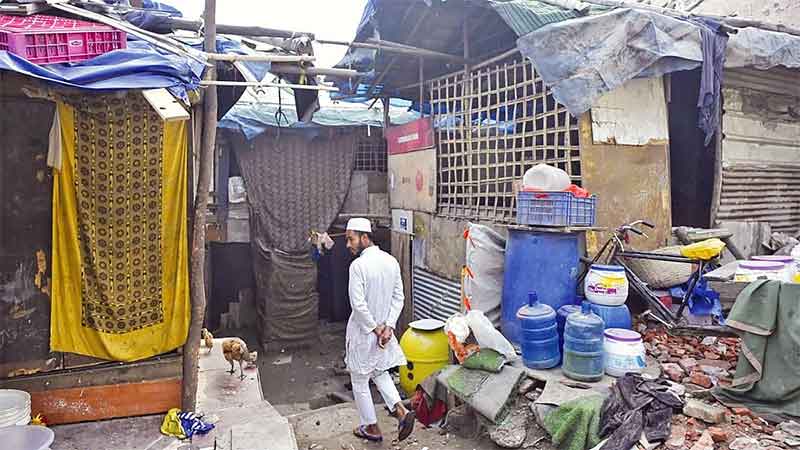
Indian Muslims experience profound residential segregation, which mirrors the systemic issues faced by marginalized groups globally. According to recent research from the National Bureau of Economic Research, Muslims in India are among the world’s most residentially segregated populations. The study indicates that about 25% of Indian Muslims reside in neighborhoods that are over 80% Muslim, revealing stark inequalities in access to public facilities and infrastructure. Neighborhoods with larger Muslim populations consistently report poorer access to essential services like education, healthcare, and sanitation. This segregation not only limits social mobility but reinforces economic disparities, perpetuating a cycle of poverty and disenfranchisement.
Labour Market Inequities
The labour market for Indian Muslims is characterized by high levels of informality and self-employment, which further exacerbate economic vulnerabilities. The Sachar Committee’s findings highlight that Muslims are predominantly employed in low-paying, informal sectors, such as tailoring and food services, with only about 28% of urban Muslim households relying on regular salaried work. Over the years, this disparity has not improved; rather, the share of Muslims in regular employment has declined. The economic ramifications are significant: low productivity, job insecurity, and lack of social safety nets. Consequently, Muslims often find themselves trapped in a segmented labour market with limited upward mobility.
The Role of Urban Planning and Public Investment
India’s urbanization process, expected to involve around 600 million people by the next decade, has not yielded equitable growth. Urban planning and municipal governance show pronounced inefficiencies, primarily driven by low revenue generation and severe fiscal constraints. The allocation of public goods is not uniformly distributed; instead, it is subject to local political dynamics and institutional inertia. As a result, neighborhoods inhabited by Muslims face the dual burden of systemic neglect and declining public investment. This creates an uneven urban landscape, where the lack of infrastructure and accessible services curtails economic opportunities, hinder development, and entrench existing inequalities.
Why It Matters
The economic marginalization of Indian Muslims has broader implications for urban development and overall economic growth in India. The segregation and exclusion jeopardize the efficiency and productivity of cities, stifling the potential benefits of agglomeration. As cities are projected to account for over 70% of national output, systematic discrimination against a sizeable demographic undermines economic potential. Recognizing the interconnectedness of identity politics and urban economics is crucial for fostering inclusive growth. Failure to address these disparities may lead to fragmented urban centers and missed opportunities for national economic advancement.
Frequently Asked Questions
What is the current state of economic opportunities for Indian Muslims?
Indian Muslims largely work in informal sectors, with low representation in regular salaried employment. Economic opportunities are compounded by residential segregation, limiting access to better job markets.
How does residential segregation impact the everyday lives of Indian Muslims?
Residential segregation restricts access to essential services like healthcare, education, and public transport, resulting in systemic inequalities and reinforcing social and economic marginalization.
What role does government policy play in the marginalization of Indian Muslims?
Government policies, particularly in urban planning and public investment, often disproportionately neglect neighborhoods with higher Muslim populations, exacerbating disparities in infrastructure and services.
Why is understanding the economics of segregation important for India’s future?
Understanding the economics of segregation is vital for building inclusive urban centers, as equitable economic growth requires improved access to opportunities for all communities, including historically marginalized groups like Indian Muslims.