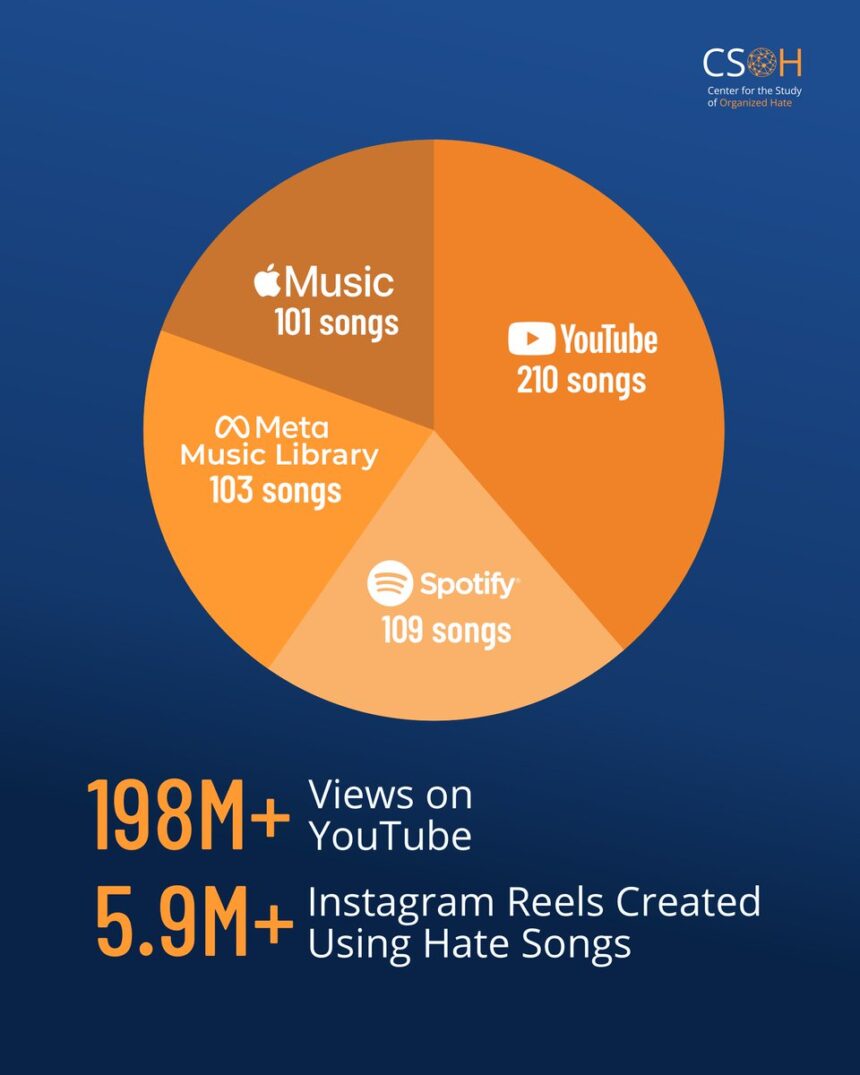

Renowned journalist Kunal Purohit’s recent report reveals a disturbing link between Big Tech companies and the proliferation of Hindutva-themed pop music that incites violence against Muslims. Over the past year, Purohit’s team has meticulously documented 523 songs promoting hate, suggesting that platforms like YouTube, Meta, Apple, and Spotify are not just facilitating but funding this alarming trend.
Context of Hate Music in India
In recent years, the rise of Hindutva-themed music has become a prominent aspect of the socio-political landscape in India. Often characterized by aggressive lyrics and themes that promote violence against minorities, this genre of music has been increasingly popularized through various digital platforms. Purohit’s findings highlight a troubling intersection of culture and technology, where music that incites hate is not only allowed to exist but is actively promoted by major tech companies.
These music tracks often celebrate radical ideologies, using catchy melodies and rhythms to reach and influence a wide audience, particularly the youth. The adaptation of traditional Indian music styles with aggressive and nationalistic themes has led to a new form of propaganda that many critics argue is shaped largely by social media trends.
The Role of Big Tech
Purohit’s investigation raises serious questions about the complicity of major corporations in fostering a culture of hate. By allowing this content to thrive, platforms like YouTube and Spotify may inadvertently validate and amplify extremist views. The report emphasizes that these platforms are not neutral entities; their algorithms and promotional strategies actively favor such incendiary content, thereby amplifying their reach.
Moreover, Purohit points out that financial backing from these companies suggests a troubling endorsement of this form of expression, raising ethical questions about corporate responsibility in moderating content. As digital spaces continue to evolve, the absence of stringent regulations around hate speech leaves significant room for abuse.
Public and Political Reactions
Responses to Purohit’s revelations underscore a growing concern among activists, scholars, and political figures. Many have voiced the need for greater accountability from tech giants, urging them to adopt stricter content moderation policies. Advocacy groups argue that it is crucial for Big Tech to re-evaluate the frameworks they use to monitor and manage user-generated content, particularly when it has the potential to harm vulnerable communities.
The report comes at a time when India is grappling with social discord exacerbated by identity politics. This underscores the necessity for the public and policymakers alike to scrutinize the wider implications of cultural products that promote divisive ideologies. It opens up critical dialogue on the role of art and technology in either supporting or challenging societal norms.
Why This Matters
Understanding the dynamics of Hindutva pop music and its relationship with Big Tech is significant for Indian readers as it compels reflection on the intersection of culture, politics, and corporate responsibility. This issue resonates in a nation where communal tensions are often reinforced through media representations. It challenges citizens to demand accountability from both the creators of such music and the platforms that propagate it.
The ramifications of allowing hate-filled content to proliferate are far-reaching, influencing public opinion and potentially inciting violence. It raises critical questions about freedom of expression versus responsibility, making the need for rigorous scrutiny and accountability in both cultural and digital spheres ever more urgent.
Frequently Asked Questions
What is Hindutva pop music?
Hindutva pop music is a genre that incorporates nationalistic and often aggressive themes, frequently targeting minority communities, particularly Muslims. It combines traditional Indian sounds with provocative lyrics.
How are Big Tech companies involved?
Major companies like YouTube, Meta, and Spotify have been found to support the spread of this music through their platforms, which not only promote but also finance content that encourages violence and hate.
Why is this report significant?
Kunal Purohit’s report sheds light on the complicity of large corporations in the perpetuation of hateful narratives. It raises important ethical questions about the responsibilities of tech companies in moderating content and the potential implications for societal harmony.
What actions can be taken in response to this issue?
Activists and concerned citizens can advocate for stricter regulations on hate speech in digital content, push for corporate accountability from tech giants, and support initiatives promoting inclusive and positive cultural expressions.