
The recent commentary by Priyank Kharge regarding a video statement made by Maulana Qari Abrar Jamal has raised eyebrows, particularly related to the Maulana’s affiliations with the Rashtriya Swayamsevak Sangh (RSS). Jamal’s endorsement of Prime Minister Modi’s recognition by Slovakia has sparked discussions about the implications of such associations within the Indian political landscape.
Context of the Statement
Maulana Qari Abrar Jamal, the President of Jamiat Himayatul Islam, made headlines by publicly expressing support for Prime Minister Narendra Modi following the conferment of Slovakia’s highest civilian honor upon him. In his remarks, Jamal framed the honor as not just a personal achievement for Modi but as a reflection of national pride. He stated that any form of insult to the Prime Minister is tantamount to an insult to the entire nation, emphasizing a united front for progress under Modi’s leadership.
Connections to RSS
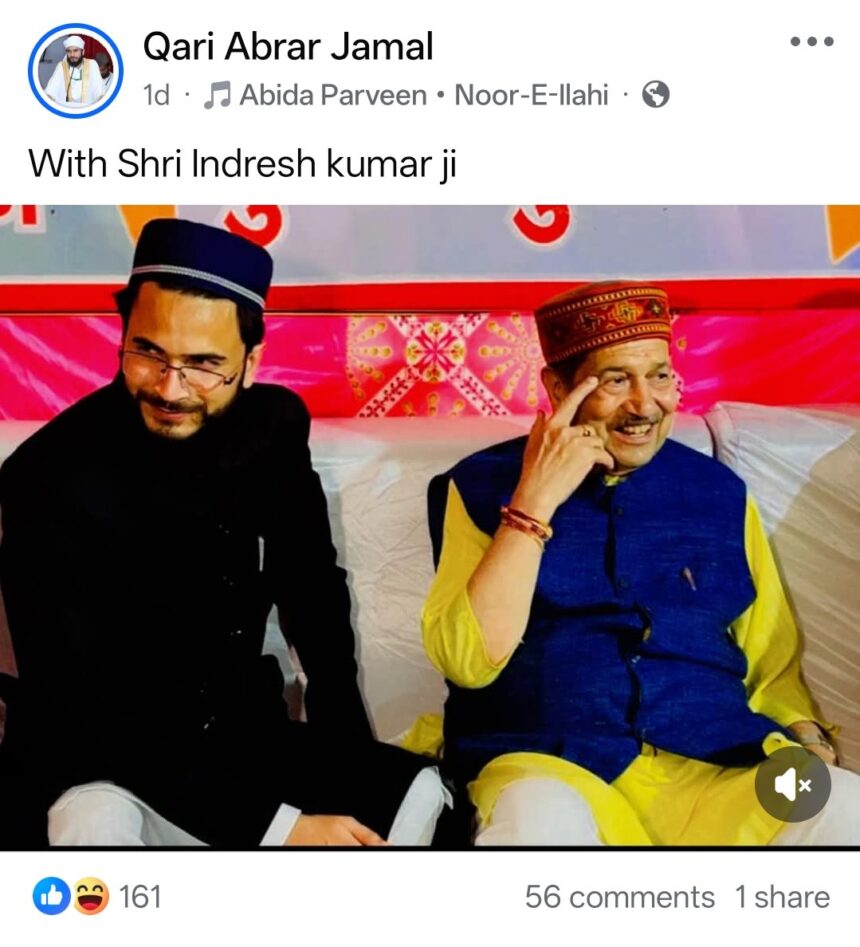
The narrative surrounding Jamal’s endorsement becomes more complex when one takes into consideration his affiliations with the Muslim Rashtriya Manch (MRM), an organization closely tied to the RSS. Founded by senior RSS leader Indresh Kumar, MRM aims to create a platform for Muslim voices within a predominantly Hindu nationalist framework. This connection raises questions about the motivations behind Jamal’s praise for Modi, leading critics like Kharge to argue that the statement is not organic but rather facilitated by affiliation with the RSS.
Critique of Media Practices
Criticism has also been directed at IANS, the news agency that facilitated Jamal’s statement to counter Priyank Kharge’s claims about RSS. Observers argue that mainstream media has a history of utilizing such tactics—highlighting select individuals to create narratives that support dominant political figures or ideologies. Critiques suggest that the media’s portrayal may overlook deeper affiliations that could alter public perception, raising ethical questions about journalistic responsibility in reporting such statements.
Why This Matters
This situation highlights a significant intersection of politics and religious identity in India. The implications of prominent figures from minority communities aligning with nationalist narratives can have a profound impact on electoral politics, identity politics, and public sentiment. As India grapples with its diverse demographic landscape, the manner in which political affiliations are represented in the media can influence voter perceptions and community relations. Understanding these dynamics is essential for both citizens and policymakers in a rapidly changing political environment.
Frequently Asked Questions
Who is Maulana Qari Abrar Jamal?
Maulana Qari Abrar Jamal is the President of Jamiat Himayatul Islam and has recently made headlines for his support of Prime Minister Modi regarding an international honor.
What is the Muslim Rashtriya Manch (MRM)?
MRM is an organization affiliated with the RSS, aimed at creating a platform for Muslims to engage in the national discourse, often within the larger framework of Hindu nationalism.
Why did Priyank Kharge criticize the media’s portrayal of Jamal’s support?
Kharge criticized the media for not disclosing Jamal’s affiliation with MRM, arguing that it misrepresents the legitimacy and implications of his support for the RSS and Modi.
What is the political significance of this issue?
This situation underscores the complexities of communal identities and political alliances in India, particularly how minority leaders may align themselves with dominant narratives and how such alignments can shape public discourse.