
Summary
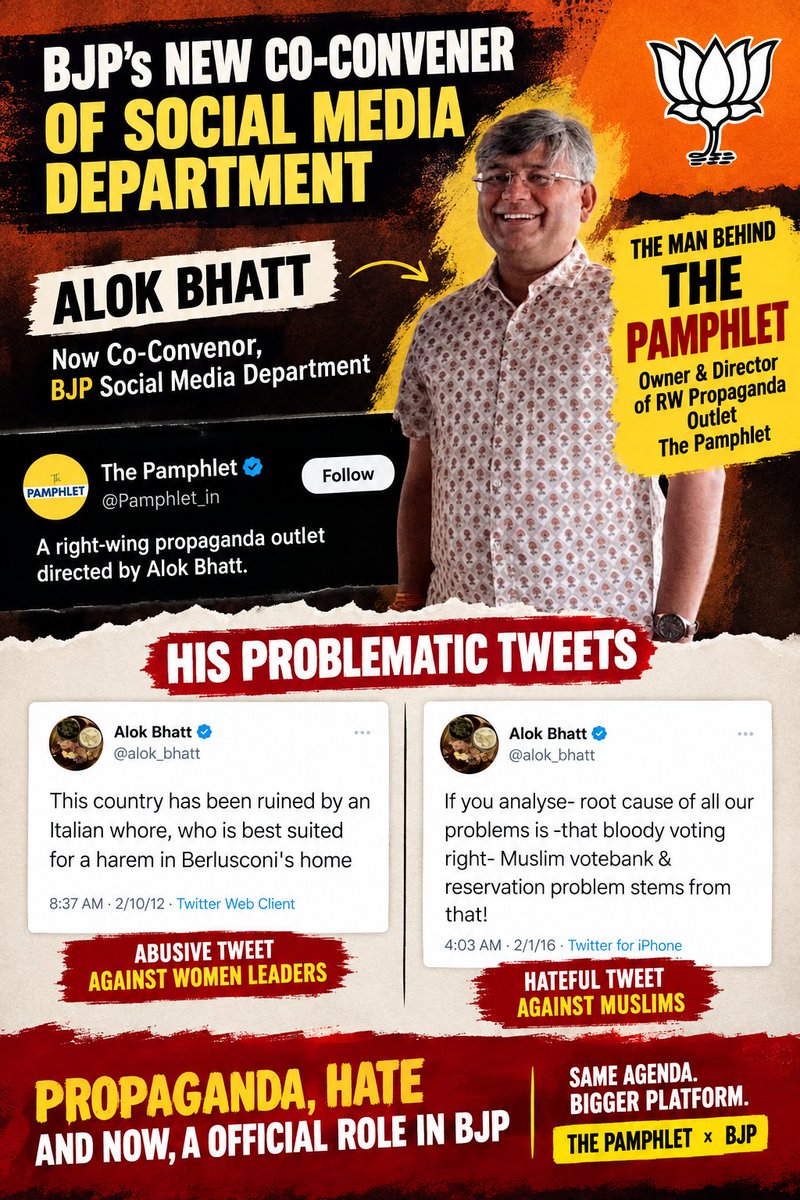
Recent observations highlight that new social media appointments within India’s ruling Bharatiya Janata Party (BJP) predominantly stem from backgrounds focused on online criticism and trolling of journalists. Notably, Alok Bhatt, newly appointed as Co-convener of BJP’s Social Media Department, is connected to a controversial propaganda outlet, raising questions about the party’s approach to media relations.
Context: The Rise of Social Media in Indian Politics
Over the past decade, social media has emerged as a pivotal platform in Indian politics, allowing parties to directly engage with voters and disseminate their narratives. The BJP, which has been particularly adept in leveraging social media, has established a robust digital presence to counter opposition narratives and bolster its own image. Appointees like Alok Bhatt, whose activities include managing accounts like @Pamphlet_in, reflect a tactical focus on aggressive digital campaigning.
Background on Alok Bhatt and His Role
Alok Bhatt’s appointment as Co-convener marks a continuation of the BJP’s strategy to harness social media influence. His involvement with the @Pamphlet_in platform, known for its provocative content, underscores the party’s reliance on aggressive tactics that often blur the lines between political discourse and personal attack. Critics argue that this method fosters a divisive atmosphere in the political landscape, where trolling and disinformation can overshadow substantive dialogue.
Implications for Media Relations
The increasing trend of employing social media personnel who specialize in trolling raises significant concerns about the future relationship between the media and the government. With key figures in the BJP’s digital strategy having previously engaged in online harassment of journalists, it raises alarm about the potential for a hostile environment for those who seek to hold the government accountable. The implications of such a strategy could lead to increased self-censorship among journalists and undermines the essential tenets of a democracy that thrives on free press.
Why This Matters
This development is crucial for several reasons. Firstly, it highlights a broader pattern within BJP politics that prioritizes aggressive online tactics over constructive dialogue, potentially isolating discourse. Secondly, the choice of personnel who have a history of antagonism toward the media can set a dangerous precedent, signaling a disregard for journalistic integrity. Lastly, these dynamics reflect the growing intersection of politics and technology in India, affecting how citizens receive information and engage politically.
Frequently Asked Questions
What is the role of the BJP’s Social Media Department?
The Social Media Department of the BJP is responsible for managing the party’s online presence, crafting digital strategies, and engaging with audiences on platforms like Twitter, Facebook, and Instagram.
Who is Alok Bhatt, and what is his significance?
Alok Bhatt is the newly appointed Co-convener of the BJP’s Social Media Department. His significance lies in his controversial online activism and association with outlets that have focused on media criticism, reflecting the BJP’s approach to digital engagement.
What are the potential impacts on journalists?
The appointment of individuals with a history of trolling could foster an environment of increased hostility towards journalists, potentially leading to challenges in investigative reporting and an atmosphere of fear among media professionals.
How does this reflect on BJP’s political strategy?
This reflects a deliberate strategy by the BJP to control narratives and utilize bold, often aggressive tactics to assert their viewpoints while countering opposition, which could influence public perception and voting behavior.