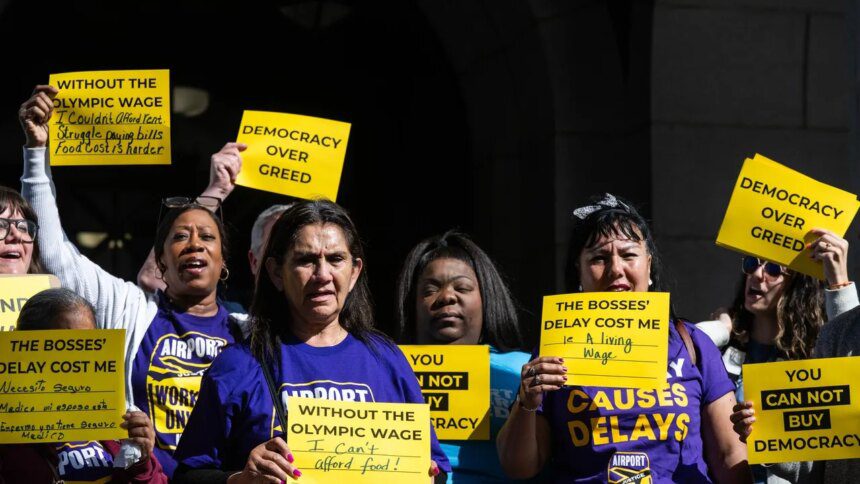

Los Angeles has recently approved a wage hike that raises hotel and airport workers’ pay to $30 per hour, a move that proponents argue will benefit from the economic activity of the upcoming 2028 Olympics. However, critics warn this mandate could drive businesses out of California, highlighting a disconnect between political decisions and economic realities.
The Economic Fallout of Wage Mandates
California’s decision to implement higher wages is seen by many as a pursuit of compassion without a grounding in economic fundamentals. Small business owners argue that while politicians aim to enhance worker salaries, they fail to understand the mechanisms that generate wealth within a free-market economy. Successful businesses tend to pay more as they thrive; however, when legislation artificially inflates labor costs, businesses face troubling choices such as raising prices, cutting staff, or even leaving the state entirely.
The Myth of Government-Created Prosperity
City leaders seem unaware that imposing higher wages through mandates does not automatically translate to better living standards for workers. Critics claim this approach reflects a naive belief that increasing labor costs will not impact business operations. The reality is stark: businesses operate with finite resources, and when one expense is raised, it often compels them to cut back in other areas. Such actions can lead to fewer job opportunities and a weakened economy, ultimately reversing any gains intended by wage hikes.
The Consequences for Los Angeles’ Future
As Los Angeles prepares for the 2028 Olympics, there’s potential for significant economic growth—if conditions are favorable for business. However, higher labor costs may deter investment and hinder job creation at a time when the city should be showcasing itself to the world. Achieving economic prosperity requires collaboration with businesses rather than treating them as adversaries. If local leaders continue to impose heavy regulations and costs, they may find that the wealth they aim to distribute will evaporate, leading to a less competitive city and economic distress.
Why This Is Trending
The discussion surrounding wage mandates in California has resonance in India due to similar challenges faced in the Indian labor market. As the country grapples with balancing labor rights and economic growth, many are looking to California’s example as a cautionary tale. Increasing wages for key sectors can have rapid societal benefits, but the economic implications of such policies often ripple through the market, impacting job availability and business sustainability. This situation has created a dialogue about wage policy reform in India, capturing the attention of legislators, business owners, and workers alike.
Frequently Asked Questions
What are the potential impacts of a $30 wage mandate in Los Angeles?
Experts argue that while the intent is to enhance worker living standards, such mandates could lead businesses to raise prices, reduce staff, or relocate to more business-friendly regions, thereby decreasing job opportunities.
How do higher wages affect business investments?
Higher wages can deter investment as businesses may find it challenging to maintain profits under increased operational costs, leading to less expansion and innovation.
What lessons can India learn from California’s wage policy?
India can observe that while advocating for higher wages is commendable, it must also consider the broader economic implications to ensure it does not harm job growth or deter investment.
How do government mandates influence free-market principles?
Government mandates can distort free-market dynamics by artificially inflating labor costs, making it more challenging for businesses to compete and thrive within their respective markets.