
Delhi Police’s arrest of Mohammed Zubair, co-founder of AltNews, has stirred controversy, particularly due to the context of a tweet he posted in 2018 about a hotel signboard that alters “Honeymoon Hotel” to “Hanuman Hotel.” This incident reveals a deeper issue concerning the politics around religious sentiments in India and the use of satire in public discourse.
Background of the Arrest
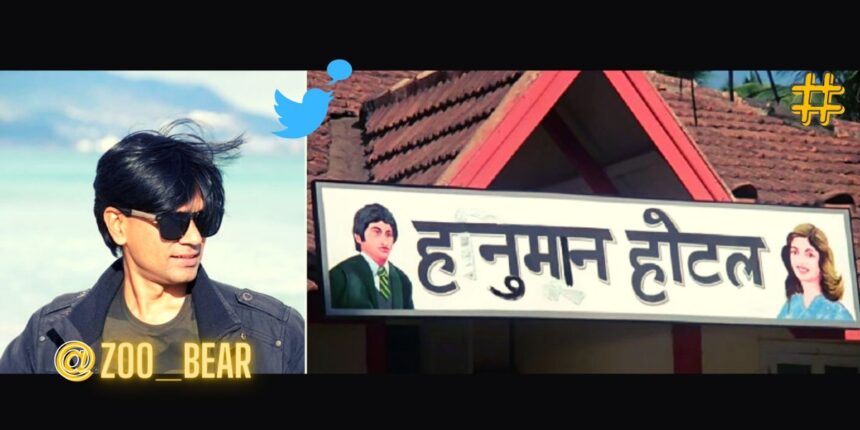
Zubair was arrested on charges of inciting communal discord under Sections 153 and 295 of the Indian Penal Code. The police’s justification centered on a tweet from March 2018, where he shared an image of the hotel sign that altered the traditional name to one associated with Hinduism. The police alleged this represented a deliberate effort to offend religious sentiments. As reported, this tweet re-surfaced when a Twitter handle gained traction by accusing Zubair of insulting Hindus, further prompting police action.
The Cultural Context
Interestingly, this photo stemmed from a 1983 Hindi comedy film, Kissi Se Na Kehna, directed by Hrishikesh Mukherjee. This connection indicates that the image itself was a part of cinematic humor, showcasing an inherent blend of cultural elements rather than any intention of malice against religious beliefs. Users on social media highlighted that the image was previously used in various contexts, including articles with no uproar. The seemingly sudden outrage appears to be a constructed narrative focusing on Zubair amidst wider dialogue concerning freedom of expression and what constitutes hate speech in contemporary India.
Political Ramifications
Zubair’s situation reflects increasing tension around religious issues in India, specifically the targeting of dissenting voices under the pretext of protecting religious sentiment. Following various incidents involving hate speech and communal clashes, such as remarks made by now-suspended BJP spokesperson Nupur Sharma regarding Prophet Muhammad, Zubair’s scrutiny intensified. His activism against hate speech, particularly against historically marginalized communities, has led to accusations of ‘Hinduphobia,’ a term used by several right-wing groups aiming to delegitimize critiques of their rhetoric. This adds another layer to the discourse on how political affiliations can skew the perception of satire, turning humorous commentary into fodder for controversy.
Why This Matters
This incident is significant not just as a legal case, but as a representation of the broader climate of fear experienced by journalists and commentators in India. The lack of clarity regarding what constitutes offensive speech versus satire creates a precarious environment. This case could serve as a chilling example for others who aim to engage in public discourse or critique systemic power dynamics. Zubair’s arrest may galvanize advocacy for freedom of expression, underscoring the need for protections for journalists and satirists working in a politically charged atmosphere.
Frequently Asked Questions
What were the specific charges against Mohammed Zubair?
Zubair was charged under Sections 153 and 295 of the Indian Penal Code, which relate to promoting enmity between different groups and deliberate acts intended to outrage religious feelings.
What is the significance of the hotel sign image?
The hotel sign image is significant because it originates from a 1983 Bollywood film, suggesting that its use in Zubair’s tweet was humorous rather than malicious. It highlights the often-complex interactions between culture and religion in India.
Why is this case viewed as politically charged?
The case is politically charged because it surfaces amidst ongoing discussions about freedom of expression and the treatment of dissenting voices in India, particularly those who critique dominant political narratives focused on religious identity.
How has social media played a role in this incident?
Social media amplified the outrage around Zubair’s tweet, enabling a rapid mobilization against him. It also underscores the dual role of social platforms as both avenues for satire and tools for targeted campaigns against individuals.