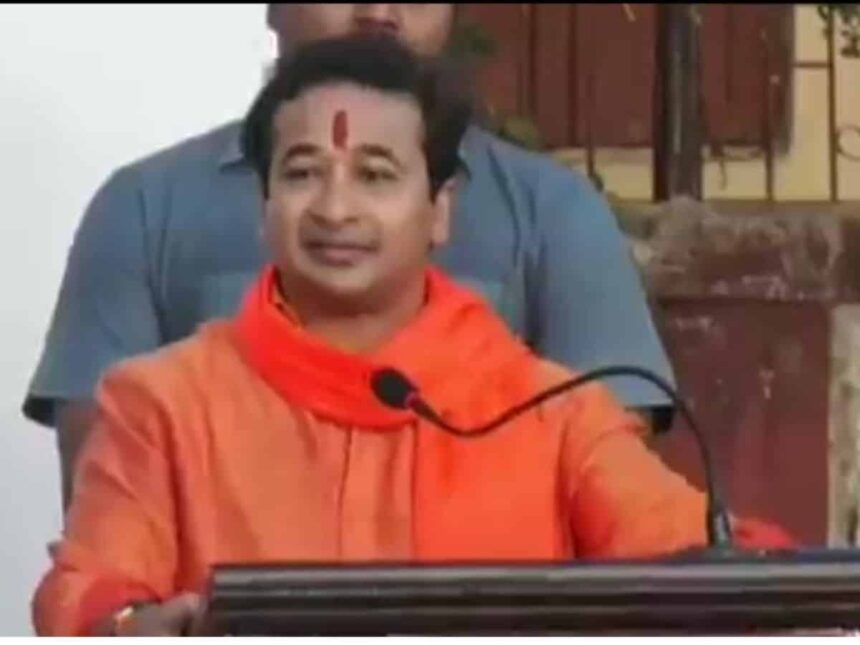

Nitesh Rane, a BJP leader from Maharashtra, has sparked outrage by allegedly threatening to invade mosques and kill Muslims during a rally on September 1. The remarks, made in support of a controversial religious figure, have been condemned by various political factions and could have significant implications for communal relations in the region.
Context of the Controversial Remarks
The BJP leader’s comments were made during a rally in Ahmednagar, where he backed Ramgiri Maharaj, a religious figure known for his incendiary statements against minority communities. This rally occurred shortly after Ramgiri Maharaj delivered a speech that was widely criticized as defamatory towards Prophet Muhammad. The merging of political and religious rhetoric at this event raises concerns about the escalation of communal tensions in Maharashtra.
Political Fallout and Reactions
In the wake of Rane’s statements, political leaders from various parties have reacted strongly. Chief Minister Eknath Shinde appeared alongside Ramgiri Maharaj, referring to him as a “saint,” which further complicates the ruling party’s position regarding the inflammatory remarks. AIMIM leader Imtiaz Jaleel publicly condemned these statements as a political conspiracy, demanding immediate action against those promoting hatred. Such responses highlight the potential for political polarization as groups seek to consolidate their voter bases in a sensitive communal landscape.
The Role of Social Media in Amplifying Controversies
The use of social media has played a crucial role in the propagation and reaction to these remarks. A viral tweet by political commentator @zoo_bear highlighted Rane’s comments, drawing attention to the increasing frequency of anti-Muslim rhetoric in Maharashtra. As the public discourse shifts online, statements such as Rane’s not only fuel divisive narratives but also ignite broader political debates on communal harmony, freedom of speech, and political responsibility.
Why This Matters
The political significance of this incident cannot be understated. As Maharashtra approaches important elections, the rhetoric used by influential political figures like Nitesh Rane could shape voter sentiment and community relations. The potential for unrest is heightened by such inflammatory statements, especially given the state’s history of communal violence. The response from both government leaders and opposition parties will be crucial in determining whether this incident exacerbates polarization or prompts a call for unity among diverse communities.
Frequently Asked Questions
What exactly did Nitesh Rane say?
Nitesh Rane allegedly stated that he would invade mosques and “kill Muslims,” remarks made during a rally supporting Ramgiri Maharaj.
What was the context of Rane’s comments?
His comments were made in a religious and political context while supporting a controversial figure known for anti-Muslim rhetoric, which has raised alarms about the potential for increased communal tensions.
How have political leaders responded to this incident?
Reactions have been mixed; while some leaders like Imtiaz Jaleel have condemned Rane’s statements, others in the ruling party have supported the figure he defended, complicating the political landscape.
What implications could this have for elections in Maharashtra?
This rhetoric could polarize voters and impact communal harmony, influencing how communities align themselves in the lead-up to significant elections in the state.