
Summary
In response to concerns raised by voters in Karnataka, the Chief Electoral Officer (CEO) clarified the criteria for linking parental names on the electoral rolls. Many eligible voters are grappling with missing names from the 2002 SIR list, guiding a discussion regarding the inclusion of their family members’ names. However, discrepancies persist between the official stance and the information provided by Booth Level Officers (BLOs).
Context of the Issue
As India approaches significant electoral deadlines, the importance of ensuring comprehensive and accurate voter lists has come to the forefront. The 2002 SIR list has been a point of contention, leaving many eligible voters categorized as incomplete due to the absence of their parents’ or grandparents’ names. The electoral requirement to link names has become particularly urgent as the youth often seek to exercise their voting rights without bureaucratic hindrance.
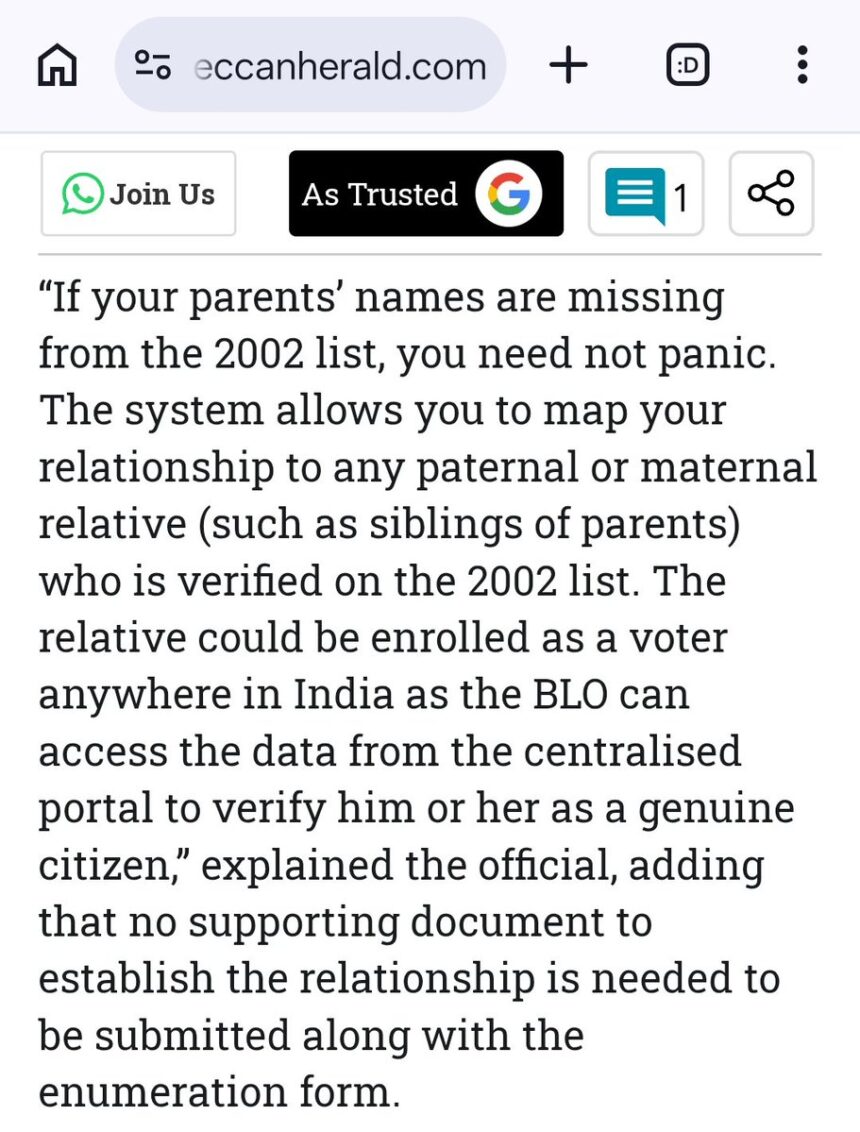
In a recent statement, the Karnataka CEO acknowledged the predicament faced by many voters without the required documentation. The CEO advised that individuals missing parent or grandparent names could potentially include their parents’ siblings (aunts and uncles) as progeny when filing forms with local BLOs. This guidance initially raised hopes among voters eager to ensure their eligibility.
Discrepancies in Information
Despite the CEO’s statement, communication from BLOs has added confusion to the process, stating that only names of parents and grandparents can be linked. This inconsistency creates obstacles for many voters who could benefit from broader inclusivity. When questioning the BLOs, voters were met with restrictions counteracting the CEO’s clarification, suggesting an urgent need for unified and clear messaging from the election office.
The situation has vast implications for various voters in Karnataka, particularly those whose ancestral ties and family histories span across extended families. Ensuring that all eligible voters can link their affiliations properly to participate in elections should take precedence, aiming for transparency and accessibility in the electoral process.
Response from the Electoral Office
In light of the concerns voiced by citizens and the discrepancies observed in communication from BLOs, there is a growing call for the Karnataka CEO to issue formal directives to BLOs. This would help create a cohesive approach to the issue and providing reassurance to voters regarding their eligibility.
Furthermore, it is crucial for the electoral office to provide adequate training for BLOs to ensure they are well-informed and can effectively assist citizens. As more individuals reach voting age, the clarity of processes and criteria will heavily influence turnout and public trust in the electoral system.
Why This Matters
The matter of voter eligibility and the process surrounding it resonates significantly in the context of Indian democratic practices. A well-functioning electoral system not only strengthens public trust but encourages citizen participation at crucial junctures in governance. In a diverse nation like India, where familial links often define identity, clarity in voting documentation becomes essential.
For Karnataka voters, the potential of having their familial ties acknowledged could significantly galvanize participation rates, enhancing democratic representation at all levels. Miscommunication in electoral processes can lead to disenfranchisement, raising questions about equity and fairness in an already complex political landscape.
Frequently Asked Questions
What should I do if my parents’ names are missing from the 2002 SIR list?
If your parents’ names are missing, it’s advisable to refer to the latest guidelines provided by the Karnataka CEO and seek assistance from local BLOs for filling out the required forms.
Can I include other family members’ names when filing for voter registration?
According to the recent statement by the CEO, individuals may be able to include parents’ siblings as progeny, but confusion persists with BLOs suggesting otherwise. It’s best to clarify with the electoral office for accurate procedures.
Why is it important for names on the electoral rolls?
Names on electoral rolls ensure that eligible citizens can exercise their right to vote, thereby participating in the democratic process. Accurate representation is pivotal for a healthy democracy.
What can I do if I receive conflicting information from BLOs?
If you receive conflicting information from BLOs, document these interactions and escalate the matter to higher authorities within the electoral office. It’s vital to ensure that public representatives are providing accurate, consistent information.