
In a recent social media discourse, Mohammed Zubair, a notable political commentator, highlighted concerns raised by eligible voters in Karnataka regarding discrepancies in voter registration. Specifically, many voters are experiencing issues related to the 2002 SIR list, particularly regarding the inclusion of their parents’ names in their voter profiles.
Context of the Concerns
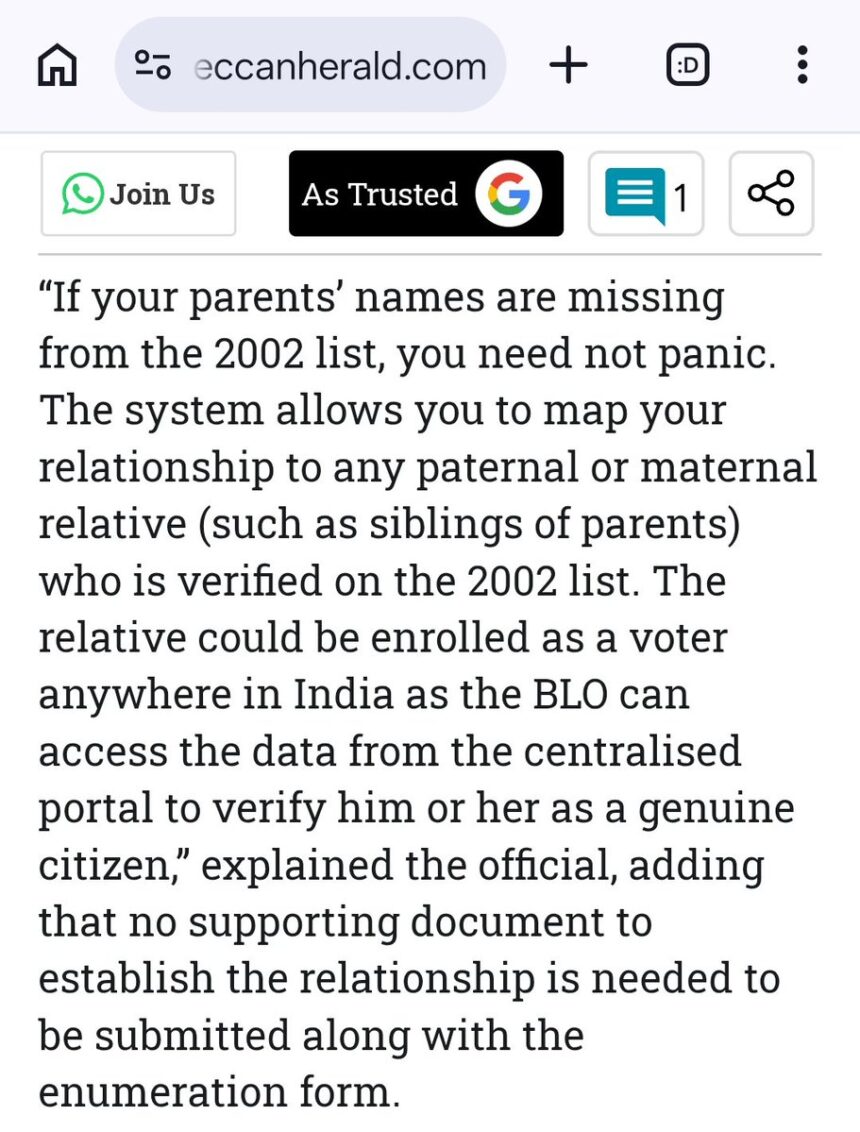
The issue at hand revolves around the 2002 Special Electoral Roll (SIR) in Karnataka, where eligible voters with current Electoral Photo Identity Card (EPIC) numbers faced difficulties linking their lineage to the voter list. Zubair pointed out that many individuals cannot find their parents’ or grandparents’ names on the list, creating uncertainty regarding their eligibility to vote. He cited a recent statement issued by the CEO of Karnataka, which suggested that voters could add their parents’ siblings as progeny when filling out forms provided by local Booth Level Officers (BLOs).
Confusion Among Adherents
Zubair’s concerns resonated with numerous voters who feared that the missing names might affect their voting rights. However, he highlighted a conflicting response from BLOs, who claimed that only parents and grandparents’ names could be linked to voters’ accounts, excluding siblings. This inconsistency between the CEO’s statement and the BLOs’ guidance is contributing to a growing sense of confusion among the electorate. Voters are effectively left in limbo as they seek clarity on their voting rights, compounded by the challenges of verifying their deceased relatives’ voting history.
Public Reaction and A Call for Clarity
The uproar among Karnataka’s electorate has escalated with many expressing frustration over the bureaucratic inefficiencies affecting their civic rights. The situation serves as a reflection of the challenges faced by citizens when engaging with electoral processes. In his tweet, Zubair not only called for clarification from the authorities but also urged the Karnataka CEO to ensure that BLOs adhere to the official policies laid out for voter registration. This clear breakdown in communication and policy enforcement has led to an urgent demand for resolution, as many fear losing their chance to participate in the electoral process.
Why This Matters
The turmoil surrounding the 2002 voter list not only highlights the administrative hurdles faced by the people of Karnataka but also underscores a broader issue plaguing the Indian electoral system—transparency and accessibility. The confusion can disenfranchise eligible voters, jeopardizing democratic processes in a country where every vote counts. Addressing these discrepancies is crucial for maintaining public trust in electoral institutions and ensuring that every citizen has a voice in democratic governance. Clarity on these matters is not just a procedural necessity; it is a fundamental right that supports the very fabric of India’s democracy.
Frequently Asked Questions
What is the 2002 Special Electoral Roll (SIR)?
The Special Electoral Roll (SIR) is a list compiled for eligible voters, detailing their names and details for electoral participation. The 2002 version has become a point of concern regarding name inclusivity.
Who is Mohammed Zubair?
Mohammed Zubair is a prominent political commentator in India, known for addressing issues related to governance, democracy, and electoral rights.
Why are voters concerned about missing names?
Voters are concerned because missing names can affect their eligibility to vote, leading to disenfranchisement and confusion regarding their rights to participate in elections.
What should voters do if their names or parents’ names are missing from the list?
Voters should seek clarification from their local Booth Level Officers (BLOs) and inquire about the procedures for rectifying discrepancies, as well as the policies regarding lineage linkage in voter registration.