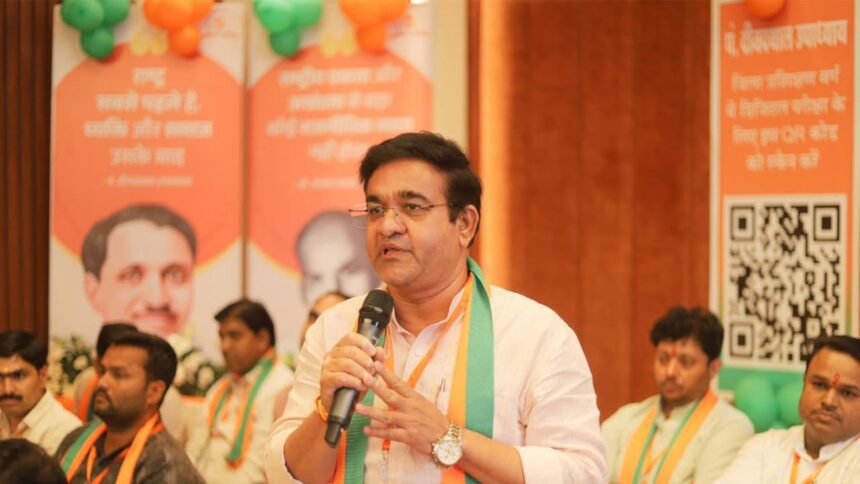

Madhya Pradesh has emerged as the first Indian state to reconstitute its Waqf Board under a new law, introducing two non-Muslim experts and four women members in a move that aims, according to financial advisor Animesh Bhargava, to enhance transparency and tackle financial irregularities.
Diverse Representation in the Waqf Board
The reconstitution of the Madhya Pradesh Waqf Board marks a significant legislative shift, making Madhya Pradesh the pioneering state in the country to undertake such a transformation under the revised Waqf law. With a 10-member board composition that includes two non-Muslim experts and four women, this initiative has stirred discussions about representation and governance. Animesh Bhargava, one of the non-Muslim members and financial advisor, emphasized that his role is focused on addressing financial mismanagement issues that have plagued the board historically, addressing complaints of irregularities surrounding Waqf properties.
Responses to Criticism
Despite the potential for positive change, the reconstitution has attracted criticism, particularly regarding the inclusion of non-Muslim members in a board traditionally aimed at serving Muslim communities. Responding to this, Bhargava argued that expertise should take precedence over religious identity. He stated, “The Waqf Board has nothing to do with religion. We are here to work for the welfare of society.” This perspective sheds light on an ongoing tension where some community leaders may fear that the board’s objectives could shift due to perceived external influences, risking the welfare of the vulnerable populations the board is supposed to protect.
Political Ramifications and Allegations
The newly constituted board has not only generated discussions about governance but also about vested interests and power dynamics within local political structures. Bhargava indicated that opposition to the board’s formation largely stems from those whose influence over Waqf properties is threatened. He claims certain influential figures within the community have previously usurped Waqf assets, diminishing both the operational integrity of the board and the aid meant for marginal groups. Bhargava asserted that any objections arising from political quarters do not reflect public sentiment but rather stem from individual self-interests, urging critics to scrutinize their motivations closely.
Why It Matters
The reconstitution of the Waqf Board in Madhya Pradesh signifies a broader societal shift, wherein governance mechanisms increasingly include diverse representation. While this initiative may intend to bring greater accountability and transparency, it also raises vital questions about community trust, especially in how marginalized groups are treated. Socially and politically charged environments often exacerbate tensions, making the effectiveness of such governmental changes critical. If successfully implemented, this model could inspire similar reforms in other states, potentially reshaping the landscape of minority welfare and inter-community relations across India.
Frequently Asked Questions
What is the Waqf Board?
The Waqf Board is a governing body responsible for the administration of Waqf properties and funds meant for various charitable and community development purposes, particularly within the Muslim community.
Why was the Waqf Board reconstituted in Madhya Pradesh?
The reconstitution was mandated under a new law to enhance transparency, bring in diverse expertise, and address longstanding issues of financial irregularities and mismanagement associated with Waqf properties.
Who are the members of the newly constituted Waqf Board?
The 10-member board includes two non-Muslim members, four women members, and representatives from various backgrounds to ensure diverse perspectives in managing Waqf properties.
What are the criticisms surrounding the inclusion of non-Muslim members?
Critics argue that involving non-Muslim members may compromise the board’s focus on Muslim community welfare, while proponents, including Bhargava, contend that expertise should prevail over religious affiliation for effective governance.