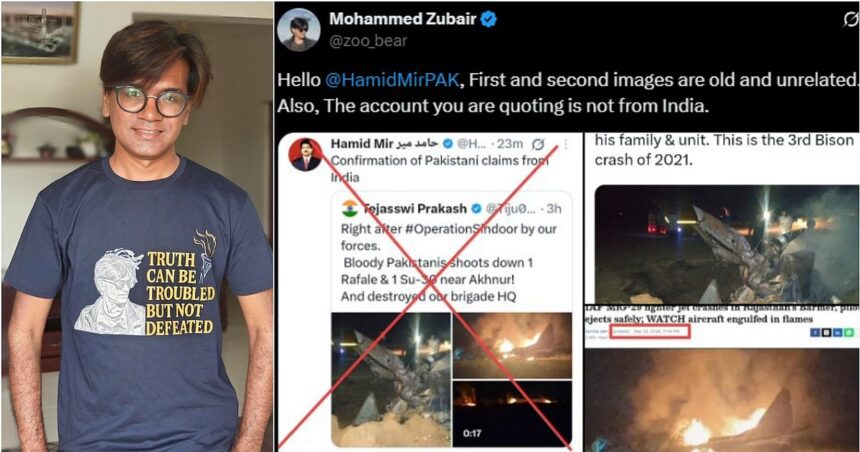

In a recent tweet, prominent political commentator Mohammed Zubair cautioned followers about deceptive accounts masquerading as Indian Army personnel. Zubair’s warning highlights the ongoing misinformation campaign, particularly within the context of heightened tensions between India and Pakistan.
Context of the Tweet
On May 7, 2025, Mohammed Zubair, known for his insightful commentary on Indian politics, took to Twitter to alert the public about accounts that allegedly promote Pakistani propaganda under the guise of Indian Army officials. Zubair urged his followers not to amplify such tweets, underscoring the risks of misinformation during politically sensitive times. He shared a visual example to illustrate his point, reinforcing the need for vigilance among social media users.
Response from Followers
The tweet prompted a wave of responses, including one from Puneet Sharma, who expressed admiration for Zubair’s resilience in the face of online vitriol. In his tweet, Sharma conveyed the emotional toll that constant attacks from fellow countrymen take on Zubair, who is often labeled as anti-national or a Pakistani sympathizer. These sentiments reflect a broader trend in Indian online discourse, where intense polarization often targets those who hold dissenting views, particularly regarding national security and military matters.
The Broader Implications of Misinformation
Misinformation remains a critical issue in India, particularly with the rise of social media as a primary information source. The potential for false narratives to influence public opinion and policy cannot be underestimated. As seen in Zubair’s warning, propaganda aimed at undermining national discourse poses dangers not only to individuals like Zubair but also to broader democratic processes. The interaction of misinformation with nationalism can lead to a dangerously toxic environment, stifling constructive debates on important issues such as defense and foreign policy.
Why This Matters
The political landscape in India is deeply affected by the proliferation of misinformation. Zubair’s warning serves as a crucial reminder for citizens to exercise discernment regarding the sources of information they engage with, especially on social media platforms. In an age where a tweet can spark significant political consequences, identifying and countering misleading narratives is vital for public discourse. The ongoing tensions between India and Pakistan make it even more imperative to avoid amplifying falsehoods that can exacerbate divisions within society.
Frequently Asked Questions
What did Mohammed Zubair warn about in his tweet?
Zubair warned his followers about accounts that are pretending to be Indian Army personnel while actually promoting Pakistani propaganda. He urged people not to amplify such misleading tweets.
What were some reactions to Zubair’s tweet?
Many followers expressed their respect and admiration for Zubair, acknowledging the challenges he faces from fellow Indians who label him as anti-national for voicing his opinions.
Why is misinformation concerning Indian national security particularly harmful?
Misinformation can exacerbate existing tensions and polarization within society, undermine public trust in legitimate institutions, and disrupt healthy political discourse, especially in matters concerning national security where emotions are often heightened.
How can citizens combat misinformation?
Citizens can combat misinformation by critically evaluating the sources of information they consume, verifying claims through credible outlets, and refraining from sharing unverified content, particularly on social media.